- Starting price
- ~$50 paperback
- Free tier
- No
- Platforms
- Print · Kindle
- Developer
- Fortress Press
- Launched
- 2003
- Updated
- May 31, 2026
The verdict
The most thorough historical study of Jesus’ resurrection in print. Wright spends 800 pages surveying what the ancient world believed about life after death, then argues - as a working historian, not a preacher - that the empty tomb and the resurrection appearances are the best explanation for the explosive rise of the early church. It is a landmark academic work. It is also not a casual read.
Try The Resurrection of the Son of God ↗Opens fortresspress.com
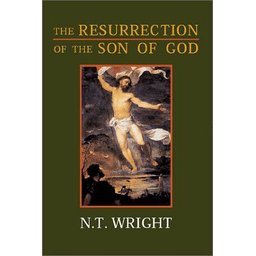
The Resurrection of the Son of God is the book that sits behind the other books. When a pastor reframes a funeral around bodily resurrection, when an apologist argues that the early church’s belief is itself a historical datum demanding explanation, when a seminary syllabus lists "the case for the resurrection" - the footnote, more often than not, points here. Published in 2003 by Fortress Press, it is the third volume in N.T. Wright’s monumental series Christian Origins and the Question of God, and at roughly 800 pages it is the heaviest single treatment of the subject most readers will ever encounter.
It is not a devotional. It is not a popular apologetic in the Lee Strobel mold. It is not a comfort book for the grieving. It is a work of historical scholarship - argued with footnotes, primary sources in Greek and Hebrew, and the patient accumulation of evidence - aimed at the question a historian is actually allowed to ask: given everything we know about the first century, what is the best explanation for the fact that a movement of Jewish monotheists suddenly began proclaiming that a crucified man had been raised from the dead?
Wright’s answer, built across five long parts, is that two things have to be explained together - the empty tomb and the appearances of the risen Jesus - and that neither alone will do the job, but the two together point to a conclusion most historians have been trained to rule out in advance. He is careful about what history can and cannot prove. He does not claim the resurrection is demonstrable the way a chemistry experiment is. He claims, rather, that it is the explanation that accounts for the evidence with the fewest loose ends, and that the alternatives strain harder than the thing they are trying to avoid.
The book made Wright’s reputation outside the academy and inside it at once. It is widely engaged, widely cited, and widely debated - historians and theologians have pressed back on the method, the scope, and the conclusion. That debate is part of what makes it a landmark: serious people argue about it because it is serious. For the lay-level version of the same thinking, Wright wrote Surprised by Hope. This is the version with the apparatus.
✓ The good
- The most comprehensive historical treatment of the resurrection in one volume - nothing else in print covers this much ground on the subject at this depth
- The opening survey of ancient views of death and afterlife - Greek, Roman, and Second Temple Jewish - is worth the price on its own and is cited far beyond the resurrection debate
- Argues as a historian, not a preacher - Wright builds the case from primary sources and explicit method rather than from the pulpit, which is exactly why it gets engaged across the academic spectrum
- Takes the early church’s belief itself as a fact requiring explanation - the question "why did this movement say what it said?" is handled with unusual rigor
- Scholar-grade footing on the resurrection narratives - Wright works through the Gospel accounts and the Pauline material (especially 1 Corinthians 15) with care, not proof-texting
- The single most-footnoted resource on the subject - if you are doing serious work on the resurrection, this is the book the field assumes you have read
- Wright’s prose, even at this length, stays clear - long, but rarely murky; the argument is always visible
✗ Watch out
- Massive and technical - at roughly 800 pages with Greek, Hebrew, and dense source-work, this is an academic monograph, not a weekend read
- Expensive - the academic pricing (around $50) puts it well above a typical trade paperback, and there is no budget edition
- Assumes scholarly stamina - readers without some background in biblical studies or ancient history will find stretches heavy going, and Wright does not slow down for them
- Not the right entry point for most readers - for the accessible version of Wright’s resurrection thinking, Surprised by Hope covers the core in a fraction of the length
- The conclusion is debated - historians and theologians disagree about whether history can carry the weight Wright places on it, and a reader should know the argument is contested, not settled
Best for
- Seminary students and scholars working seriously on the resurrection or early Christianity
- Pastors and teachers who want the full argument behind the popular books they already use
- Apologists who need primary-source depth rather than summary-level talking points
- Readers with academic stamina who want the most thorough treatment available, length notwithstanding
Avoid if
- You want an accessible introduction - start with Surprised by Hope instead
- You want a quick popular-level case for the resurrection - The Case for Christ is the lighter read
- You are reading for devotion or comfort rather than historical argument
- You bounce off long academic prose, footnotes, and untranslated Greek
What The Resurrection of the Son of God is
The Resurrection of the Son of God is an 800-page work of New Testament scholarship by N.T. Wright, published in 2003 as the third volume of his series Christian Origins and the Question of God. Wright is one of the most-respected New Testament scholars alive - former Bishop of Durham in the Church of England, formerly Research Professor of New Testament and Early Christianity at the University of St. Andrews - and this volume is the academic centerpiece of his lifelong work on the resurrection. It is written for scholars, students, and serious readers, with full footnotes and primary sources.
The structure moves in five parts. Wright begins not with the Gospels but with the ancient world: what did Greeks, Romans, and Second Temple Jews actually believe about death and the afterlife? He then works through the Pauline letters - 1 Corinthians 15 above all - and the rest of the early Christian writings, then the resurrection narratives in the four Gospels, before turning in the final part to the historical question itself: what explanation best accounts for the empty tomb, the appearances, and the rise of the resurrection belief at the heart of the early church?
Why scholars and serious readers reach for this volume
The single biggest difference between this book and a popular apologetic on the resurrection is that Wright does not start with the resurrection. He starts with the ancient mind. Before he argues anything about Jesus, he spends hundreds of pages establishing what "resurrection" and "life after death" meant to the people of the first century - that pagans by and large did not expect bodily resurrection and often regarded it as impossible or undesirable, and that Second Temple Jews who did hope for resurrection expected it at the end of history, for everyone, not for one man in the middle of time. That groundwork is what makes the later argument land: the early Christian claim was strange against both backgrounds, and strangeness is a historical fact that wants explaining.
That method - historian first, advocate second - is why the book is engaged across the academic spectrum rather than only inside the church. Wright takes the early church’s belief as data: a movement of Jewish monotheists, within a few years of the crucifixion, reorganized its entire worldview around the claim that a particular man had been bodily raised. Wright argues the most economical explanation is that something happened to produce that belief, and that the empty tomb and the appearances, taken together, are the explanation that leaves the fewest loose ends. Whether the argument finally succeeds is debated by historians and theologians alike - but the rigor of the case is why it is the one nearly everyone in the conversation has to reckon with.
The ancient world on life after death: the survey that frames everything
The first long stretch of the book is a survey of what the ancient Mediterranean world believed about death, the dead, and any possible life beyond. Wright works through Homer and the Greek philosophical tradition, Roman attitudes, and then the spectrum of Second Temple Jewish hope - from groups that expected no afterlife at all, to apocalyptic literature that anticipated a bodily resurrection of the righteous at the end of the age. The point is precise: when first-century people heard the word "resurrection," they did not hear "a soul going to heaven." They heard "dead bodies coming back to embodied life" - and most of the pagan world considered that either impossible or actively unwelcome.
This section has a reach well beyond the resurrection debate itself. Scholars in unrelated fields cite Wright’s survey of ancient afterlife belief because it is unusually thorough and carefully sourced. For the book’s own argument it is load-bearing: Wright is establishing that the early Christian claim - one man, raised bodily, in the middle of history, as the firstfruits of a resurrection still to come - fit neither the pagan nor the standard Jewish expectation. It was a mutation in the hope, and a sharp one. By the time Wright turns to the Gospels and Paul, the reader already understands why the early church’s belief is not something a first-century person would casually invent.
Paul, the Gospels, and the historical argument
With the ancient backdrop in place, Wright turns to the earliest Christian sources. He treats the Pauline letters first, since they are the earliest written evidence, and gives extended attention to 1 Corinthians 15 - Paul’s great resurrection chapter - arguing that Paul means bodily resurrection (a transformed, "spiritual" body in the sense of Spirit-animated, not non-physical) and that this was the settled belief of the church well within a generation of the events. He then works through the resurrection narratives in all four Gospels, attending to their oddities - the surprising prominence of women as first witnesses, the lack of the scriptural ornamentation one would expect from invented stories, the strangely un-theologized character of the accounts.
The final part is the historical argument proper. Wright lays out the data that any explanation must cover: the empty tomb on its own, the appearances on their own, and the rise of a resurrection-shaped movement among people who had no category for it. He examines the alternative explanations - theft, hallucination, legend, misunderstanding - and argues that each strains against one part of the evidence or another, while the bodily resurrection accounts for all of it together. He is explicit about the limits: history cannot compel belief, and a reader committed in advance to ruling out the possibility will rule it out. What Wright claims is that, judged by ordinary historical standards, the resurrection is the best available explanation - a conclusion other historians and theologians actively contest, which is part of why the book remains a fixture of the discussion.
A landmark in a larger project - and what that context means
This volume is not a standalone. It is book three of Christian Origins and the Question of God, a multi-volume scholarly project running well past 3,000 pages, in which Wright is reconstructing the origins of Christianity as a historical phenomenon. Within that project Wright is also one of the leading voices in what is usually called the "New Perspective on Paul" - a school of New Testament interpretation that rereads Paul against his Second Temple Jewish context, and which has been debated within the academy, including by writers in the Reformed tradition. That broader conversation is mostly background here: The Resurrection of the Son of God is about the resurrection, not about justification, and a reader does not need a position on the New Perspective to engage it.
Knowing the context still helps. The same instincts that drive Wright’s wider work - read the texts inside their first-century Jewish setting, take the historical question seriously on its own terms, resist collapsing ancient categories into modern ones - are the instincts that organize this book. Readers who already know Wright from Surprised by Hope will recognize the thesis in its mature, fully-argued form; readers who know him only from the New Perspective debates will find that those debates sit largely to the side of this particular volume. Either way, the book’s standing does not depend on agreeing with the rest of the project. It is engaged as a landmark on its own subject, by readers who line up on many different sides of Wright’s other arguments.
Pricing
Paperback
~$50
The standard Fortress Press academic paperback - around 800 pages. The copy most students and libraries own.
Kindle / ebook
~$40
Full text, searchable, syncs across devices - genuinely useful for a book you will be citing rather than reading front to back.
Hardcover
~$70+
Library-grade binding, sometimes only available used or through academic distributors. Same text as the paperback.
Used / secondhand
~$25-40
The text has not been revised since 2003, so a used copy reads identically to a new one - the cheapest path into a costly book.
The Resurrection of the Son of God is a paid academic book with no free tier, no library-subscription bundling, and no budget edition. The Fortress Press paperback runs around $50 - academic pricing for an 800-page monograph - and is the copy most students, scholars, and libraries own. We mark it as best value mainly because it is the standard reference edition everyone’s citations are keyed to.
The Kindle edition at around $40 is the more practical pick for many readers, and not only on price. This is a book most people use rather than read straight through - it is searchable, the footnotes are navigable, and highlights sync across devices, all of which matter when you are tracking down a specific argument rather than reading front to back.
The hardcover (around $70 and up, sometimes only available used or through academic channels) is for libraries and collectors; the text is identical. Because the book has not been revised since 2003, the secondhand market is the smart move for anyone on a budget - used paperbacks commonly run $25-40 in good condition and read exactly like a new copy.
One honest note on value: most readers do not need this book. If you want Wright’s resurrection thinking at a price and length you will actually finish, Surprised by Hope delivers the core argument for under $20. This volume is the investment you make when summary-level treatment is no longer enough and you need the full apparatus.
Where The Resurrection of the Son of God falls behind
Length and technicality. At roughly 800 pages, with extended source-work and untranslated Greek and Hebrew, this is an academic monograph that assumes you are equipped to read one. It is comprehensive precisely because it is exhaustive, and that exhaustiveness is a real barrier for a general reader. Know that going in.
No accessible on-ramp inside the book itself. Wright does not include a "for the busy reader" summary or a popular-level fast path. If you want the argument without the apparatus, the book to buy is Surprised by Hope, not this one - and Wright would tell you the same.
Cost. There is no cheap edition. Around $50 new for the paperback is academic-standard pricing, but it is several times what a trade paperback costs, and the absence of a budget version is a real friction for lay readers who are merely curious.
A contested conclusion. Wright argues the resurrection is the best historical explanation for the evidence; a number of historians and theologians disagree - some on whether history can bear that kind of weight at all, some on the handling of specific sources. The argument is rigorous and widely respected, but it is debated rather than settled, and a reader should engage it as a strong case to be weighed, not a closed question.
Single-subject by design. This is a deep study of one question. Readers wanting a broader treatment of Christian doctrine, or a survey of apologetics generally, will need other books - this volume goes very deep on the resurrection and deliberately stays there.
The Resurrection of the Son of God vs. Surprised by Hope vs. The Case for Christ
Different strengths, and they sit at three different depths. The Resurrection of the Son of God (Wright, 2003) is the full scholarly argument - 800 pages, primary sources, the historical case built from the ground up for an academic readership. Surprised by Hope (Wright, 2008) is the same author taking the core of that thinking to the person in the pew - around 300 readable pages, footnotes restrained, focused on what bodily resurrection and new creation mean for how the church lives now. The Case for Christ (Lee Strobel, 1998) is the popular-level entry point - a former investigative reporter interviewing scholars on the reliability of the Gospels and the evidence for the resurrection, written for a reader who wants the case without the academic weight.
Pick by what you actually need. If you are doing serious study and need the primary-source depth, it is this volume - there is nothing more thorough. If you want Wright’s argument at a length you will finish and a price you will not flinch at, Surprised by Hope is the right call, and it is the one most readers should start with. If you are new to the question and want an approachable, journalistic walk through the evidence, Strobel’s The Case for Christ is the lightest lift of the three.
All three are read across Catholic, Protestant, Orthodox, and other Christian traditions. Wright writes from within Anglicanism but argues as a historian, and his resurrection work is engaged broadly - including by readers who differ with him sharply on his other projects. Strobel writes from an evangelical perspective, but the historical material he assembles circulates well beyond it. The three together - Strobel as the on-ramp, Surprised by Hope as the working argument, and this volume as the full reference - form a strong personal library on the resurrection.
The bottom line
The Resurrection of the Son of God is the book to own if you need the complete historical argument for Jesus’ resurrection rather than a summary of it. Wright builds the case as a working historian - first establishing what the ancient world believed about death, then arguing that the empty tomb and the appearances together best explain the rise of the early church - and does it with a rigor that has made the volume a fixture in the field, debated by serious people precisely because it is serious. It is long, technical, and expensive, and it is not where most readers should begin. For the accessible version, read Surprised by Hope. For the full apparatus, this is the landmark.
Alternatives to The Resurrection of the Son of God
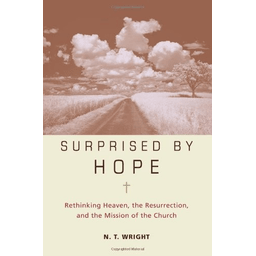 Surprised by HopeN.T. Wright’s popular-level book on resurrection and new creation - the accessible, ~300-page version of the thinking behind this academic volume, and where most readers should start.
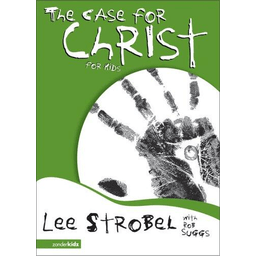 The Case for ChristLee Strobel’s journalistic investigation of the evidence for Jesus, including the resurrection - the popular-level on-ramp to the question this book treats at scholarly depth.
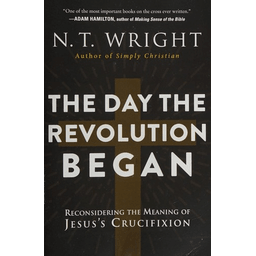 The Day the Revolution BeganN.T. Wright on the meaning of the cross - a companion to his resurrection work, written for a general readership rather than for the academy.
 The Reason for GodTim Keller’s case for Christian faith against contemporary objections - broader in scope than Wright’s resurrection focus, and pitched at the modern skeptic.
Frequently asked questions
Is this the same as Surprised by Hope?
No. They share an author and a subject but sit at different depths. The Resurrection of the Son of God is the 800-page academic argument with full footnotes and primary sources; Surprised by Hope is the ~300-page popular-level book that carries the core of the same thinking to a general reader. If you want one to start with, start with Surprised by Hope. This volume is the full scholarly version.
Do I need a theology degree to read it?
Not a degree, but some stamina and background help. It is a serious academic monograph with stretches of untranslated Greek and Hebrew and dense engagement with primary sources. A motivated reader without formal training can get a great deal out of it, but should expect heavy going in places - Wright is writing for scholars and students and does not slow the pace for a general audience.
What is Wright’s actual argument about the resurrection?
In brief: two facts have to be explained together - the empty tomb and the post-crucifixion appearances of Jesus - and neither alone will do it. Wright argues, building from what the ancient world believed about death, that the bodily resurrection of Jesus is the explanation that best accounts for the evidence and for the sudden rise of a resurrection-shaped movement among first-century Jews. He is explicit that history cannot compel belief; he claims the resurrection is the strongest available explanation, a conclusion other scholars actively debate.
How does this relate to the "New Perspective on Paul"?
Wright is one of the leading voices in the broader New Perspective on Paul, a school of interpretation that reads Paul closely against his Second Temple Jewish context and that has been debated within the academy, including by writers in the Reformed tradition. This book, however, is about the resurrection rather than justification, so that debate is mostly background here - you do not need a position on the New Perspective to engage the resurrection argument.
Is the historical case for the resurrection considered proven?
It is considered a strong and widely engaged argument, not a settled matter. Wright makes a rigorous case that the resurrection is the best historical explanation for the evidence, and the book is a landmark for that reason. But historians and theologians disagree - some about whether history can carry that kind of conclusion at all, some about the handling of particular sources. It is best read as a serious case to be weighed rather than a closed question.
Why is the book so expensive?
It is an academic monograph from a scholarly publisher (Fortress Press), and academic pricing runs well above trade-paperback rates - around $50 new for the paperback, with no budget edition. The Kindle edition (around $40) is cheaper and, because the book is more often consulted than read cover to cover, often the more practical buy. Used copies (roughly $25-40) read identically, since the text has not been revised since 2003.
Where should I start if I just want the gist?
Read Surprised by Hope. It is Wright’s accessible book on resurrection and new creation, under 300 pages and under $20, and it delivers the heart of the argument without the academic apparatus. If you later find you need the full historical case with the sources, this volume is the place to go - and for a popular-level walk through the evidence generally, Lee Strobel’s The Case for Christ is the lightest entry point.
Sources & further reading
More Apologetics Books
The Reason for GodTim Keller’s 2008 apologetic has quietly become the default gift for the smart, secular friend who has questions - and it earns the reputation. Making Sense of GodTim Keller’s 2016 “prequel” to The Reason for God doesn’t argue that God exists - it argues that the things you already want make more sense inside Christianity than outside it, and it’s the book for the skeptic who isn’t ready for the argument yet.
 TacticsGreg Koukl wrote the book that teaches you how to talk about faith without it turning into an argument - the one most people reach for when "I never know what to say" is the real problem.
 On GuardWilliam Lane Craig’s 2010 primer takes the formal arguments from his heavyweight Reasonable Faith and redraws them as flowcharts a layperson can actually follow - apologetics taught like a skill, not a sermon.The Case for ChristLee Strobel’s investigative-journalist apologetic has quietly become the default gift book for skeptical friends - and the on-ramp into apologetics for an entire generation of readers.
 Total TruthThe book that taught a generation of evangelicals to think in terms of worldview - and to stop letting their faith get filed under "private values" while everyone else got "public facts."