- Starting price
- $11.99 paperback
- Free tier
- No
- Platforms
- Print · Kindle · Audiobook · Audible
- Developer
- Thomas Nelson
- Launched
- 2001 (Revised + Updated 2010)
- Updated
- May 24, 2026
The verdict
Wild at Heart has quietly become the default men’s book of a generation - equal parts campfire confession, theology, and call to risk. Its archetype-driven thesis can land like a thunderclap for one reader and like a too-tight suit for the next, and both reactions are fair.
Try Wild at Heart ↗Opens wildatheart.org
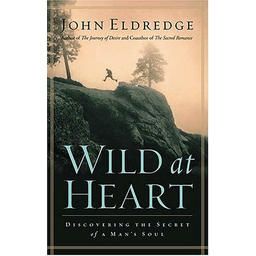
Wild at Heart is not the right book for everyone, and that is part of why it has sold more than four million copies. John Eldredge wrote it in 2001 as a kind of intervention - a claim that Christian men in the West had been domesticated into "really nice guys" who were bored, passive, and quietly furious about it, and that the gospel actually invites men into something rougher and more alive than the church had been offering them. Two decades later, it is still the men’s book pastors hand out at retreats, still the one men’s groups read first, and still the one critics return to with sharpened pencils.
It is not a systematic theology. It is not a marriage manual. It is not a self-help program with steps. It is closer to a long, fireside argument from a counselor who has clearly done a lot of his own work and wants to drag the reader through some of it, too. Eldredge moves through Scripture, Westerns, fly fishing, fatherhood, and his own story to make one central claim: every man has three core longings - a battle to fight, an adventure to live, a beauty to rescue - and most of his confusion, anger, and addiction is what happens when those longings get buried.
For a lot of men, that frame has been clarifying in a way nothing else they have read has been. For other readers - including many women, many men who do not see themselves in the cowboy imagery, and many theologians who think the archetypes get stretched past what the text will bear - the same frame raises real questions. A useful review has to hold both honestly. This one tries to.
✓ The good
- Reaches men who do not read - pastors report this is the one book the quiet guy in the back actually finishes
- A single, memorable thesis - the three longings (battle, adventure, beauty) give men language for things they have felt but never named
- Permission to feel - Eldredge writes about grief, father wounds, and shame in a way the Christian men’s shelf rarely allows
- Storytelling carries the load - Braveheart, fly-fishing trips, and confession-around-a-fire make the theology stick
- Built a real ecosystem - Ransomed Heart retreats and Wild at Heart Boot Camps extend the book into community, not just a one-time read
- Companion book for couples - Captivating, co-written with Stasi Eldredge, lets husbands and wives read parallel volumes and actually talk
- Genuinely re-readable - many men report a deeper read in their forties than they got in their twenties
✗ Watch out
- Reads masculine archetypes universally - if you are not the cowboy/warrior type, the imagery can feel like a costume that does not fit
- Hermeneutics run hot - some scriptural moves feel more devotional-poetic than exegetical, and that bothers careful readers
- Light on church and sacrament - the book’s spirituality is intensely personal and outdoorsy, less rooted in ordinary congregational life
- Gender essentialism critique is real - egalitarian readers and many women find the "men are like this, women are like this" framing overstated
- Spiritual-warfare register is not for everyone - the charismatic-leaning emphasis on the enemy and the heart will land differently across traditions
- Dated in places - even with the 2010 update, some cultural references feel like another decade
Best for
- Men who have never finished a Christian book and need one that grabs them by the collar
- Pastors and small-group leaders running a men’s ministry from scratch
- Couples wanting a his-and-hers read (Wild at Heart + Captivating)
- Guys in a midlife stuck-point looking for language for what is actually wrong
Avoid if
- You want a tightly exegetical, footnoted theology of manhood
- You bristle at universal masculine archetypes or strong gender essentialism
- You prefer a low-key, sacramental, parish-rooted spirituality over an outdoor-adventure register
- You are looking for a step-by-step program rather than a long, evocative argument
What Wild at Heart is
Wild at Heart is a roughly 230-page work of Christian living published in 2001 by Thomas Nelson, written by counselor and author John Eldredge. It argues that the heart of a man - not his behavior, his role, or his job description - is the place where God most wants to meet him, and that most of the men Eldredge has counseled have been hiding from that heart for a long time. The book moves in three acts: what a man’s heart was made for, what has gone wrong with it, and how the gospel sets it free to live again.
Eldredge writes from a broadly evangelical Protestant frame with a noticeable charismatic and contemplative streak - he leans on writers like George MacDonald, C. S. Lewis, Brent Curtis, and Dallas Willard, and on imagery from Westerns and wilderness adventure. The book spawned a whole publishing line (Captivating, Fathered by God, Beautiful Outlaw) and an ongoing retreat ministry, Ransomed Heart, now operating as Wild at Heart, which runs in-person and online "boot camps" built on the book’s framework.
Why men’s ministries keep coming back to Wild at Heart
The single biggest practical difference between Wild at Heart and the rest of the Christian men’s shelf is that men actually finish it. Pastors will tell you stories of guys who have not read a book since high school showing up to small group week three with the chapters underlined and the margins full. That is not an accident. Eldredge writes in scenes - a father at a soccer game, a boy in the canyon, a husband sitting across from his wife unable to speak - and the scenes do the work that lectures cannot.
The book also gives men a shared vocabulary. Once a group has read it together, phrases like "the question every man is asking," "the wound," "the false self," and "the battle to fight" become shorthand. That shared language is what turns a one-time read into a year of conversations. It is also why men’s ministries that have tried newer, tighter books often drift back to this one: it does not just inform, it organizes how a group talks about their lives.
The three-longings framework: battle, adventure, beauty
The book’s central claim is that God wired every man with three deep longings: a battle to fight, an adventure to live, and a beauty to rescue. The battle is the desire to give yourself to something hard and worth doing. The adventure is the pull toward risk, wildness, and unscripted life. The beauty is the desire to offer your strength to someone - most often a wife - for her flourishing. Eldredge argues that when those longings get suppressed, they do not go away. They go sideways into workaholism, porn, passivity, escapism, and rage.
Whether that framework is universally true is one of the book’s big arguments, and not every reader is sold. But as a diagnostic, it earns its keep. A man who cannot say what he wants out of his life can often, after a chapter or two, say which of the three he has been starving. That single move - turning a vague midlife ache into a nameable longing - is most of why the book has stayed in print for a quarter of a century.
The boot-camp and small-group ecosystem
Wild at Heart is not just a book. It is the front door to a whole ministry. Ransomed Heart (now operating under the Wild at Heart name) runs multi-day retreats - historically a Colorado-based "Boot Camp" weekend, now expanded into regional events, online cohorts, and an extensive podcast and app - built directly on the book’s framework. The retreats lean heavily on guided story-work, prayer ministry, and outdoor settings, and they are the place a lot of men say the book actually landed for them.
Underneath the retreats sits a much larger small-group infrastructure: the Field Manual workbook, study guides, and a long-running pattern of churches reading the book in chapter-a-week cohorts. The practical upshot is that if a man’s ministry decides to use Wild at Heart, it does not have to invent everything around it. The curriculum, the prompts, the retreat partners, and the alumni-style community are already there - which is part of why this book, more than its peers, tends to become a multi-year cultural fixture in a congregation rather than a one-time study.
The gender-essentialism critique - stated honestly
The most serious recurring critique of Wild at Heart is that it reads masculine archetypes as if they were universal human truths. Eldredge often writes as though every boy needs the same kind of father-blessing, every man wants the same kind of adventure, and every woman wants to be fought for in the same way. Readers who do not fit those molds - quieter men, men with disabilities, men in cultures where the cowboy register does not translate, and many women reading either Wild at Heart or its companion Captivating - have pushed back, sometimes hard, on whether the archetypes are descriptive of all people or only of a particular slice.
There is also a theological version of this critique. Some egalitarian readers worry that the book baptizes a specific cultural masculinity as if it were divine design. Some complementarian readers worry that it leans more on Jungian and mythic categories than on the biblical text. Both critiques are worth taking seriously. The fairest read is that Eldredge is writing pastorally for men he has actually counseled, and the framework works powerfully for many of them - but no single archetype is going to fit every reader, and treating it like one is where the book gets into trouble. Used as a conversation-starter rather than a verdict, it holds up much better.
Pricing
Paperback
~$11.99
The everyday edition most men read. Easy to mark up, easy to hand to a friend.
Hardcover
~$22
Durable gift edition. Common pick for retreats, mentors, and graduation presents.
Kindle
~$10
Digital copy. Good if you highlight heavily and want to search your notes later.
Audible
~$15
Unabridged audio. Eldredge’s voice carries the storytelling well, especially on long drives.
Field Manual
~$15
Companion workbook with questions, exercises, and journaling space - built for small-group use.
10th Anniversary Edition
~$15
Revised and updated text with new preface and reflections from a decade of reader response.
There is no free tier. This is a book, not a freemium app, and the cheapest legitimate way in is a roughly $12 paperback - which is also the edition most men actually use, because it gets marked up, dog-eared, and loaned out.
The Kindle copy lands around $10 and is the right pick if you highlight heavily and like to search your notes later. The Audible version, around $15, is a quiet favorite among commuters; the storytelling format reads aloud well, and Eldredge’s pacing carries it.
The Field Manual is the move if you are running a group. At around $15 it is purpose-built for a chapter-a-week cohort, with prompts and journaling space already laid in. The 10th Anniversary Edition, also around $15, is the cleanest single-volume read for someone coming to the book fresh.
For a couples read, the practical bundle is Wild at Heart plus Captivating - about $24 for the pair in paperback. That is the configuration most marriage retreats use, and it is the one most worth the spend if both spouses are actually going to read.
Where Wild at Heart falls behind
No tightly exegetical theology of manhood. Eldredge moves through Scripture devotionally and poetically rather than working passages with the rigor of, say, a Carson or a Keller. Readers who want footnotes, original-language work, and a careful argument from the text will feel like the book is gesturing at conclusions faster than it earns them.
No real treatment of church, sacrament, or ordinary parish life. The spirituality of Wild at Heart is outdoor, personal, and intense - campfire, canyon, prayer-closet. The weekly rhythms of congregational worship, communion, and ordinary fellowship sit largely in the background. For traditions where those rhythms are the heart of formation, that absence is felt.
Limited cultural range. The book’s imagery is overwhelmingly Western, rural-coded, and American - cowboys, fly rods, mountains, Braveheart. Men from other cultural backgrounds, urban contexts, or quieter temperaments sometimes have to translate every page, and a few simply put it down.
Light engagement with the critiques. Even in the revised edition, Eldredge does not spend much time wrestling on the page with the gender-essentialism pushback the book has drawn. Readers who want the author to argue with his own critics will not find much of that here.
Not a program. There are no steps, no scorecards, no app, no plan. That is part of the book’s charm and part of its limit - if you want a structured habit-building system, this is not it.
Wild at Heart vs. Captivating vs. The Mingling of Souls
Different goals. Wild at Heart is written to men about the shape of their own hearts. Captivating, co-authored by John and Stasi Eldredge, is the parallel volume for women - same overall framework, but the three longings get reframed (to be romanced, to play an irreplaceable role in a great adventure, to unveil beauty). The Mingling of Souls, by Matt Chandler, is a different animal entirely: a sermon-driven walk through Song of Solomon on attraction, dating, marriage, and sex, written from a Reformed-Baptist frame.
Different strengths. Wild at Heart is best at reaching men who have been bored by the Christian men’s shelf and giving them language for their own interior life. Captivating is best read alongside it as a couple, because it lets a husband and wife trade vocabularies rather than guess at each other. The Mingling of Souls is best when the question is specifically about a relationship - how to date, how to fight, how to stay - and you want a more text-driven, sermon-shaped voice.
Different theological registers. The Eldredges write with a charismatic-contemplative, archetype-friendly voice. Chandler writes in a tighter Reformed register with verse-by-verse exposition. Neither approach is the right one for every reader. If you want story and longing, start with Wild at Heart and Captivating. If you want exposition and structure, start with The Mingling of Souls - and honestly, many couples end up reading both pairs over a few years.
The bottom line
Wild at Heart is the most-read Christian men’s book of the 21st century for a reason: it actually moves men. The three-longings frame is a genuine gift - diagnostic, memorable, and easy to share - and the surrounding ecosystem of retreats and small groups makes it stickier than almost anything on the shelf. The critiques are real, too: the masculine archetypes are pitched as more universal than they are, the hermeneutics run hot, and the imagery will not fit every reader. Taken as a conversation-starter rather than a final word on manhood, it more than earns its place.
Alternatives to Wild at Heart
 The Five Love LanguagesGary Chapman’s framework for how people give and receive love. Quieter, more practical, and the most-handed-out marriage book of the era.
 Mere ChristianityC. S. Lewis’s patient, generous case for the Christian faith. Different aim entirely, but the book most men reach for when they want substance.
 Crazy LoveFrancis Chan’s short, urgent call to a wholehearted faith. A common follow-up read for men who got their fire lit by Wild at Heart.
 The Purpose Driven LifeRick Warren’s 40-day frame for "what on earth am I here for." More structured and program-shaped than Wild at Heart, and gentler in voice.
Frequently asked questions
Is Wild at Heart only for men?
It is written to men, and the imagery and pronouns reflect that, but plenty of women have read it - most often to understand a husband, son, or father better. The companion volume Captivating is the parallel book aimed at women, and many couples read them together.
Do I need to read the 10th Anniversary Edition or is the original fine?
Either works. The 10th Anniversary Edition (2010) is a light revision with a new preface and some updated language; the original 2001 text is still in print and still the version most older small-group libraries have. If you are buying fresh, the anniversary edition is the cleaner pick.
How long does it take to read?
About 230 pages, twelve chapters. Most readers move through it in two to three weeks at a comfortable pace, or a chapter a week if you are using the Field Manual in a small group.
Is the book theologically reliable?
Eldredge writes from a broadly evangelical Protestant frame with a charismatic-contemplative streak. Readers from more confessional or expositional traditions sometimes find his use of Scripture more evocative than precise. Treat it as pastoral writing and devotional reflection rather than systematic theology and you are reading it the way it was written.
What is a Wild at Heart Boot Camp?
A multi-day retreat run by Wild at Heart (formerly Ransomed Heart Ministries) that walks men through the book’s framework in person, with teaching, story-work, and prayer ministry. There are also regional and online versions now, plus a long-running podcast and app from the same ministry.
What is the main criticism of the book?
The most common critique is that it treats a particular set of masculine archetypes - warrior, adventurer, rescuer - as if they were universal. Readers who do not fit those archetypes, including many women, many quieter men, and readers from non-Western contexts, often feel the framework is overstated. The fairest use is as a conversation-starter, not a verdict on manhood.
Should my church use it for a men’s group?
Many do, and there is a well-developed Field Manual and small-group infrastructure built for exactly that. Plan for some men to connect with it deeply and some to push back on the imagery, and treat both responses as part of the conversation rather than a problem to manage.
Sources & further reading
More Christian Living Books
 The Prodigal GodTim Keller’s 130-page reading of Luke 15 has quietly become one of the most-gifted Christian books of the last twenty years - and the reason is the title itself.
 Practicing the WayComer’s 2024 follow-up to The Ruthless Elimination of Hurry has quietly become the default spiritual-formation book in a thousand small groups - and the reasons are worth unpacking.
 Walking with God Through Pain and SufferingTim Keller’s most comprehensive book on suffering - part survey of how every culture has tried to explain pain, part biblical theology, part field manual for the people actually walking through it.
 FerventThe prayer book that turned “strategic, specific prayer” into a fill-in-the-blank battle plan - and rode the War Room moment to the top of the bestseller lists.
 A Grace DisguisedJerry Sittser lost his mother, his wife, and his four-year-old daughter in a single car crash - and the book he wrote about it has quietly become the one grieving people press into each other’s hands, because it refuses to tell you how to get over your loss.
 The Ruthless Elimination of HurryJohn Mark Comer’s 2019 breakout - a pastor’s case that hurry is the great spiritual enemy of our age - has quietly become the go-to slow-down book for an exhausted generation of Christians. Here’s what it actually delivers, and where it doesn’t.