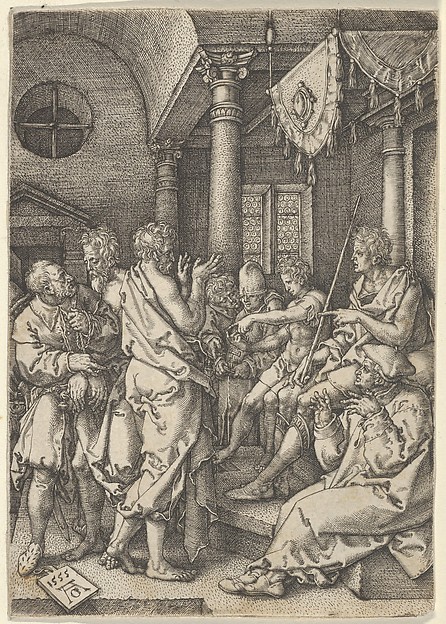
Painter of the Bible
Heinrich Aldegrever
Heinrich Aldegrever was a German engraver and goldsmith of the second generation after Albrecht Dürer, one of the principal members of the Little Masters whose tiny, finely worked plates carried Reformation-era German bi…

Their faith
Why Heinrich Aldegrever painted Christ
Heinrich Aldegrever was a devoted adherent of the Reformation, deeply influenced by the Lutheran faith that permeated his community of Soest. Born in 1502, he was trained in his father's goldsmith shop, which instilled in him a sense of craftsmanship that he would carry into his art. Aldegrever's commitment to his faith is evident in the themes he chose to explore in his work, often focusing on biblical narratives that resonated with Lutheran moral teachings. His engravings reflect a sober, yet profound understanding of scripture, showcasing a reverence for the divine that was characteristic of his time. As a member of the Little Masters, his contributions to the Reformation-era visual culture were significant, as he helped disseminate religious imagery that inspired and edified the faithful.
Aldegrever's engravings, such as the "Story of Joseph" and the "Crucifixion," reveal his spiritual vision and dedication to portraying biblical truths. His works often depict characters who embody virtues celebrated in Lutheran teachings, such as patience, chastity, and suffering. This focus on moral resonance not only served to instruct viewers in their faith but also provided a means of connecting with the divine through art. His ability to convey deep spiritual narratives through the intricate detail of his engravings continues to inspire viewers today, reminding us of the power of faith and the beauty of devotion in artistic expression. Aldegrever's legacy lives on, as his art invites us to reflect on our own spiritual journeys and the timeless truths found in scripture.
Life & work
Heinrich Aldegrever was a German engraver and goldsmith of the second generation after Albrecht Dürer, one of the principal members of the Little Masters whose tiny, finely worked plates carried Reformation-era German biblical and allegorical subjects through the print markets of the mid-sixteenth century. Born in Paderborn in 1502, trained in his father's goldsmith shop and in the broader Westphalian metalworking tradition, and settled in Soest in northwestern Germany from about 1525 onward, he ran his own workshop in that city and produced engravings, ornament designs, and goldsmith work until his death around 1561.
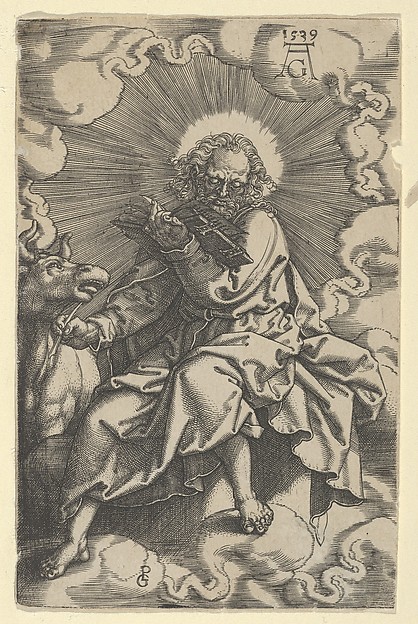
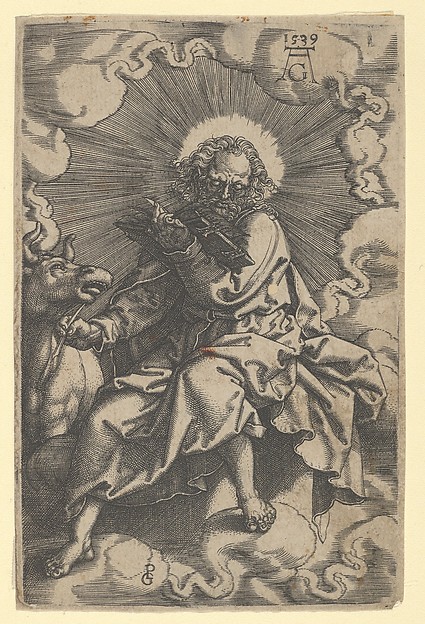
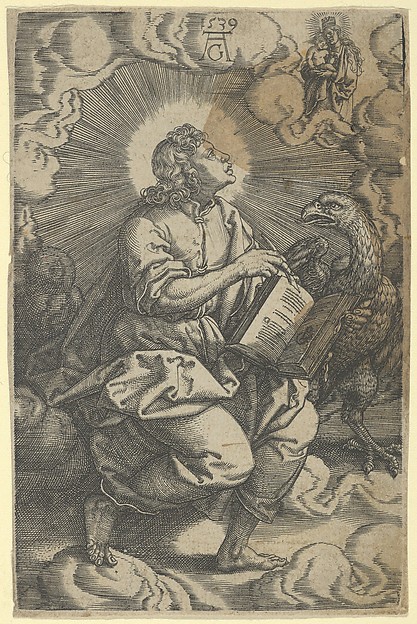
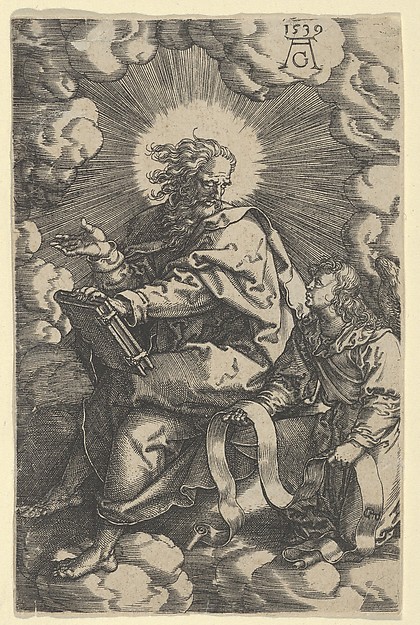
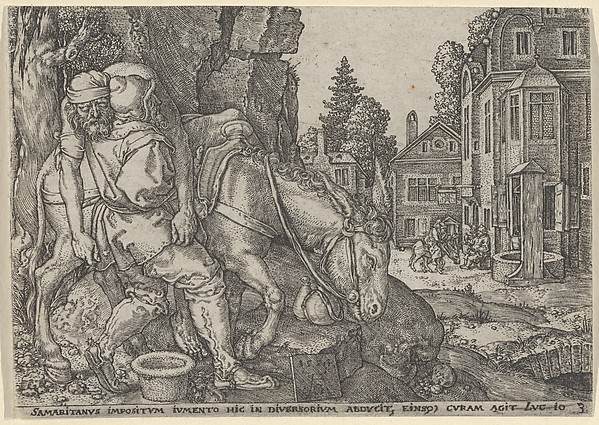
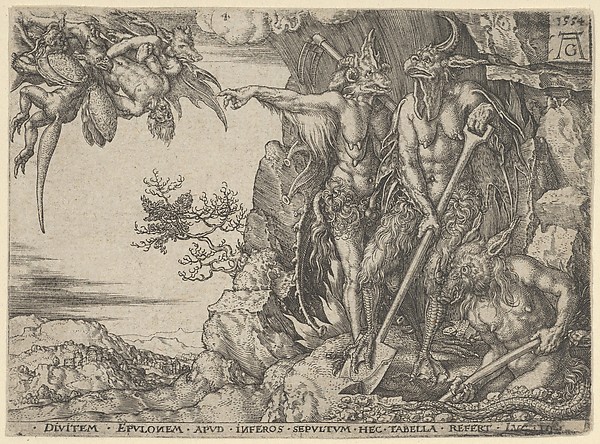
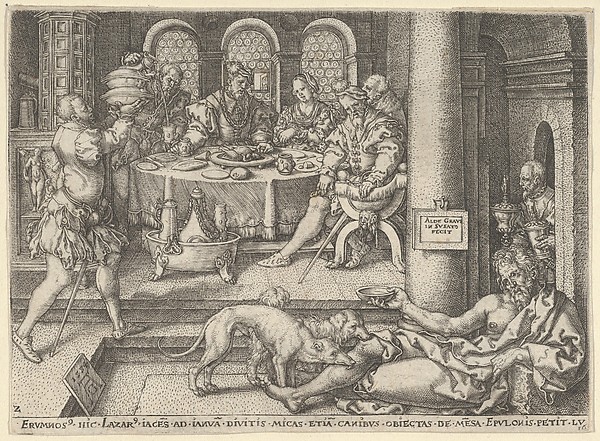
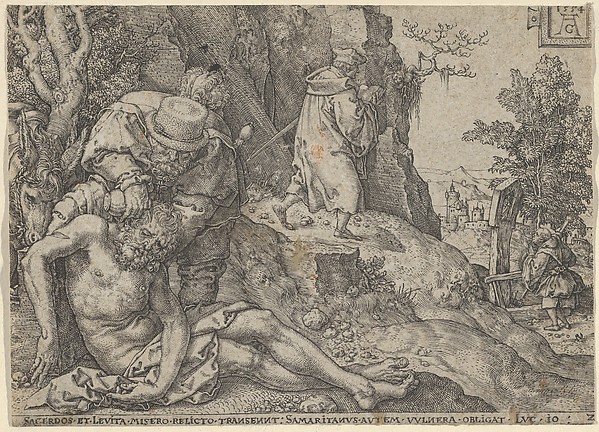
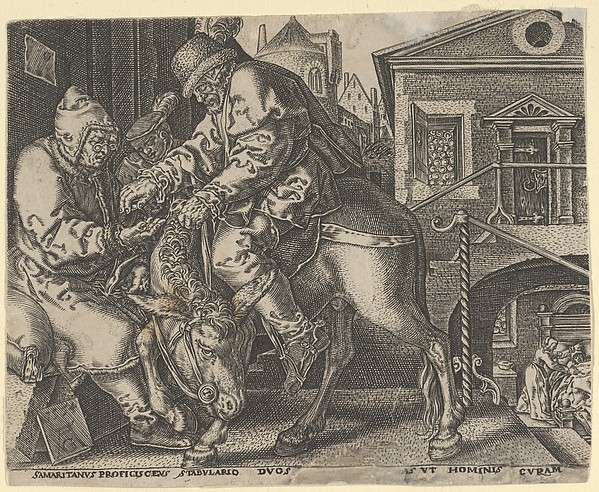
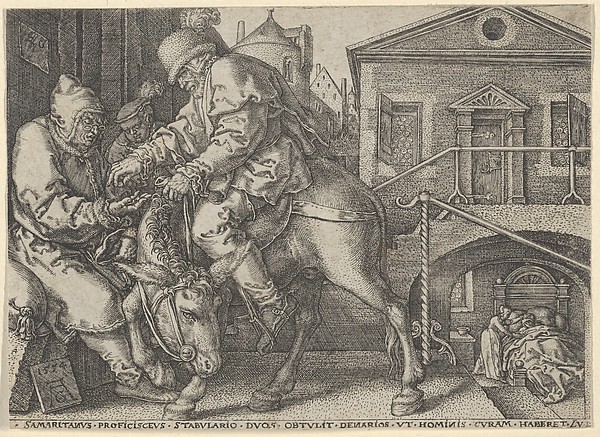
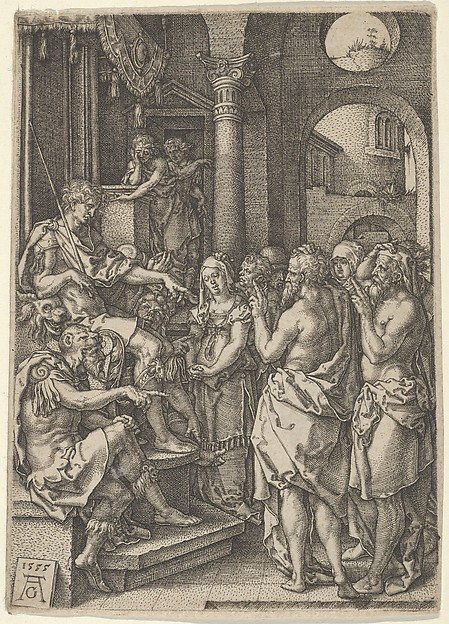
His engraved output runs to about 290 plates, almost evenly split between biblical narrative, mythological allegory, ornament, and portraiture. The biblical series include the great Story of Joseph in twelve plates, the Story of Susanna, the Apostles in fifteen plates, the Parable of the Good Samaritan, the Wise and Foolish Virgins, the four Evangelists, the Children of Israel under Moses, and individual plates of the Annunciation, the Crucifixion, the Resurrection, and many other Christian subjects. His Old Testament cycles in particular, with their delicately crowded compositions and his characteristic small monogram, are the typical late-1530s and 1540s Aldegrever religious print.
He was an early adherent of the Reformation. Soest had adopted Lutheranism by the 1530s, and Aldegrever's religious imagery — Old Testament-leaning, sober in tone, with subjects (the patient Joseph, the chaste Susanna, the suffering Job) that had clear Lutheran moral resonance — fit the new evangelical visual culture as smoothly as any of his contemporaries' work. He produced portrait engravings of Luther's wife Katharina von Bora's brother Hans, of the Anabaptist leaders of Münster (whose 1534–1535 takeover and suppression took place not far from Soest), and of various Westphalian patrons.
His ornament designs — strapwork, foliate scrolls, candelabra panels — were collected and copied by goldsmiths, joiners, and cabinetmakers throughout the German lands and the Low Countries. The combination of the religious plates and the ornament suites made him, at his peak, one of the most thoroughly distributed Northern engravers of the mid-sixteenth century.
Notable works in detail
met-340674
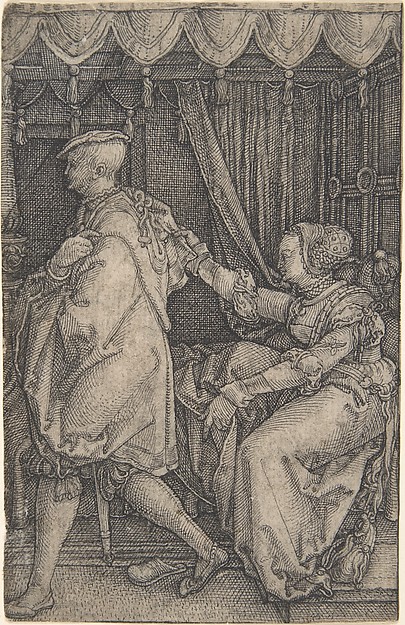
Joseph and Potiphar's Wife, from The Story of Joseph series engraved by Heinrich Aldegrever in 1532 in his Soest workshop, illustrates the dramatic moment from Genesis 39 in which Potiphar's wife seizes Joseph by his garment and attempts to seduce him; he flees, leaving the garment in her hand. Aldegrever stages the scene in a small bedchamber with characteristic German Little Master density: the seated Potiphar's wife in the foreground reaching out to seize the fleeing Joseph by his cloak, Joseph already half-out of the door at the upper right with his head turned in alarm, the small interior of the room carefully detailed with wooden bedposts, embroidered cushions, and a Renaissance window. The Story of Joseph series — twelve plates illustrating the entire Joseph narrative from Genesis 37 through Genesis 47 — was one of the most reproduced of Aldegrever's Old Testament cycles and circulated through the German-speaking Reformation publishing market.
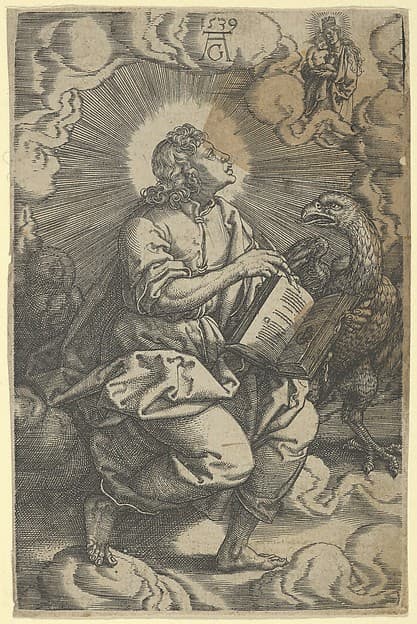
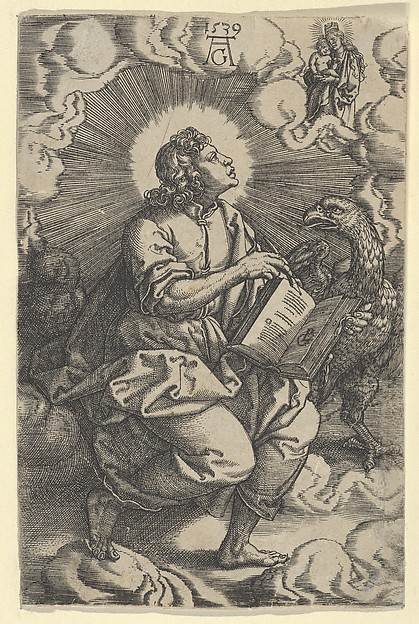
Saint John, from "The Four Evangelists"
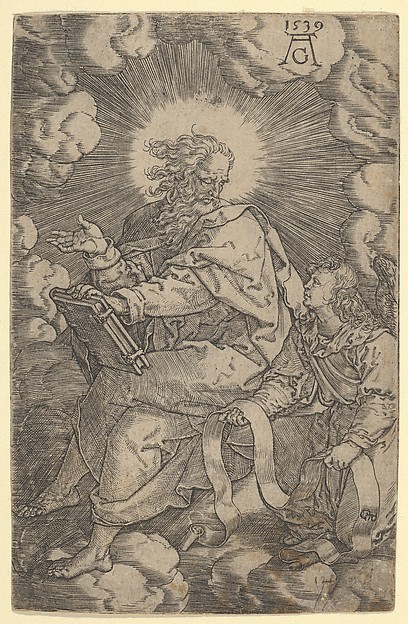
Saint John, from The Four Evangelists series engraved by Heinrich Aldegrever in 1539 in his Soest workshop, depicts the youngest of the four Gospel writers seated in his characteristic posture of inspired authorship — pen in hand over an open book, his head lifted in attention to the divine revelation, his attribute (the eagle, the second of the four creatures of Revelation 4) at his feet. The Four Evangelists series — small-format individual portraits of Matthew, Mark, Luke, and John — was one of the standard German Little Master devotional cycles, used as decorative components in Lutheran prayer books, devotional pamphlets, and bound illustrated Bibles throughout the German-speaking Reformation publishing market in the second quarter of the sixteenth century.
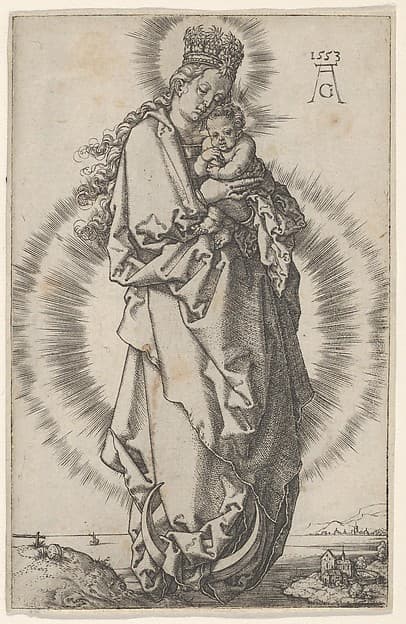
The Virgin and Child on a Crescent Moon
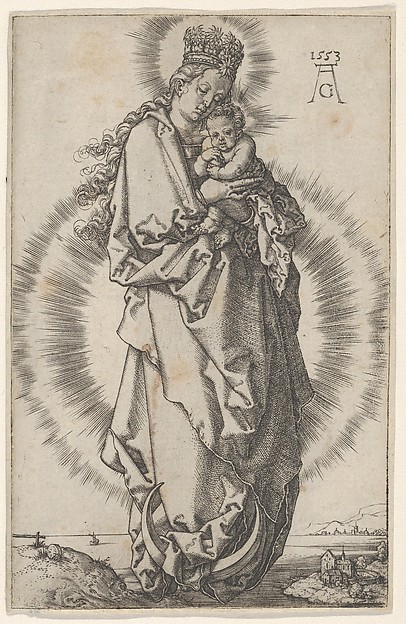
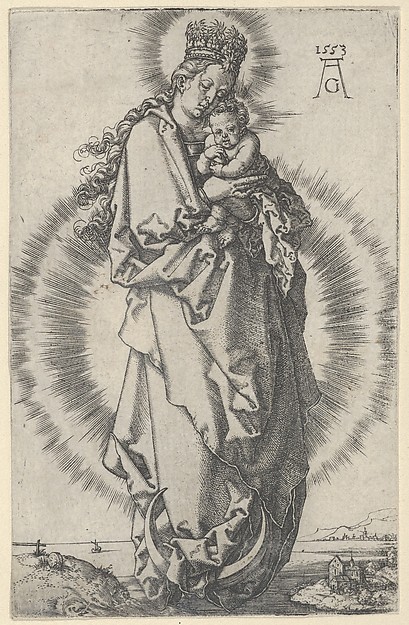
The Virgin and Child on a Crescent Moon, engraved by Heinrich Aldegrever around 1553 in his late Soest workshop years, depicts the iconographic subject of the Virgin standing on the crescent moon and surrounded by a luminous mandorla — the visual treatment derived from the woman of the Apocalypse described in Revelation 12 and the Catholic doctrine of the Immaculate Conception that the late-medieval and early-Renaissance Northern devotional tradition associated with it. Aldegrever stages the scene in his characteristic German Little Master format: the standing Virgin in the center holding the Christ Child, surrounded by a circle of small attendant cherubs against a luminous background. The print belongs to the late Aldegrever Marian devotional output and is one of the principal small-format Conception engravings of the mid-sixteenth-century German tradition.
met-336271
Design for a Dagger Sheath, with Cain and Abel, engraved by Heinrich Aldegrever in 1539 in his Soest workshop, is a small ornament print intended as a working pattern for a goldsmith or armorer to translate into the engraved metal of a dagger sheath. The composition shows the moment from Genesis 4 of the first murder — Cain raising his club to strike the kneeling Abel — set inside an elaborate Renaissance ornamental frame of strapwork, foliate scrolls, and grotesque masks. Aldegrever's ornament prints, which he produced alongside his religious cycles throughout his career, were used and copied by goldsmiths, joiners, and cabinetmakers throughout the German-speaking lands and the Low Countries; the combination of biblical narrative and Renaissance ornament in a single small format is characteristic of the goldsmith-trained engraver's output.
Bible scenes Heinrich Aldegrever painted
Genesis
Matthew
Luke
Revelation
Daniel