- Starting price
- ~$18 paperback
- Free tier
- No
- Platforms
- Print · Kindle · Audiobook
- Developer
- HarperOne
- Launched
- 1998
- Updated
- May 31, 2026
The verdict
The Divine Conspiracy is Dallas Willard's fullest statement of what it means to follow Jesus - an extended walk through the Sermon on the Mount built around one idea: the kingdom of God is available now, and discipleship is apprenticeship to Jesus in the life he actually lived. It is long, unhurried, and dense in places; Willard circles a theme rather than marching through points. But for readers who want the deep version of the everyday Christian life, it has few rivals. Read it slowly, the way it was written.
Try The Divine Conspiracy ↗Opens harpercollins.com
The Divine Conspiracy has quietly become the book serious readers reach for when they want more than a devotional and more than a doctrine summary. It is Dallas Willard's major work - the one he spent years on, the one he seems to have regarded as his most important - and it sets out to do something larger than its predecessors. Where The Spirit of the Disciplines explained how a person is formed, this book asks what that formed life is actually for. Its answer is the kingdom of God, and the whole book is an attempt to make that ancient phrase feel as concrete and present as the room you are reading in.
Willard was a professor of philosophy at the University of Southern California for nearly half a century, and the book reads like a thinker who has earned the right to slow down. It is not a manual. It does not march. It circles. Willard takes a theme - the availability of God's kingdom, the meaning of a beatitude, what Jesus was actually teaching on the mountainside - and walks around it from several sides until the reader sees what he is pointing at. Some readers find this discursive and demanding. Others describe it as the most spiritually substantial book they have ever read. Both reactions are fair, and which one you have depends largely on whether you are willing to read at the book's pace rather than your own.
Published in 1998 under the subtitle "Rediscovering Our Hidden Life in God," the book's central claim is that much of modern Christianity has reduced the gospel to a transaction - a way of securing forgiveness and a place in heaven after death - while quietly setting aside Jesus's own announcement that the kingdom of God is at hand right now. Willard wants to recover what he calls "the gospel of the kingdom": the good news that ordinary life, starting today, can be lived in interactive relationship with God under the rule of Christ. Discipleship, in this account, is not a program you graduate from but an apprenticeship you enter - learning from Jesus how to live the life he would live if he were in your place. It is a simple reframing stated at great length, and it has shaped how a generation understands what the Christian life is even about.
✓ The good
- Willard's fullest statement of discipleship - where his other books cover pieces of the formed life, this one attempts the whole picture and is widely regarded as his major work
- The 'gospel of the kingdom' reframing is genuinely clarifying - recovering the idea that Jesus's good news was about a present reality, not only a future destination, lands as a permanent shift for many readers
- One of the best extended treatments of the Sermon on the Mount in print - Willard reads it not as an impossible ideal or a new law but as a portrait of life lived from within the kingdom
- Apprenticeship as the model for discipleship - the framing of following Jesus as learning his actual way of living, day to day, is concrete and reorients the whole project away from abstraction
- Philosophically substantial - Willard was a career philosopher and reasons his way to his claims rather than asserting them, which gives the argument unusual staying power
- Reads widely across traditions in spiritual-formation circles - the kingdom and discipleship themes draw on the historic church, and readers from many backgrounds find their own heritage in it
- Ages well. Nearly three decades on, the book has not dated the way trend-driven Christian-living titles do; its concerns have only grown more relevant
✗ Watch out
- Long and discursive - Willard circles a theme rather than marching through numbered points, so readers who want a tight, linear argument will need patience
- Philosophically dense in places - some passages reason carefully through abstract territory and reward a second slow pass rather than a quick read
- Demands slow reading - this is not a book to skim or finish in a weekend; readers who push through quickly tend to feel they missed it
- The kingdom-now emphasis is the lens for everything - a few readers find that other doctrines (the cross, last things, the church) get comparatively less room and feel under-defined here
- Front-loaded with reframing - Willard spends real time dismantling the reductive gospel he is reacting against before building his own, which tests readers who came for the constructive part
Best for
- Readers who want the deep, full version of what the everyday Christian life is for
- Anyone drawn to the Sermon on the Mount who wants a patient, serious guide through it
- Pastors and leaders building a theology of discipleship and the kingdom
- Thoughtful readers willing to read slowly and let an argument unfold at its own pace
Avoid if
- You want a short, fast, story-driven read you can finish in a weekend
- You want a step-by-step practical manual rather than an extended meditation
- You bounce off discursive, philosophically dense prose
- You want even coverage of every major doctrine rather than one sustained theme
What The Divine Conspiracy is
The Divine Conspiracy is Dallas Willard's major work on discipleship and the kingdom of God, published by HarperOne in 1998. Built largely around an extended reading of the Sermon on the Mount, it argues that the heart of Jesus's message - the "gospel of the kingdom" - is the announcement that life in interactive relationship with God is available to ordinary people now, not merely after death. Discipleship, in this account, is apprenticeship to Jesus: learning from him how to live the life he himself would live in our circumstances, so that character is gradually transformed from the inside out.
It is an extended meditation rather than a manual or a checklist. Willard moves through the great themes of Jesus's teaching - the beatitudes, the call to a deeper righteousness, prayer, treasure, judgment, the two roads - circling each from several angles rather than reducing them to steps. The flavor is broadly evangelical spiritual-formation thought, though the kingdom and discipleship themes he develops have deep roots across the historic Christian church. It is regarded as a modern classic of spiritual formation, and it asks to be read slowly.
Why readers reach for The Divine Conspiracy
Most books on the Christian life pick a slice - how to pray, how to read Scripture, how to break a habit - and work it carefully. Willard, in The Divine Conspiracy, goes after the frame around all of them. His diagnosis is that modern Christianity has, without quite meaning to, shrunk the good news down to a transaction about the afterlife: believe the right things, secure forgiveness, and wait for heaven. What goes missing in that account is the thing Jesus actually kept announcing - that the kingdom of God is at hand, available, present. Willard's whole project is to put that back at the center and then ask what it changes about ordinary Monday-morning life.
That is the book's distinctive value and the reason it outlasts flashier titles. Willard does not just assert that the kingdom is present; he reads the Sermon on the Mount as Jesus's own portrait of what life from within that kingdom looks like, and he reasons his way through it with a philosopher's patience. The payoff is a vision of discipleship as apprenticeship - not striving to obey an impossible standard, and not coasting on a one-time decision, but learning Jesus's actual way of living as something a person can take up today. It is the book you read when you want to understand not just how to grow but what the growing is finally for.
The gospel of the kingdom: recovering a present reality
The engine of the book is Willard's insistence that Jesus's central message - "the kingdom of God is at hand" - was an announcement about the present, not only a promise about the future. Much of modern Christianity, he argues, has quietly turned the gospel into a transaction concerning the afterlife: a way to get sins forgiven and secure a place in heaven, with the life lived between conversion and death treated as essentially a waiting room. Willard calls this a "gospel of sin management," and he means the phrase as a diagnosis rather than an insult. The problem with it, in his account, is not that it is false but that it is far too small - it leaves out the part where the kingdom is actually available now.
What Willard wants to recover is the idea that life under the rule of God is something a person can step into today, in an interactive, day-to-day relationship with a God who is present and at work. The "divine conspiracy" of the title is precisely this hidden, ongoing project of God to invite ordinary people into that life. Readers consistently describe this single reframing as the most lasting thing they take from the book. It reorders the whole question of discipleship: the point is no longer merely securing a future destination but learning to live now in the reality Jesus announced. Whether a reader finds the emphasis perfectly balanced against other doctrines is a fair question, but few come away from it thinking about the gospel exactly as they did before.
The Sermon on the Mount: not a new law, but a portrait
The long heart of the book is Willard's reading of the Sermon on the Mount, and his interpretive move is distinctive. The Sermon is often read in one of two ways: as an impossibly high ideal meant mainly to drive us to grace, or as a new and stricter set of rules. Willard rejects both. He reads it instead as a portrait - a description of what life naturally looks like for a person who has genuinely entered the kingdom and is being formed by it from the inside. The beatitudes, on his reading, are not entry requirements or a ladder of virtues to climb but an announcement of who is now blessed and included: the poor in spirit, the mourning, the ordinary and overlooked, are precisely the ones for whom the kingdom is available.
Working through the Sermon this way, Willard treats anger, contempt, lust, retaliation, and anxiety not as items on a rulebook but as conditions of the heart that the kingdom heals over time. The aim is not behavior modification but transformed character - a person who has so taken on Jesus's way of seeing that the actions follow from the inside out rather than being forced from the outside in. This is where the book's patience does its work: Willard lingers, returns, and rephrases, because the point is a shift in how the reader sees, not a list to memorize. It is one of the fuller and more searching treatments of the Sermon in modern Christian writing, and it is the section most readers cite as the reason the book stayed with them.
Discipleship as apprenticeship: learning Jesus’s actual life
Willard's model for discipleship is apprenticeship, and he means the word literally. An apprentice does not merely admire the master or assent to facts about the trade; an apprentice learns by doing what the master does, under the master's guidance, until the skill becomes second nature. To be a disciple of Jesus, in this account, is to be his apprentice in the business of living - to learn from him how to live the life he himself would live if he were in your exact circumstances, with your job, your family, your frustrations. It is a strikingly concrete reframing of a word that can drift toward abstraction.
This reframing answers a question Willard thinks the reductive gospel leaves dangling: if salvation is just a transaction settled at conversion, what is the rest of life for? His answer is that the rest of life is the apprenticeship - the long, ordinary process of being trained by Jesus into the character and competence of the kingdom. He is careful, here as in his other work, that this is not earning anything from God; it is learning to live in the grace already given. The vision dignifies the everyday: a believer's actual days become the classroom in which Jesus is teaching. Readers across many backgrounds describe this as the moment the Christian life stopped feeling like a holding pattern and started feeling like a craft worth giving a lifetime to.
Pricing
Paperback
~$18
The standard HarperOne edition and the copy most readers own. Prices vary by retailer.
Kindle / ebook
~$14
Searchable and highlight-syncs across devices - genuinely useful for a long, quotable book you will want to return to.
Audiobook
~$25
An unabridged recording exists; a reasonable option for a long book, with the caveat that Willard rewards re-listening to the denser stretches.
Used / library
Under ~$9
A 1998 title with a long print run - used copies are easy to find, and most libraries carry it.
The Divine Conspiracy is not free. A new HarperOne paperback runs around $18 as of writing, though the figure moves with the retailer - call it the everyday default and the copy most readers end up owning. It is a 1998 title with a long print history, so used copies are easy to come by: thrift stores, library sales, and secondhand sellers routinely have it for under nine dollars, which is how plenty of readers first acquire it.
The ebook runs roughly $14 and is worth considering for a book this long and this quotable - Willard writes in dense, deliberate paragraphs that reward highlighting and returning to, and search makes navigating a four-hundred-page argument far easier on a second pass. An unabridged audiobook exists at around $25; it is a reasonable option for the commute, with the standing caveat that this is a book of sustained reflection rather than fast narrative, so listeners may want to revisit the heavier chapters.
There is no premium tier to agonize over here - it is one book in a few formats. Most readers want the paperback, the balanced default and the copy you will mark up and reach for again. If you commute and prefer to listen, the audiobook is fine; if you live in your highlights, the ebook earns its slightly lower price. The used paperback, meanwhile, is the genuine bargain for anyone who does not mind a previous reader's underlining - and given how often this book gets re-read, plenty of secondhand copies come pre-underlined.
Where The Divine Conspiracy falls behind
Length and pace. This is the thing to know going in. The Divine Conspiracy is long, and Willard takes his time - he circles a theme, returns to it, and rephrases rather than marching through a tidy outline. Readers who push through it like a typical Christian-living paperback tend to feel they missed the point. It rewards slow reading, which is a feature for some and an obstacle for others.
Density. Willard was a philosopher and writes like one in places - carefully, with sustained reasoning, in paragraphs that occasionally need a second slow pass. Most readers find the effort repays itself, but this is not a skim. Compared with the brisker prose of some contemporaries on the same themes, it asks more of you.
Discursive structure. There is no clean one-idea-per-chapter scaffolding to hang the argument on; the book unfolds more like an extended meditation than a modular framework. That makes it harder to use as a reference and easier to lose the thread of on a first read. Readers who want a clear outline they can map will find the organization looser than they would like.
Emphasis over breadth. The kingdom-now reading is the lens for everything, by design. A few readers feel that other doctrines - the cross, last things, the life of the church - get comparatively less room and come across as under-defined relative to the central theme. It is the right narrowing for the book Willard set out to write; it is worth knowing that the focus is deliberate rather than comprehensive.
The Divine Conspiracy vs. The Spirit of the Disciplines vs. Practicing the Way
These three sit close together on the spiritual-formation shelf, and they do genuinely different jobs. The Divine Conspiracy (Willard, 1998) is the big-picture vision - it asks what the formed life is for and answers with the kingdom of God and apprenticeship to Jesus, built around the Sermon on the Mount. The Spirit of the Disciplines (Willard, 1988) is the mechanism beneath that vision - it explains how a person is actually formed, through the training of the classic disciplines, and supplies the theology the later book assumes. Practicing the Way (John Mark Comer, 2023) is the contemporary on-ramp - Comer takes the same apprenticeship framing, distills it for a modern reader, and writes in a faster, more accessible, more practical voice.
Different strengths. The Divine Conspiracy is the most comprehensive and the most demanding - the book you read to grasp the whole vision of life in the kingdom, and the one you will still be turning over years later. The Spirit of the Disciplines is the most foundational - read it when you want the why beneath the practices. Practicing the Way is the most usable and the gentlest - if a friend is new to the idea of apprenticeship to Jesus and you want one approachable book to hand them, Comer lands best. If you want Willard's full statement and are willing to read slowly, start here; if you want the underlying theory of formation, pair it with The Spirit of the Disciplines; if you want a contemporary, practical entry point, start with Comer and grow toward Willard.
All three are read widely across Christian traditions in spiritual-formation circles, and the kingdom, discipleship, and practice themes they develop have deep roots in the historic church. Willard writes from a broadly evangelical spiritual-formation perspective; Comer writes from a similar lineage for a younger, contemporary audience. Readers from many backgrounds find their own heritage of discipleship and prayer reflected in all three.
The bottom line
The Divine Conspiracy is Dallas Willard's fullest answer to the question of what the Christian life is actually for, and for readers willing to meet it at its own pace, it has few equals. Its recovery of the "gospel of the kingdom" as a present reality, its patient reading of the Sermon on the Mount, and its framing of discipleship as apprenticeship to Jesus add up to a vision that quietly reorders how you see the whole project of following Christ. It is long, discursive, and dense in places, and the kingdom-now lens leaves some doctrines lightly sketched - real things to know going in rather than dealbreakers. Read slowly, it is one of the modern classics of spiritual formation for good reason.
Alternatives to The Divine Conspiracy
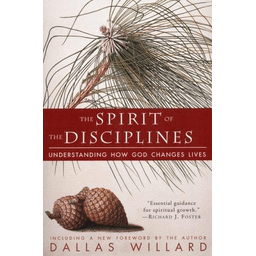 The Spirit of the DisciplinesWillard's earlier book on the theology of the disciplines - the mechanism of formation beneath the kingdom vision.
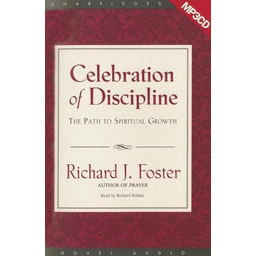 Celebration of DisciplineRichard Foster's practical walk through the disciplines - the how-to companion to Willard's why and what-for.
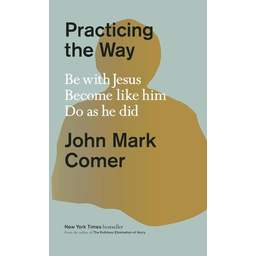 Practicing the WayJohn Mark Comer's accessible guide to apprenticeship to Jesus - a contemporary on-ramp to the same tradition.
Frequently asked questions
What is The Divine Conspiracy actually about?
It is Dallas Willard's major book on discipleship and the kingdom of God. Its central claim is that Jesus's good news - the "gospel of the kingdom" - was an announcement that life with God is available now, not only after death, and that following Jesus means apprenticing yourself to him to learn his actual way of living. Much of the book is an extended reading of the Sermon on the Mount as a portrait of what that life looks like.
Is The Divine Conspiracy hard to read?
It is more demanding than most Christian-living books. It is long, and Willard was a career philosopher who writes carefully, circling a theme and returning to it rather than marching through a tight outline. Many readers find it deeply rewarding, but it asks to be read slowly. Readers who try to finish it quickly often feel they missed it; the book repays patience.
What does Willard mean by the “gospel of the kingdom”?
Willard argues that Jesus's central message was that the kingdom of God is at hand and available in the present - an interactive, day-to-day life under God's rule that a person can step into now. He contrasts this with what he calls a "gospel of sin management," which reduces the good news to securing forgiveness and a place in heaven later. His point is not that forgiveness is false but that the reductive version leaves out the present reality Jesus kept announcing.
How does it compare to The Spirit of the Disciplines?
They are companion books by the same author. The Spirit of the Disciplines (1988) explains how a person is formed - the theology of the disciplines and the training that changes character. The Divine Conspiracy (1998) is the larger vision of what that formed life is for: living in the kingdom of God as an apprentice of Jesus. Many readers use them together, with the earlier book supplying the mechanism the later one assumes.
Does the book teach that you earn salvation by your own effort?
No. As in his other work, Willard frames the disciplined, apprenticed life as learning to live within grace already given, not as a way of earning standing with God. Discipleship in his account is the ordinary process of being trained by Jesus into the life of the kingdom, with grace at work throughout. He is careful to distinguish this from striving to earn anything.
Who was Dallas Willard?
Dallas Willard (1935-2013) was a professor of philosophy at the University of Southern California for nearly fifty years and one of the most influential writers on Christian spiritual formation. Alongside The Divine Conspiracy he wrote The Spirit of the Disciplines, Renovation of the Heart, and other widely read books. He is regarded as a foundational thinker of the modern spiritual-formation movement.
Where should I start if I am new to Willard or to spiritual formation?
If you want Willard's full vision and are willing to read slowly, The Divine Conspiracy is the major statement. Many newcomers start with something more accessible and grow toward it - John Mark Comer's Practicing the Way is a gentle contemporary on-ramp, and Richard Foster's Celebration of Discipline is the practical manual. For the theology beneath Willard's vision, pair this with The Spirit of the Disciplines.
Sources & further reading
More Modern Christian Classics
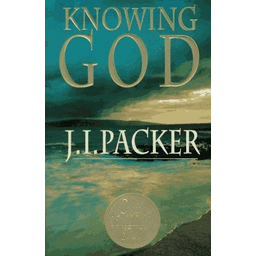 Knowing GodJ.I. Packer’s 1973 classic on the doctrine of God has sold more than 1.5 million copies and is still the book most pastors hand to laypeople who want theology that goes somewhere - here’s what it actually does and who it’s for.
 The Cost of DiscipleshipDietrich Bonhoeffer’s 1937 exposition of the Sermon on the Mount, written for pastors training under a regime that wanted them silent - and still the sharpest book in print on what following Jesus actually costs.
 Gentle and LowlyDane Ortlund’s 23 short chapters on Matthew 11:29 have quietly become the most-given new Christian book of the decade - and the reason is not what you’d guess.
 The Holiness of GodR.C. Sproul’s career-defining book on the one attribute of God the church most forgets - and the vision in Isaiah 6 he believed everything else flows from.
 The Weight of GloryThe 1941 sermon many call Lewis's single finest piece of writing - "there are no ordinary people" - gathered with eight other addresses into one slim, uneven, unforgettable collection.
 The Pursuit of GodA.W. Tozer’s ten-chapter wake-up call on knowing God personally - short, severe, and the one devotional Reformed, Wesleyan, Catholic, and Orthodox readers all seem to keep on the nightstand.