- Starting price
- ~$17 paperback
- Free tier
- No
- Platforms
- Print · Kindle · Audiobook
- Developer
- Farrar, Straus and Giroux
- Launched
- 2004
- Updated
- May 31, 2026
The verdict
Gilead has quietly become the literary novel readers press on each other when they want a book that takes faith seriously without arguing for it. It is a dying minister’s letter to his small son - slow, plotless by design, and written in some of the most admired prose of the century. If you want one contemporary novel about grace, fatherhood, and the weight of an ordinary life, this is the one to start with - provided you have patience for its stillness.
Try Gilead ↗Opens us.macmillan.com
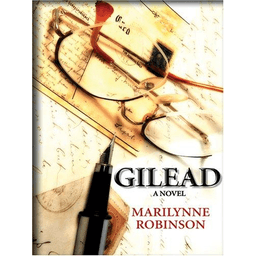
Gilead is a novel by Marilynne Robinson, published in 2004 and awarded the Pulitzer Prize for Fiction the following year. It takes the form of a long letter - really a journal addressed to a reader - written in 1956 by John Ames, a seventy-six-year-old Congregationalist minister in the small prairie town of Gilead, Iowa. Ames has a weak heart and knows he is dying, and he is writing to his seven-year-old son, the child of a late and unexpected second marriage, so that the boy will one day have some record of the father he will barely remember. What follows is not a plot so much as a life laid open: memories of Ames’s own father and grandfather, both preachers; the long ache of his first wife’s death and the decades of solitude that followed; the slow gift of his second marriage; and the unsettling return to town of his namesake and godson, John Ames Boughton, whose arrival forces the old man toward a reckoning with forgiveness he would rather avoid.
It is not a theology book. It does not argue. It does not systematize. It does not try to win anyone to anything. What it does instead is slower and stranger - it lets a dying, observant, deeply learned man tell you what it was like to baptize a child, to watch light fall across a baseball game in a vacant lot, to bury people he loved, to bless a son he will not see grow up. The prose is unhurried and frankly luminous; Robinson writes sentences that readers reread for the pleasure of them, and the novel moves the way Ames thinks - by association, by return, by sudden quiet wonder at a world he is about to leave.
Published by Farrar, Straus and Giroux, Gilead became the first of four loosely linked novels set in the same town - followed by Home (2008), Lila (2014), and Jack (2020) - and the one most readers begin with. It has sold well over a million copies, is taught in college courses and seminaries, and turns up on shelves across literary and religious readers who do not usually overlap. This review is for anyone trying to decide whether to start with this particular book - and whether its stillness, its plotlessness, and its meditative pace are the right fit for the reader holding it.
✓ The good
- One of the most admired literary novels of the century - a Pulitzer Prize winner whose prose is held up as a model of contemporary American writing
- The voice is the achievement - John Ames is one of the most fully realized narrators in modern fiction, and readers describe living inside his mind as the whole reward of the book
- It takes faith seriously without arguing for it - the novel renders a believing life from the inside, as lived experience rather than as a case to be made, which lands harder than any apologetic
- Sentence for sentence, the prose is extraordinary - many readers reread passages simply for their beauty, and the book is among the most quoted novels of its decade on grace and forgiveness
- It finds the holiness in ordinary things - a sprinkler, a soap bubble, a borrowed cigarette, light on water - and makes the texture of a quiet life feel enormous
- Read across literary and faith audiences alike - assigned in MFA programs and church reading groups, discussed by secular critics and ministers, because the story works through one man’s experience rather than tradition-specific language
- The first of four linked novels - readers who fall for Gilead have Home, Lila, and Jack waiting, each retelling corners of the same town from a different life
✗ Watch out
- It is slow and almost plotless by design - this is a meditation, not a page-turner, and readers expecting narrative drive will find long passages of memory, reflection, and quiet observation
- The form is demanding - there are no chapters, just a continuous flow of journal entries that circle and double back, and some readers find the structure hard to get traction in
- The central tension arrives late - the conflict over John Ames Boughton builds slowly across the second half, so the first stretch can feel like it is not going anywhere
- It rewards patience above all - the book asks you to slow to its pace, and readers who cannot or will not are unlikely to find what others love in it
- It is literary fiction, not instruction - readers wanting teaching, doctrine, or a devotional takeaway should know the novel offers experience and atmosphere instead
- The stillness is the point and also the risk - the very quietness that makes it luminous for some readers makes it inert for others, and there is little middle ground
Best for
- Readers who love literary fiction and slow, beautiful prose
- Anyone drawn to faith rendered as lived experience rather than argument
- Readers reflecting on mortality, fatherhood, or the weight of an ordinary life
- Book groups willing to read a quiet, meditative novel together
Avoid if
- You want a fast, plot-driven story with clear forward momentum
- You bounce off interior reflection and need external action to stay engaged
- You are looking for instruction, doctrine, or a devotional takeaway
- You dislike unconventional structure and want clear chapters and scenes
What Gilead is
Gilead is a novel by Marilynne Robinson, first published in 2004 by Farrar, Straus and Giroux and awarded the 2005 Pulitzer Prize for Fiction. It runs roughly 250 pages and is written as a continuous letter - a kind of journal - from John Ames, an aging Congregationalist minister in the fictional town of Gilead, Iowa, to his seven-year-old son. Ames is dying of a heart condition in 1956 and writes so the boy will have something of him after he is gone. There are no conventional chapters; the book unfolds as a stream of dated and undated entries that move freely between Ames’s present, his memories of three generations of his preacher family, the death of his first wife and child, the late grace of his second marriage, and the troubling return of his godson, whose story becomes the novel’s quiet center of gravity.
It is the first of Robinson’s four Gilead novels, followed by Home, Lila, and Jack, each of which revisits the same town and overlapping characters from a different vantage. Robinson writes from a Congregationalist and Reformed-sympathetic sensibility, and the texture of that tradition runs through Ames’s reflections - his reading, his sermons, his sense of providence and grace. The novel does not press those convictions on the reader, however; they are rendered as the inner weather of one believing man rather than as doctrine, which is part of why Gilead has been embraced by literary and religious readers who rarely read the same books.
Why readers across literary and faith audiences keep returning to Gilead
The single biggest practical difference between Gilead and most novels about religion is that Robinson refuses to treat faith as a subject to be examined from the outside. She does not write about a believer; she writes from inside one, and lets the reader live in John Ames’s mind - its learning, its tenderness, its long-carried griefs, its sudden astonishments at the ordinary world. The whole book is an act of attention. Ames notices light on water, the way young men lean against a wall, the weight of a child asleep, and treats each as worth recording because he is about to lose all of it. The result is a novel in which almost nothing happens and everything matters, and the late, slow conflict over his godson lands with disproportionate force precisely because the reader has spent so long learning to see through Ames’s eyes.
That interiority is the reason Gilead is read across audiences that rarely overlap. It is taught in writing programs as a model of voice and in seminaries as a meditation on grace; it is discussed by secular literary critics and by church reading groups. Robinson tells the story through one man’s remembered experience rather than through tradition-specific argument, and the result has been received as their own by readers of many kinds - Catholic, Protestant, Latter-day Saint, and entirely secular alike. It is the thoughtful reader’s novel of faith and mortality, and the quality of its prose gives it a standing in contemporary letters that few comparable books can claim.
The voice of John Ames: a whole life rendered from the inside
The novel is built entirely on the voice of its narrator, and that voice is the achievement. John Ames is seventy-six, learned but unpretentious, formed by a lifetime of reading and preaching in one small place, and aware that his weak heart gives him only months. Robinson lets him write the way a thoughtful old man actually thinks - not in a straight line but in loops and returns, breaking off to record something his son did that morning, circling back to a memory of his own father, pausing to wonder at a thing he has seen a thousand times and is seeing now as if for the last time. There is no plot machinery driving him; there is only attention, and the gradual accumulation of a single consciousness laid open on the page.
It is the most demanding thing about the book and also the most rewarding. Because there are no chapters and little external action, a reader who wants events will feel the lack - the first stretch can seem to wander, and the form gives few of the usual handholds. But readers who settle into Ames’s mind describe the experience as the whole point of the novel: living for a few hundred pages inside a humane, dying intelligence that loves the world and is about to leave it. The voice is so fully realized that by the end many readers grieve Ames as they would a person they had known, which is a rare thing for a book in which so little, on the surface, takes place.
The holiness of ordinary things
Much of Gilead is given over to small, concrete moments that Ames treats as quietly sacred: a young couple walking under trees in the rain, a man blessing a litter of kittens as a boy, the play of a garden sprinkler, two young men sharing a cigarette on a porch, light moving across the dust of a vacant lot during a baseball game. Robinson’s prose slows over these images until they fill the page, and Ames, a minister to his fingertips, keeps finding in them something close to grace - a sense that the ordinary world is shot through with a significance most people are too hurried to notice. The book’s most famous passages are these acts of seeing, and they are the lines readers copy out and return to.
This is where Gilead works on its reader most powerfully, and it is also where it divides them. To many, the attention Robinson pays to a soap bubble or a borrowed cigarette is the novel’s great gift - a discipline of wonder that changes how a reader looks at their own ordinary days. To others, the same passages read as static, even airless, a book in which the camera lingers when it ought to move. Robinson is unhurried on purpose; the slowness is the form, not a flaw in it, and the meditative stillness that makes the novel luminous for some readers is exactly what makes it inert for others. Knowing that going in helps a reader decide whether the patience the book asks for is patience they want to give.
Forgiveness, fathers, and the return of the prodigal
The nearest thing the novel has to a plot gathers in its second half, around the return to Gilead of John Ames Boughton - Jack, the wayward son of Ames’s closest friend and Ames’s own namesake and godson. Jack’s history is troubled, and his presence unsettles the old minister, who finds in himself a wariness and even resentment he is ashamed of, especially toward a young man so close to his own small family. The tension is interior rather than dramatic: it is the struggle of a dying man who has preached grace and forgiveness his whole life to actually extend it to a particular person who unnerves him. Robinson lets the reckoning build slowly, through observation and unease, until it arrives with a weight the quiet of the rest of the book has carefully prepared.
It is the strand that gives Gilead its moral spine, and it is also why the novel rewards the patience its early pages demand. The story of fathers and sons runs through the whole book - Ames’s grandfather and father, Ames and his own late-born boy, Boughton and Jack - and the return of the prodigal namesake draws those lines together into a single question about whether grace can be felt as well as believed. Readers who push through the slow opening find that the meditative stillness was not idle; it was the ground being prepared. The late chapters land hard precisely because the reader, by then, knows Ames well enough to feel what the effort of forgiveness costs him.
Pricing
Paperback
~$17
The standard Picador / FSG edition - the copy most readers own and the one book groups buy in bulk. The everyday default.
Kindle
~$13
The full text in digital form. Highlighting and note-syncing make it a strong pick for a book this quotable, especially for groups reading across cities.
Audiobook
~$20
Narrated unabridged. Ames’s long, reflective sentences carry well in a patient voice, and the journal form suits being read aloud.
Hardcover
~$26
Library-quality binding for readers who want a keepsake edition, or who expect to reread it - and many readers of Gilead do reread it.
For a Pulitzer-winning novel that has sold well over a million copies, Gilead is inexpensive. The standard Picador / FSG paperback runs around $17 new, and used copies turn up in library sales and secondhand shops for a few dollars. It is the edition most quotations in print are keyed to and the copy most book groups buy in bulk.
The Kindle edition at roughly $13 is the right pick for highlighters and for groups reading across cities - and this is a book people highlight heavily, given how many of its sentences readers want to keep. Highlights and notes sync cleanly across devices.
The audiobook at around $20 suits the source material well. Robinson wrote long, reflective sentences in the voice of an old man writing by lamplight, and a patient narrator carries that cadence in a way that the continuous, chapterless text can otherwise make demanding on the page.
If you are buying a gift or expect to reread it - and many readers of Gilead do reread it - the ~$26 hardcover is the natural pick. Most readers do not need it; the paperback is the balanced default and the copy you will reach for again. There is no free tier; this is a book you buy, but it is a cheap one for what it contains.
Where Gilead falls behind
Slow, almost plotless pacing. This is the most common stumbling block. Gilead is a meditation in the form of a letter, not a plot-driven novel, and long stretches are given over to memory, reflection, and the quiet observation of ordinary things. Readers who want narrative momentum will feel the drag, especially in the first half. Push through - the patience the early pages ask for is what makes the late chapters land.
A demanding form. There are no chapters, only a continuous stream of journal entries that circle, pause, and double back the way an old man’s thoughts do. Some readers find this immersive; others find it hard to get traction in, with few of the usual structural handholds. The form is deliberate and central to the book, but a reader who needs clear scenes and breaks should know the texture going in.
A late-arriving tension. The nearest thing to a conflict - the unease around John Ames Boughton - builds slowly across the second half, so the opening can feel as though it is not heading anywhere. The novel is patient about its own stakes, and a reader who abandons it early may leave before the strand that gives it shape comes into focus.
Literary fiction, not instruction. The faith here is rendered, not taught. Readers wanting doctrine, a devotional takeaway, or guidance on grace or forgiveness will need a different kind of book; Gilead offers the lived experience of a believing mind rather than its conclusions. A Severe Mercy is a natural companion for that experiential register, and Confessions sits behind both as the older model of the examined, God-directed life.
Stillness that does not suit every reader. The very quietness that makes Gilead luminous for many readers makes it inert for others, and there is little middle ground. The book asks you to slow to its pace and find significance in small things; a reader who cannot meet it there is unlikely to find what its admirers do, and that is worth knowing before buying rather than fifty pages in.
Gilead vs. Pilgrim at Tinker Creek vs. A Severe Mercy
These three form a natural shelf - literary works that take faith and attention seriously without arguing a case - and each does something different.
Gilead is the novel: a dying minister’s letter to his son, a work of fiction that renders a believing life from the inside in some of the most admired prose of its century. Pilgrim at Tinker Creek (Annie Dillard, 1974) is the nonfiction counterpart - a Pulitzer-winning book of nature writing and meditation in which Dillard watches a Virginia creek through the seasons and finds in it a fierce, searching theology of beauty and terror; it shares Gilead’s discipline of wonder but turns it on the natural world rather than a human life. A Severe Mercy (Sheldon Vanauken, 1977) is the memoir - a first-person account of a marriage, a conversion, and a bereavement, built around real letters from C.S. Lewis; it is the most personal and the most explicitly a story of faith found.
Different strengths. Gilead is the richest as a work of fiction - the fullest realized voice and the deepest meditation on an ordinary life. Pilgrim at Tinker Creek is the most intense as prose and the boldest in its sustained looking at the world. A Severe Mercy is the most narratively complete, carrying the reader from courtship to graveside in one arc. Readers who love any one of the three often come to the others; if you can start with only one and want a novel that takes faith seriously without preaching it, Gilead is the one - and Robinson’s prose is reason enough on its own.
The bottom line
Gilead is the rare contemporary novel that earns its acclaim. It is luminous to read, unhurried, and built around a voice - the dying minister John Ames - that readers come to grieve as they would a person they had known. It takes faith seriously without arguing for it, finds the holiness in ordinary days, and carries a quiet reckoning with forgiveness that the patience of the early pages makes possible. It is slow, it is nearly plotless by design, and it asks you to meet it at its own pace. Meet it there and it gives a great deal back. If you read one contemporary novel about grace, fatherhood, and the weight of an ordinary life, this is the one.
Alternatives to Gilead
 Pilgrim at Tinker CreekAnnie Dillard’s Pulitzer-winning meditation on a Virginia creek - the nonfiction companion to Gilead’s discipline of wonder, turned on the natural world.
 A Severe MercySheldon Vanauken’s memoir of love, conversion, and loss, built around real letters from C.S. Lewis - the most personal of these literary works of faith.
 Mere ChristianityC.S. Lewis’s gathered wartime broadcasts - the argued, public faith standing opposite Gilead’s rendering of faith as lived experience.
 ConfessionsAugustine’s fourth-century memoir of a restless heart turning toward God - the ancient model of the examined, God-directed life Gilead quietly stands in.
Frequently asked questions
What is Gilead about?
Gilead is a 2004 novel by Marilynne Robinson, written as a long letter from John Ames, a dying Congregationalist minister in the small town of Gilead, Iowa, to his seven-year-old son. It is a reflective meditation on faith, fatherhood, grace, forgiveness, mortality, and the holiness of ordinary life, rather than a plot-driven story.
Is Gilead a religious book or a novel?
It is a novel - literary fiction that won the 2005 Pulitzer Prize for Fiction. Faith runs all through it, because the narrator is a minister and the book renders his believing life from the inside, but Gilead is a work of fiction, not a book of theology or instruction. It tells a story and offers experience rather than argument.
Is Gilead hard to read?
It is not difficult in vocabulary - Robinson’s prose is clear and beautiful - but it is slow, reflective, and unconventional in form. There are no chapters, just a continuous flow of journal entries that circle and double back. Readers who love literary fiction tend to savor it; readers expecting a plot-driven story should know it lingers in memory and reflection.
Do I need to read the Gilead novels in order?
Gilead is the first of four loosely linked novels set in the same town - followed by Home, Lila, and Jack - and most readers begin with it. The others revisit overlapping characters from different vantages and can be read in various orders, but starting with Gilead is the common and natural entry point.
What tradition does Marilynne Robinson write from?
Robinson writes from a Congregationalist and Reformed-sympathetic sensibility, and that texture runs through her narrator’s reflections. The novel itself, however, renders faith as one man’s lived experience rather than through tradition-specific doctrine, and it has been read and admired across literary and religious audiences - Catholic, Protestant, Latter-day Saint, and secular readers alike.
Is Gilead a sad book?
It is elegiac - the narrator is dying and writing to a son he will not see grow up - so there is real sorrow in it. But it is also full of wonder, tenderness, and quiet joy in ordinary things, and it moves toward grace and forgiveness. Many readers describe it as moving and ultimately consoling rather than simply sad.
What should I read after Gilead?
The natural next reads are the other Gilead novels - Home, Lila, and Jack - which retell corners of the same town. Beyond Robinson, Annie Dillard’s Pilgrim at Tinker Creek shares its discipline of wonder, and Sheldon Vanauken’s A Severe Mercy offers a more personal story of faith. Augustine’s Confessions sits behind all of them as the older model of the examined life.
Sources & further reading
More Modern Christian Classics
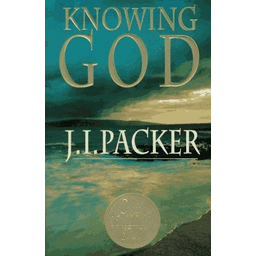 Knowing GodJ.I. Packer’s 1973 classic on the doctrine of God has sold more than 1.5 million copies and is still the book most pastors hand to laypeople who want theology that goes somewhere - here’s what it actually does and who it’s for.
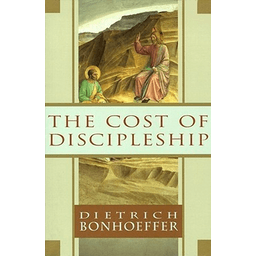 The Cost of DiscipleshipDietrich Bonhoeffer’s 1937 exposition of the Sermon on the Mount, written for pastors training under a regime that wanted them silent - and still the sharpest book in print on what following Jesus actually costs.
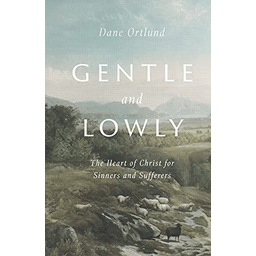 Gentle and LowlyDane Ortlund’s 23 short chapters on Matthew 11:29 have quietly become the most-given new Christian book of the decade - and the reason is not what you’d guess.
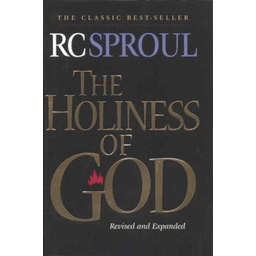 The Holiness of GodR.C. Sproul’s career-defining book on the one attribute of God the church most forgets - and the vision in Isaiah 6 he believed everything else flows from.
 The Weight of GloryThe 1941 sermon many call Lewis's single finest piece of writing - "there are no ordinary people" - gathered with eight other addresses into one slim, uneven, unforgettable collection.
 The Pursuit of GodA.W. Tozer’s ten-chapter wake-up call on knowing God personally - short, severe, and the one devotional Reformed, Wesleyan, Catholic, and Orthodox readers all seem to keep on the nightstand.