- Starting price
- ~$16 paperback
- Free tier
- No
- Platforms
- Print · Kindle · Audiobook
- Developer
- Harper Perennial
- Launched
- 1974
- Updated
- May 31, 2026
The verdict
Pilgrim at Tinker Creek has quietly become the book people press on each other when they want to learn how to look - at a creek, an insect, a sky, and at whatever is behind them. It is gorgeously written, fiercely observed, and unafraid of both the beauty and the horror it finds in the natural world. If you want one modern classic of nature writing that keeps opening onto mystery and the divine, this is the one to start with - provided you have patience for dense, digressive, demanding prose.
Try Pilgrim at Tinker Creek ↗Opens harpercollins.com
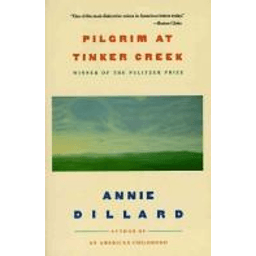
Pilgrim at Tinker Creek is Annie Dillard’s record of roughly a year spent paying close, deliberate, sometimes obsessive attention to the natural world around Tinker Creek, in the Blue Ridge foothills of Virginia. It is not a guidebook and not a diary, though it borrows the shape of both. It is a sustained act of looking - at a frog being drained to a sack of skin by a giant water bug, at light pouring through a backyard tree, at the migrations and moltings and small slaughters that go on, mostly unseen, a few feet from where any of us are standing. Dillard goes out to the creek and comes back with sentences, and the sentences keep turning into questions about why any of it is here at all.
It is not a theology book, and it does not argue. It does not systematize. It does not try to prove a creed or recruit you to one. What it does instead is something stranger and more demanding - it stalks the world with such intensity that the natural and the spiritual stop being separate subjects. Dillard reads widely and idiosyncratically; her pages braid together field observation, physics, mysticism, the Bible, Sufi and Hasidic stories, Eskimo lore, and pure terrified wonder. The prose is ecstatic and exact at once, the work of a writer willing to stare at a thing until it gives up something true, even when what it gives up is unsettling.
Published in 1974 by Harper & Row (now Harper Perennial), the book won the Pulitzer Prize for General Nonfiction when Dillard was twenty-nine, and it has stayed continuously in print for more than fifty years. It is regularly named among the defining works of American nature writing and is taught as a model of what gets called "theology through attention" - the idea that seeing rightly is itself a spiritual discipline. This review is for anyone trying to decide whether to start with this particular book - and whether its density, its digressions, and its unflinching look at nature’s cruelty are the right fit for the reader holding it.
✓ The good
- One of the defining works of modern American nature writing - a Pulitzer Prize winner that turned close observation of a single creek into a literary event, and has stayed in print for over fifty years
- The prose is genuinely extraordinary - Dillard writes some of the most precise, startling sentences in modern nonfiction, and the book rewards reading slowly and aloud
- A serious meditation on seeing - the book treats attention itself as a discipline, and readers come away looking harder at the ordinary world than they did before
- Unafraid of the hard questions - Dillard refuses to flinch from nature’s violence and waste, which gives her wonder real weight rather than sentiment
- Spiritually open without being doctrinaire - the mystery and the divine are everywhere in the book, drawn from many sources, so readers of many backgrounds find it speaks to them
- Read across literary, naturalist, and faith audiences alike - it sits on syllabi, in birders’ backpacks, and in spiritual-reading lists, which few books manage at once
- Short chapters, enormous range - at roughly 270 pages it moves from a backyard to the far edges of physics and back, and re-reads endlessly
✗ Watch out
- The prose is dense and demanding - Dillard packs more into a paragraph than most writers put in a chapter, and readers wanting an easy, linear read will struggle
- It is digressive by design - the book wanders from observation into physics, theology, and history without warning, which delights some readers and loses others
- The unflinching look at nature’s violence unsettles some readers - the parasitism, predation, and waste are described in vivid detail and are not softened
- It is not a how-to or a devotional in the usual sense - there are no steps, no plan, no daily readings; it asks to be experienced rather than applied
- It demands slow reading - skimming defeats it entirely, and a reader without the patience to sit with a page will get little out of it
- The spirituality is exploratory and unconventional - Dillard draws on many traditions and does not resolve into a single creed, which some readers want and others find unsatisfying
Best for
- Readers who love literary prose and want to be slowed down by it
- Anyone drawn to nature writing, birding, or close observation of the world
- Readers open to spiritual questions raised through wonder rather than doctrine
- Writers and students studying the craft of the nonfiction sentence
Avoid if
- You want a fast, linear, plot-driven read
- You want a step-by-step devotional or a how-to on the spiritual life
- You are unsettled by vivid descriptions of nature’s predation and waste
- You bounce off dense, digressive prose and need a plainer voice
What Pilgrim at Tinker Creek is
Pilgrim at Tinker Creek is a book-length work of literary nonfiction by Annie Dillard, first published in 1974. It runs roughly 270 pages and is loosely organized around the turning of a single year - beginning and ending in winter - as Dillard observes the natural world along Tinker Creek and the surrounding valley near Roanoke, Virginia. Each chapter takes up a season, a creature, a phenomenon, or a question, and ranges freely outward from there: the mechanics of sight, the staggering fecundity of insects, the strangeness of water, the problem of pain in a world that seems both lavish and indifferent. It is observation raised to the level of contemplation.
It is published by Harper Perennial, an imprint of HarperCollins, and has remained continuously in print for more than fifty years. The book won the 1975 Pulitzer Prize for General Nonfiction and helped establish a whole mode of writing in which patient attention to the physical world becomes a way of asking the largest questions. Dillard’s own spiritual outlook in the book is exploratory and wide-ranging - she draws on Scripture, Christian mystics, and traditions well beyond any one of them - and readers have received the result less as a statement of belief than as an invitation to see.
Why readers across literary, naturalist, and faith circles keep returning to Tinker Creek
The single biggest practical difference between Pilgrim at Tinker Creek and most nature writing is that Dillard refuses to keep the seeing separate from the questions the seeing raises. She does not write a field journal and then, in a closing chapter, reach for a moral. The looking and the wondering are the same act on every page - a water bug killing a frog is, in the same breath, a fact of natural history and a problem about what kind of universe allows it, and what kind of maker stands behind a world so beautiful and so brutal at once. The book’s great subject is attention itself: the conviction that to see a thing truly is already a spiritual act, and that most of us go through life with our eyes mostly closed.
That double vision - exact observation fused with open-ended wonder - is why the book travels across audiences that rarely share a shelf. Naturalists read it for the precision of its looking. Writers read it for the sentences. Readers drawn to the spiritual life read it for the way the divine keeps surfacing in a backyard. Dillard frames her questions through wonder and through many sources rather than through one tradition’s doctrine, and the result has been received as their own by readers of widely different backgrounds. It is the thoughtful person’s book about how to look at the world, and there is very little else quite like it.
The theology of seeing: attention as a discipline
The book’s central preoccupation, announced early and returned to constantly, is the act of seeing. Dillard distinguishes between two kinds of sight: the ordinary, verbalizing, walking-with-a-camera kind, in which we narrate the world to ourselves and mostly miss it; and a rarer, emptied, receptive kind, in which the seer lets go of words and is simply present to what is there. She tells the story of the newly sighted - patients blind from birth, given vision by cataract surgery, learning to see for the first time - and uses it to dramatize how much of "seeing" is something we have to learn and can lose. The book is, among other things, an extended training of the reader’s own attention.
This matters because it reframes a backyard into a place where everything is at stake. If seeing rightly is a discipline, then the failure to see is a kind of poverty, and the world is constantly offering more than we take. Dillard’s famous image is the tree "with the lights in it" - an ordinary backyard cedar that, on one charged afternoon, blazes into significance simply because she was finally ready to look. Readers across naturalist and spiritual traditions return to these passages because they name an experience most people half-recognize: that the world is denser with meaning than our usual, distracted seeing admits, and that paying attention is a moral and even a sacred act.
Beauty and horror: the world as both gift and slaughter
The book’s most unsettling material is its refusal to look away from what nature actually does. Dillard catalogs the predation, parasitism, and sheer waste of the living world with a naturalist’s precision and none of the usual softening. The frog drained by the giant water bug is the book’s opening image and its governing one: a single egg-laying moth produces hundreds of offspring most of which will be devoured; parasites live inside parasites; the fecundity that looks like generosity from one angle looks, from another, like a machine that manufactures life mostly in order to destroy it. She does not flinch, and she does not pretend the cruelty is an illusion.
What keeps this from collapsing into bleakness is that Dillard holds the horror and the beauty in the same hand. The same world that runs on slaughter also pours out a generosity so extravagant it seems almost playful - the colors, the abundance, the absurd inventiveness of creation. She lets the contradiction stand rather than resolving it cheaply, and she presses it as a genuine question about the nature of the One who made such a place. This is the part of the book that unsettles some readers and the part others find most honest, precisely because it refuses the sentimental nature writing that pretends the meadow is only ever gentle.
Mystery and the divine: wonder drawn from many wells
Running underneath the observation is a steady reaching toward the mystery the natural world keeps pointing at. Dillard’s frame of reference is unusually wide: she quotes the Bible and the Christian mystics, but also Hasidic and Sufi stories, Eskimo and Inuit lore, the Greek atomists, modern physics, and her own startled experience. Her spirituality in the book is exploratory rather than settled - a search conducted out loud, in which she is as willing to register God’s apparent absence or extravagance or terrifying otherness as His presence. The God who surfaces in these pages is vast, generous, and not at all tame, and Dillard pursues Him through the world rather than around it.
For readers, the effect depends on the reader. Some come to the book for exactly this - wonder that opens onto the divine without first demanding agreement to a creed - and find it one of the most spiritually alive books they have read. Others, wanting a clear statement of belief, find the open-endedness unsatisfying or want to know where, precisely, Dillard lands. (She later became Catholic, though the book itself predates that and does not slot neatly into any single tradition.) What is not in doubt is that Pilgrim at Tinker Creek takes the mystery seriously, treats the natural world as a place where it presses hardest, and trusts the reader to keep their own counsel about what they find there.
Pricing
Paperback
~$16
The standard Harper Perennial edition - the copy most readers own and the one classrooms and book groups buy in bulk. The everyday default.
Kindle
~$13
The full text in digital form. Highlighting and note-syncing make it a strong pick for a book this quotable - and this is a book people highlight relentlessly.
Audiobook
~$20
Narrated unabridged. Dillard’s long, image-dense sentences carry surprisingly well aloud, though some readers prefer the page so they can slow down and reread.
Hardcover
~$26
Library-quality binding for readers who want a keepsake edition, or who expect to reread it across decades. Anniversary printings appear periodically.
For a book that won the Pulitzer Prize and has sold steadily for half a century, Pilgrim at Tinker Creek is inexpensive. The standard Harper Perennial paperback runs around $16 new, and used copies turn up in library sales and secondhand shops for a few dollars. It is the edition most quotations in print are keyed to and the copy most classrooms and book groups buy in bulk.
The Kindle edition at roughly $13 is the right pick for highlighters and for groups reading across cities - and this is a book people highlight heavily, both Dillard’s observations and her flights of reflection. Highlights and notes sync cleanly across devices, which is genuinely useful for a book this quotable.
The audiobook at around $20 suits the material better than you might expect. Dillard’s sentences are long and image-dense, and a good narrator can carry their rhythm; that said, some readers prefer the page precisely so they can stop, reread, and let an image settle, which the audio format does not invite.
If you are buying a gift or expect to reread it for life, the ~$26 hardcover is the natural pick. Most readers do not need it - the paperback is the balanced default and the copy you will reach for again. There is no free tier; this is a book you buy, but it is a cheap one for what it contains.
Where Pilgrim at Tinker Creek falls behind
Dense, demanding prose. This is the most common stumbling block. Dillard packs an extraordinary amount into every paragraph, and the book asks to be read at a fraction of normal speed. Readers who want to move quickly, or who skim, will get almost nothing out of it. The reward is real, but it is gated behind patience that not every reader brings.
Digressive structure. The book wanders - from the bank of the creek into optics, into insect reproduction, into theology, into mathematics - often within a single chapter and without signposting. Readers who love the range find it exhilarating; readers who want a clear through-line can feel adrift. It is a book of sustained attention, not of argument, and it never pretends otherwise.
The violence is not softened. Dillard describes nature’s predation, parasitism, and waste in vivid, unsentimental detail, and the imagery can be genuinely disturbing - the opening frog scene sets the tone. This is deliberate and central to the book’s honesty, but a reader who wants nature writing that stays gentle should know what they are walking into.
Not a devotional or a how-to. There is no plan here, no daily reading, no set of steps for the spiritual life or the naturalist’s practice. The book works by immersion, not instruction. Readers who want something to apply, rather than something to undergo, will find it elusive - it hands you an experience, not a method.
Exploratory, unresolved spirituality. The divine is everywhere in the book, but Dillard draws on many traditions and does not settle into one, nor does she close with a tidy statement of where she stands. Readers who want a clear creed will find the open-endedness frustrating; it is best read as a search rather than a destination.
Pilgrim at Tinker Creek vs. Gilead vs. The Pursuit of God
These three sit near one another on the shelf of books where attention to the world keeps turning into attention to God - but they go about it in very different ways.
Pilgrim at Tinker Creek (Dillard, 1974) is the nature writing: a first-person, nonfiction year of close observation that lets the physical world raise the largest questions, drawn from many sources and resolved into none. Gilead (Marilynne Robinson, 2004) is the novel - a dying Congregationalist pastor’s letter to his young son, quiet and luminous, that finds the sacred in ordinary light and family memory rather than in wild nature; it is fiction where Dillard is fact, and gentler in temperament. The Pursuit of God (A.W. Tozer, 1948) is the devotional - a short, direct call to seek and experience God Himself, written explicitly from within the Christian tradition and aimed at the reader’s own spiritual hunger.
Different strengths. Dillard is the most astonishing on the page and the most willing to stare at nature’s cruelty; she is the book for learning to see. Robinson is the most tender and the best as a story, the one that rewards readers who want the sacred rendered through a human life. Tozer is the most direct and the most practical as a guide to seeking God, and the shortest. If you want wonder that opens onto mystery through the natural world, start with Dillard; if you want the sacred through a quiet human voice, add Robinson; if you want a focused devotional call, add Tozer.
The bottom line
Pilgrim at Tinker Creek is the rare nature book that earns its enormous reputation. It is astonishing to read, fierce in its attention, and unafraid of both the beauty and the horror it finds at the water’s edge. Dillard treats seeing as a discipline and the natural world as a place where the largest questions press hardest, and she pursues the mystery behind it all through wonder rather than doctrine. It is dense, it is digressive, it does not flinch, and it asks for slow, patient reading. Give it that patience and it changes how you look at everything. If you read one modern classic of nature writing that keeps opening onto the divine, this is the one.
Alternatives to Pilgrim at Tinker Creek
 GileadMarilynne Robinson’s luminous novel of a dying pastor writing to his young son - fiction where Dillard is fact, finding the sacred in ordinary light rather than wild nature.
 A Severe MercySheldon Vanauken’s memoir of love, conversion, and grief at Oxford - literary nonfiction like Dillard’s, but turned toward a marriage and a friendship with C.S. Lewis.
 The Pursuit of GodA.W. Tozer’s short, direct classic on seeking and seeing God Himself - the devotional cousin to Dillard’s theme of attentiveness, written from within the Christian tradition.
 Mere ChristianityC.S. Lewis’s gathered wartime broadcasts - the argued, accessible case for the faith that stands behind the wonder Dillard pursues through the natural world.
Frequently asked questions
What is Pilgrim at Tinker Creek about?
It is Annie Dillard’s book-length work of literary nonfiction, organized loosely around a year of close observation of the natural world near Tinker Creek in Virginia’s Blue Ridge. From those observations the book ranges outward into questions about seeing, beauty, the violence and abundance of nature, mystery, and the God behind it all. It won the 1975 Pulitzer Prize for General Nonfiction.
Is Pilgrim at Tinker Creek a Christian book?
It is a work of nature writing with deep spiritual and theological dimensions, but it is not a devotional or a statement of any single creed. Dillard draws on the Bible and Christian mystics alongside many other traditions and her own experience, and her outlook in the book is exploratory rather than settled. Readers from literary, naturalist, and various faith backgrounds all find it speaks to them. Dillard herself later became Catholic, though the book predates that.
Is it a hard read?
It can be. The prose is some of the densest and most image-packed in modern nonfiction, and the book is digressive by design - it wanders from observation into physics, theology, and history. It rewards slow reading and rereading, and it largely defeats skimming. Readers who love language tend to find the difficulty worth it; readers wanting a fast, linear book should know what they are getting.
Why is the book so unsettling in places?
Dillard refuses to look away from what nature actually does - predation, parasitism, and waste are described vividly and without softening, beginning with a frog being drained by a giant water bug in the opening pages. This is deliberate: she holds the horror and the beauty together and uses the contradiction to ask serious questions about the world and its maker. Some readers find it disturbing; others find it the book’s most honest quality.
How long is it, and how is it organized?
About 270 pages. It is loosely structured around the turning of a single year, beginning and ending in winter, with chapters built around seasons, creatures, phenomena, or questions. Within each chapter Dillard ranges freely from the creek bank to the far edges of science and theology, so the organization is more thematic and seasonal than linear.
Who should read Pilgrim at Tinker Creek?
Readers who love literary prose and are willing to be slowed down by it; anyone drawn to nature writing or close observation of the world; readers open to spiritual questions raised through wonder rather than doctrine; and writers studying the craft of the nonfiction sentence. It is less suited to readers who want a fast plot, a step-by-step devotional, or nature writing that stays gentle.
What should I read after Pilgrim at Tinker Creek?
For more Dillard, Holy the Firm and Teaching a Stone to Talk continue her themes in shorter form. For the sacred rendered through a quiet human voice, Marilynne Robinson’s Gilead is a natural next read. For a focused devotional on seeking and seeing God, A.W. Tozer’s The Pursuit of God pairs well with Dillard’s theme of attention. And Sheldon Vanauken’s A Severe Mercy is a kindred work of literary nonfiction about wonder, love, and faith.
Sources & further reading
More Modern Christian Classics
 Knowing GodJ.I. Packer’s 1973 classic on the doctrine of God has sold more than 1.5 million copies and is still the book most pastors hand to laypeople who want theology that goes somewhere - here’s what it actually does and who it’s for.
 The Cost of DiscipleshipDietrich Bonhoeffer’s 1937 exposition of the Sermon on the Mount, written for pastors training under a regime that wanted them silent - and still the sharpest book in print on what following Jesus actually costs.
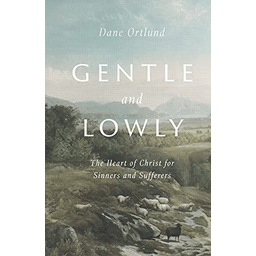 Gentle and LowlyDane Ortlund’s 23 short chapters on Matthew 11:29 have quietly become the most-given new Christian book of the decade - and the reason is not what you’d guess.
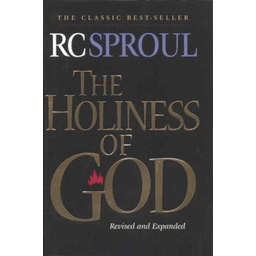 The Holiness of GodR.C. Sproul’s career-defining book on the one attribute of God the church most forgets - and the vision in Isaiah 6 he believed everything else flows from.
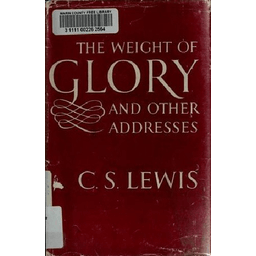 The Weight of GloryThe 1941 sermon many call Lewis's single finest piece of writing - "there are no ordinary people" - gathered with eight other addresses into one slim, uneven, unforgettable collection.The Pursuit of GodA.W. Tozer’s ten-chapter wake-up call on knowing God personally - short, severe, and the one devotional Reformed, Wesleyan, Catholic, and Orthodox readers all seem to keep on the nightstand.