- Starting price
- Free (public domain); ~$12 print
- Free tier
- Yes
- Platforms
- Print · Kindle · Audiobook · Web (free)
- Developer
- Various / Public domain
- Launched
- 1682
- Updated
- May 31, 2026
The verdict
The Holy War is John Bunyan’s most ambitious allegory - the whole drama of the soul told as the siege of a walled town. It is richer and more intricate than The Pilgrim’s Progress, and for that exact reason it is harder to follow: more characters, more battles, more 1680s English. Readers who already love Bunyan find it the deeper book. Readers new to him should start with Pilgrim’s Progress and come here second.
Try The Holy War ↗Opens ccel.org
The Holy War is the book Bunyan wrote after the book that made him immortal. By 1682 The Pilgrim’s Progress was already a sensation, and John Bunyan - the Bedford tinker turned preacher who had written the first allegory in jail - set out to do something larger. Where Pilgrim’s Progress follows one man walking one road, The Holy War zooms out to a whole town and the war fought over it. The result is more crowded, more architectural, and in some ways more theologically complete than its famous predecessor.
The premise is a single sustained metaphor. There is a town called Mansoul, built by a great King named Shaddai to be the fairest town in the universe. It has five gates - Eye-gate, Ear-gate, Mouth-gate, Nose-gate, Feel-gate - and a castle at its center. A rebel named Diabolus besieges it, talks his way in through Ear-gate, and takes the town captive. The rest of the book is the campaign to win it back: Shaddai sends his son Emmanuel with an army, the town is recaptured, and then - because Bunyan is not interested in easy endings - Mansoul is besieged again and again even after its rescue. It doesn’t simplify the Christian life. It doesn’t pretend the war ends at conversion. It doesn’t let the reader rest.
What this review tries to do is tell you honestly what you’re getting into. The Holy War is the connoisseur’s Bunyan - beloved by people who have already read Pilgrim’s Progress two or three times, and genuinely tough going for people who haven’t. We’ll walk through what the allegory actually is, why its admirers rank it so high, where it loses modern readers, and which edition makes the 1680s prose easiest to carry. The short version: it is a great book and the wrong place to start.
✓ The good
- Bunyan’s most ambitious allegory - the entire arc of the soul rendered as the founding, fall, conquest, and ongoing defense of a single town
- The Mansoul conceit is brilliant - the five gates (Eye, Ear, Mouth, Nose, Feel) and the central castle map the human person with a precision that rewards slow reading
- Theologically fuller than Pilgrim’s Progress - it covers creation, fall, redemption, backsliding, and perseverance in one sustained story rather than a single journey
- Refuses the tidy ending - Mansoul is rescued and then attacked again, which many readers find truer to lived experience than a one-time arrival at the Celestial City
- Drenched in Scripture - like all of Bunyan, nearly every move echoes a biblical text, and the marginal references in good editions show the scaffolding
- Public domain - free full text online, free Kindle, free audio; nothing stands between you and trying it but the prose
- A favorite of serious Bunyan readers - Charles Spurgeon famously rated it among the books he most admired, and it rewards the patience it demands
✗ Watch out
- Denser and harder to follow than The Pilgrim’s Progress - far more characters, factions, and set-piece sieges to keep straight
- The military allegory can feel elaborate - long stretches of councils of war, troop dispositions, and negotiated terms test a modern reader’s patience
- 1680s English throughout - the syntax and vocabulary are a real wall, and there are more proper-noun characters to track than in Bunyan’s first allegory
- Slower to grip - Pilgrim’s Progress hooks you in a page; The Holy War asks you to learn its world first
- Less famous for a reason - the very complexity that admirers prize is what has kept it out of the popular canon its predecessor owns
- The 17th-century Puritan frame is unmistakable - the human experiences translate widely, but the doctrinal weather is plainly of its time and tradition
Best for
- Readers who already love The Pilgrim’s Progress
- Patient readers who enjoy intricate, sustained allegory
- Anyone wanting Bunyan’s fullest picture of the spiritual life
- Long-time readers ready for a denser second Bunyan
Avoid if
- You’ve never read Bunyan before
- You bounce off pre-1900 English on principle
- You want a fast, single-thread narrative
- You prefer practical step-by-step Christian living advice
What The Holy War is
The Holy War is an allegorical prose narrative - Bunyan’s second, published in 1682, four years after Part I of The Pilgrim’s Progress. Its full original title sets the scene: The Holy War Made by Shaddai upon Diabolus, for the Regaining of the Metropolis of the World; or, the Losing and Taking Again of the Town of Mansoul. The story follows a town called Mansoul - a clear figure for the human soul - that is built by King Shaddai, betrayed and captured by the rebel Diabolus, recaptured by Shaddai’s son Emmanuel and his army, and then defended through repeated later sieges. Every wall, gate, officer, and traitor in the town stands for something in the spiritual life.
Bunyan was a 17th-century English tinker turned Puritan Baptist preacher who spent twelve years in Bedford jail for refusing to stop preaching without a Church of England license. He wrote The Holy War after his release, at the height of his powers as a writer, and it shows: the architecture is more elaborate than anything in his first allegory. Most editions run 250 to 350 pages. It has never matched The Pilgrim’s Progress for fame or sales, but it has had devoted admirers in every generation - readers who consider it the richer, more demanding achievement of the two.
Why Bunyan’s admirers rank The Holy War so high
The single biggest reason devoted readers prize The Holy War is scope. The Pilgrim’s Progress shows you one believer’s journey from conversion to glory. The Holy War shows you the whole story - how the soul was made, how it fell, how it was redeemed, how it keeps coming under attack even after rescue, and how it is finally kept. By choosing a town under siege instead of a traveler on a road, Bunyan gains the ability to dramatize things a single journey can’t: internal factions, divided loyalties, a self that is partly recaptured and partly still occupied. The result is a fuller map of the spiritual life, even if it is a harder one to read.
The second reason is the refusal of a tidy ending. Pilgrim’s Progress closes at the Celestial City; the arrival is the point. The Holy War does not let Mansoul rest after its rescue - Diabolus regroups, Doubters and Bloodmen lay fresh siege, and Emmanuel’s closing speech is a warning to stay watchful, not a victory lap. Many readers across very different traditions find this truer to their own experience than a one-time arrival. That honesty about the long war after the first deliverance is why Charles Spurgeon and a long line of later readers regarded it as Bunyan’s deepest book, and why it still finds devoted readers who came to it after wearing out their copy of the first.
The town of Mansoul: the soul rendered as a walled city
The governing image of the book is architecture. Mansoul is a town built by King Shaddai to be the finest in his dominions, with a strong wall, a central castle, and five gates that can never be forced from outside without the townspeople’s consent: Ear-gate, Eye-gate, Mouth-gate, Nose-gate, and Feel-gate. Those five gates are the five senses, the only ways into the human soul, and the whole plot turns on which gate is open to whom. Diabolus takes the town not by storming the wall but by talking his way through Ear-gate - the soul is captured by what it listens to. When Emmanuel comes to retake it, the campaign is fought gate by gate.
What makes this conceit so durable is how exact it is. A reader who slows down finds that the architecture keeps paying out: the castle at the center is the heart, the will is a captain who can be turned, conscience is an officer named Mr. Recorder who is silenced under Diabolus and restored under Emmanuel. Bunyan is doing a kind of psychology in allegorical dress, and at its best The Holy War reads like a precise anatomy of how a person is lost and won. It asks more of the reader than Pilgrim’s Progress - you have to hold the floor plan in your head - but the payoff for that effort is a picture of the inner life that few books in any century have matched.
Shaddai, Diabolus, and Emmanuel: the war for the town
The cast of The Holy War is enormous, and it splits into armies. On one side is King Shaddai, the builder and rightful lord of Mansoul, and his son Emmanuel, who leads the campaign of rescue. On the other is Diabolus, the rebel who seizes the town and installs his own government - a mayor named Lord Lustings, a recorder named Mr. Forget-good, and a garrison of vices given offices and titles. In between are the townspeople themselves, who are neither simply good nor simply evil but a population that can be deceived, divided, recaptured, and re-deceived. The war is fought through sieges, parleys, treaties, betrayals, and the slow business of restoring a captured city to its true king.
This is also where the book makes its biggest demand. There are far more named figures than in The Pilgrim’s Progress, and the action is built from set pieces - councils of war, the storming of a particular gate, the trial of captured Diabolonians - rather than a single forward-moving road. Readers who enjoy intricate plotting find this exhilarating; readers who want momentum can stall in the longer military passages. The antagonists, though, are unforgettable once you have them: Diabolus is a genuinely subtle tempter, and the later siege led by the captain named Incredulity, with his regiments of Doubters and Bloodmen, is one of the most vivid pictures of assaulted faith in English literature.
Reading the 1680s prose: which edition makes it manageable
This is the practical decision, and for The Holy War it matters even more than it does for Pilgrim’s Progress. The original 1682 text is in early modern English - long sentences, archaic vocabulary, and the heightened diction Bunyan reserved for his most ambitious work. On top of that, the sheer number of proper-noun characters (every captain, every Diabolonian, every officer of the town has a name that is also a meaning) asks a lot of working memory. A good edition helps. The Banner of Truth and Oxford World’s Classics editions keep the original text intact and add the kind of introduction and notes that help you track the cast and catch the biblical references behind each scene.
Two on-ramps are worth knowing about. First, the audiobook: a skilled narrator turns Bunyan’s long sentences back into the spoken cadences he wrote them in, and several recordings exist, including free LibriVox versions. For many readers this is the difference between finishing and stalling. Second, a scholarly annotated edition (around $25) earns its price here more than with most classics, because the notes catch the scriptural allusions and gloss the harder words while you read. The honest recommendation is the same as for any Bunyan: start with whatever edition you will actually finish, lean on the audio if the page feels heavy, and don’t be afraid to keep a finger on the list of characters.
Pricing
Free editions
$0
Full text at CCEL and Project Gutenberg, plus free Kindle downloads - the book has been public domain everywhere for over a century
Paperback
~$12
Standard reprints from Banner of Truth, Penguin Classics, and others - the durable, markup-friendly copy for a careful first read
Kindle / ebook
Free-$4
Free public-domain versions exist; a few publishers charge a small fee for cleaned-up, properly formatted editions with working notes
Audiobook
~$15
Several narrations exist (some free via LibriVox); a skilled reader makes the 1680s sentences far easier to follow than they are on the page
Annotated / scholarly edition
~$25
Oxford and academic editions with introductions and notes - useful for tracking the large cast and the biblical references behind each scene
The Holy War is fully public domain, which means the cheapest edition you can find is also a completely legitimate one. The full text is free at CCEL and Project Gutenberg and as a no-cost Kindle download, and free audio narrations exist through LibriVox. There is genuinely no financial barrier to trying it.
A standard paperback (Banner of Truth, Penguin Classics, and various reprints) runs around $12 - the right pick if you want to mark it up and keep it. Cleaned-up, properly formatted ebooks sometimes carry a small fee under $4, which buys you working notes and fewer scanning errors than the roughest free files.
The audiobook (around $15, or free via LibriVox) is the unlock for readers who find the prose heavy on the page, and the scholarly annotated edition (around $25) earns its premium here more than with most classics - the cast is large and the notes that track it are genuinely useful. Most readers do not need more than one edition.
The reasonable pattern is the same one that works for The Pilgrim’s Progress: start with whatever is free, see whether Bunyan’s denser second allegory grips you, and only then decide whether a nicer annotated copy is worth the difference. Many readers find the audio plus the free text is all they need.
Where The Holy War falls behind
Accessibility, head to head with Pilgrim’s Progress. This is the honest comparison, and it is the book’s central limitation: The Holy War is harder to follow than its famous sibling in almost every way - more characters, more factions, more set-piece battles, and a structure that asks you to learn a whole town rather than walk a single road. The very richness admirers love is what keeps it from being the book you hand a beginner.
Pacing in the military passages. Bunyan loves a council of war, a formal parley, a negotiated set of terms. These scenes carry real theological weight, but a modern reader expecting narrative momentum can stall in the longer stretches of troop movements and sieges. The action is built from elaborate set pieces rather than a steady forward pull.
The 1680s prose, intensified. Early modern English is a wall in all of Bunyan, but The Holy War raises it: the diction is more elevated than in Pilgrim’s Progress, and the flood of meaning-laden proper nouns adds a memory load on top of the vocabulary. Without notes or audio, many readers find the first chapters genuinely steep.
A single doctrinal frame. The Holy War is a 17th-century Puritan book, and its understanding of conversion, backsliding, and perseverance is shaped by the Reformed theology of its time and tradition. Readers from Catholic, Orthodox, Wesleyan, Pentecostal, and Latter-day Saint backgrounds have long read Bunyan with appreciation - the human experiences translate across traditions - but it should not be mistaken for a tradition-neutral text.
Fame, and everything that comes with it. Because The Holy War never entered the popular canon the way Pilgrim’s Progress did, there are fewer good modernized editions, fewer children’s adaptations, and less surrounding apparatus to ease a new reader in. You are more on your own with this one.
The Holy War vs. The Pilgrim’s Progress vs. Confessions
These three are among the most-read pre-modern accounts of the inner spiritual life in the English-speaking world, and they take very different shapes. Bunyan’s The Pilgrim’s Progress (1678) is allegorical journey - one believer walking one road from the City of Destruction to the Celestial City. Bunyan’s own The Holy War (1682) is allegorical siege - a whole town built, lost, retaken, and defended, told from a wider angle than the journey allows. Augustine’s Confessions (c. 400 AD) is autobiography - the interior story of one extraordinary mind’s conversion, addressed directly to God.
Different strengths. The Pilgrim’s Progress is the most accessible - it carries you immediately, and its images (Slough of Despond, Vanity Fair) have become common Christian vocabulary. The Holy War is the most complete - it covers creation, fall, redemption, backsliding, and perseverance in one sustained story, at the cost of being harder to follow. Confessions is the deepest single portrait of one soul, with the literary force of one of late antiquity’s great minds. Between Bunyan’s two allegories specifically, the first is broader in reach and the second is fuller in scope.
If you only read one Bunyan, read The Pilgrim’s Progress first - it is the on-ramp to everything else he wrote. Come to The Holy War once you have loved the first and want the bigger, denser canvas. Add Confessions when you want to leave allegory behind for the real interior story of a real person. Many readers eventually read all three, and together they form much of the shared furniture of the Christian inner life as English readers have pictured it.
The bottom line
The Holy War is the book to read second. It is Bunyan’s most ambitious work - a fuller, stranger, more architecturally complete picture of the soul than The Pilgrim’s Progress - and its admirers are right that it rewards the patience it demands. But the density that makes it great is also what makes it the wrong starting point: more characters, more sieges, more 1680s English than a newcomer should take on cold. Start with Pilgrim’s Progress. When you have worn out that copy and want the bigger canvas, The Holy War is waiting, and it is free.
Alternatives to The Holy War
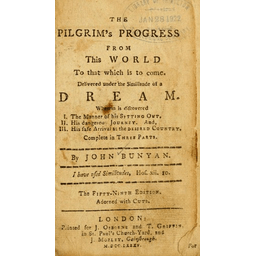 The Pilgrim’s ProgressBunyan’s first and most famous allegory - one believer’s road to the Celestial City, and the place every new Bunyan reader should begin before The Holy War.
 Mere ChristianityC.S. Lewis’s plain-prose introduction to the shared Christian faith - a clear modern companion for readers who find Bunyan’s 17th-century allegory heavy going.
 ConfessionsAugustine’s 4th-century autobiographical prayer - the deepest single portrait of one soul’s conversion, and a natural next step beyond allegory.
 The Mortification of SinJohn Owen’s Puritan classic on putting sin to death - the same era and spiritual concerns as Bunyan, told as direct instruction rather than allegory.
Frequently asked questions
What is The Holy War about?
It is an allegory of the human soul, told as the story of a walled town called Mansoul. The town is built by King Shaddai, captured by the rebel Diabolus, and recaptured by Shaddai’s son Emmanuel - then defended through repeated later sieges. Every gate, officer, and enemy in the town stands for something in the spiritual life, dramatizing creation, fall, redemption, backsliding, and perseverance in one sustained story.
Should I read The Pilgrim’s Progress or The Holy War first?
Read The Pilgrim’s Progress first. It is shorter, simpler, and grips you immediately, and it is the on-ramp to everything else Bunyan wrote. The Holy War is the richer and more ambitious book, but it has more characters, more battles, and denser prose, which makes it the wrong place to start. Come to it once you have loved Pilgrim’s Progress and want a bigger canvas.
Is The Holy War harder to read than The Pilgrim’s Progress?
Yes. Both are written in 1680s English, but The Holy War is more demanding: the diction is more elevated, the cast is much larger, and the military allegory of sieges and councils of war asks you to hold a whole town in your head rather than follow a single road. A good annotated edition or an audiobook narration makes it considerably more manageable.
Is it a Protestant book? Can readers from other traditions still enjoy it?
It is a 17th-century Puritan book - Bunyan was an English Baptist preacher and the theological frame reflects that. But like all of Bunyan, it has been read with appreciation across Catholic, Orthodox, Reformed, Wesleyan, Pentecostal, and Latter-day Saint readers. The experiences it dramatizes - temptation, deception, rescue, backsliding, and the long fight to stay faithful - translate across traditions, which is the main reason it has lasted.
Which edition should I buy?
The full text is free at CCEL and Project Gutenberg and as a free Kindle download. For a durable print copy, the Banner of Truth or Penguin Classics paperbacks run around $12. For the large cast and the biblical references, a scholarly annotated edition (around $25, such as Oxford World’s Classics) earns its price here more than with most classics. The audiobook (around $15, or free via LibriVox) is a strong option if the prose feels heavy.
Why is The Holy War less famous than The Pilgrim’s Progress?
Mostly because it is harder. The complexity that its admirers prize - the larger cast, the siege structure, the fuller theological scope - is exactly what kept it out of the popular canon that Pilgrim’s Progress has owned for centuries. Pilgrim’s Progress was for generations the most-published English book after the Bible; The Holy War has always been the connoisseur’s Bunyan rather than the household one.
When did Bunyan write The Holy War?
It was published in 1682, four years after Part I of The Pilgrim’s Progress (1678) and six years before Bunyan’s death in 1688. He wrote it after his release from the Bedford jail where he had spent twelve years for preaching without a Church of England license, at the height of his powers as a writer - which is part of why it is his most architecturally ambitious work.
Sources & further reading
More Christian Classics (Pre-1900)
The Mortification of SinThe 1656 Puritan handbook on fighting indwelling sin - still the most rigorous spiritual diagnostic in print, four centuries on. The Imitation of ChristA 600-year-old devotional that has outsold almost every Christian book ever written - and still rearranges the modern reader who is willing to sit with it.
 The Practice of the Presence of GodA 17th-century Carmelite kitchen monk’s short, plain talks and letters on staying aware of God in the middle of ordinary work - the smallest devotional classic that keeps outlasting bigger books.The Treasury of DavidSpurgeon spent two decades on a verse-by-verse commentary on all 150 Psalms - his own exposition, centuries of collected commentators, and notes for preachers - and the result is still the first book many turn to when they open the Psalter.All of GraceSpurgeon's short 1886 book explaining salvation by grace through faith - written for the anxious and the seeking, given away by the millions, and still the booklet people press into a searching friend's hands.The Bruised ReedRichard Sibbes built an entire book out of half a verse - "a bruised reed he will not break" - and four centuries on it is still the tenderest page the Puritans ever wrote.