- Starting price
- ~$20 paperback
- Free tier
- No
- Platforms
- Print · Kindle · Audiobook
- Developer
- HarperOne
- Launched
- 2018
- Updated
- May 31, 2026
The verdict
The most readable full-length life of the apostle Paul written by a major scholar in a generation. Wright takes four decades of Pauline study and pours it into a narrative - Tarsus to Damascus to the prison letters - that reads like a travel story without losing its footing. His reading sits inside the much-debated "New Perspective" school, which shapes the portrait; read it as a vivid, expert biography rather than the last word, and it is hard to beat.
Try Paul: A Biography ↗Opens harpercollins.com
Paul: A Biography has quietly become the book people reach for when they want to actually meet the apostle rather than study him. Published in 2018 by HarperOne, written by N.T. Wright - former Bishop of Durham, longtime professor of New Testament - it does something most books about Paul never attempt: it tells his life as a story, start to finish, from a boyhood in Tarsus to a last imprisonment in Rome. Almost a decade on it is still the title most-recommended when someone asks "what should I read to understand who Paul actually was?"
It is not a commentary. It is not a verse-by-verse walk through the letters. It is not a systematic theology of Paul either - Wright wrote a separate two-volume monster for that. It sits in a genre that is harder than it looks: a working scholar writing narrative history for ordinary readers, reconstructing a first-century life from letters, the book of Acts, and a deep knowledge of the Roman and Jewish worlds Paul moved between.
Wright’s aim, stated plainly in the opening pages, is to recover Paul as a human being - a small, intense, controversial man who walked thousands of miles, started fragile churches in hostile cities, argued with his own colleagues, was beaten and jailed repeatedly, and somehow produced the letters that would reshape the world. The result reads less like a textbook and more like a biography of a great and difficult figure, which is exactly what Wright set out to write.
A note up front, because it matters for how you read the book: Wright is one of the leading voices in what scholars call the "New Perspective on Paul," a way of reading the apostle that has been vigorously debated - including by Reformed critics who read Paul differently. That lens shapes the portrait throughout. This review treats the book as biography and scholarship, flags where Wright’s interpretation is doing the work, and leaves the doctrinal questions to the reader.
✓ The good
- Genuinely a narrative - most books on Paul are organized by doctrine or by letter; this one is organized by his life, and it reads like a story you can finish on a long weekend
- Scholar-grade footing without the academic prose - Wright is one of the most-cited Pauline scholars alive, and the depth is there, but the writing stays in reach of any motivated reader
- Brings the first-century world to life - the synagogues, the trade routes, the Roman cities, the danger of travel, the social texture of the early house churches all become vivid and concrete
- Treats Paul as a real, difficult human being - the temper, the stubbornness, the broken relationships (the split with Barnabas, the tension with Peter) are not smoothed over
- Sets the letters back into their moments - reading 1 Corinthians or Philippians after seeing the city and the crisis that produced it changes how the letters land
- Anglican-flavored but readable across traditions - Catholic, Orthodox, Reformed, Wesleyan, and Anglican readers all find a Paul they recognize somewhere in the portrait
- The chapter on Paul’s imprisonments and final years is unusually moving - Wright’s pastoral instincts carry the ending without overreaching the evidence
✗ Watch out
- Wright reconstructs and speculates where the sources are thin - he flags these moves honestly ("we cannot know, but it is reasonable to imagine"), but a reader wanting only hard evidence will notice how much is informed conjecture
- The interpretive lens shapes the portrait - Wright reads Paul through the "New Perspective," which has been pushed back on by some Reformed writers (John Piper and others have engaged him directly), and a reader from that tradition will feel the disagreement in the background
- It is long - around 450 pages, and the missionary-journey middle can feel like a lot of itinerary if you are not already invested in the geography
- Leans on Acts as broadly historical - Wright defends this, but scholars who treat Acts as a later theological construction will disagree with some of the framework the narrative is built on
- Light on the "what do I do with this" payoff - this is a life of Paul, not a devotional or an application guide; the takeaways are left for the reader to draw
- A few British idioms and the occasional aside about academic debates may slow readers who just want the story
Best for
- Readers who want to meet Paul as a person before studying his theology
- Small-group leaders and teachers preparing a series on Acts or the Pauline letters
- Seminary students and ministry workers wanting a serious, narrative entry-point into Paul
- Anyone who has read the letters for years but never seen the life behind them
Avoid if
- You want a verse-by-verse commentary on Paul’s letters - this is biography, not exposition
- You want only hard documented fact with no reconstruction - Wright fills gaps with informed conjecture and says so
- You are firmly committed to a strict Reformed reading of Paul and want nothing that nudges against it
- You want something short - this is a full-length biography, not a quick introduction
What Paul: A Biography is
Paul: A Biography is a roughly 450-page narrative life of the apostle Paul by N.T. Wright, published in 2018. Wright is one of the most-respected New Testament scholars alive - former Bishop of Durham in the Church of England, formerly Research Professor of New Testament and Early Christianity at the University of St. Andrews - and the book distills decades of his Pauline scholarship into a single readable arc. It is not a study of Paul’s ideas in the abstract; it is the story of his life, told in order, from his upbringing as a zealous young Pharisee in Tarsus through his missionary travels to his final years in Roman custody.
The book moves chronologically. It opens with the world Paul was born into - a devout, diaspora-Jewish boy in a Greek-speaking Roman city - and the fierce convictions that made him a persecutor of the early Jesus movement. It works through the Damascus road and its aftermath, the long obscure years, the missionary journeys city by city, the letters written into specific crises, the arrests, the shipwreck, the house arrests, and the tradition of his death in Rome. Throughout, Wright reads the letters against the life and the life against the letters, building a portrait of the man behind the most influential correspondence in history.
Why teachers and readers keep reaching for Wright’s Paul
The single biggest practical difference between Paul: A Biography and most other books about Paul is that this one is a story, not a syllabus. Most treatments are organized by theme - justification, the law, the church, the resurrection - or they march letter by letter through the corpus. Wright instead asks what it was actually like to be this man: to walk those roads, to enter those cities cold, to plant a fragile congregation among strangers and then have to write to them when it all went sideways. The theology is still there, woven in, but it arrives the way it arrived for Paul - out of lived crisis rather than out of a textbook’s table of contents.
That move - small on paper, transformative in practice - is why teachers hand the book out. The letters stop being free-floating doctrine and become urgent mail from a man under pressure. You read Philippians differently once you have seen the prison; you read Galatians differently once you have felt the heat of the argument that produced it. Readers across Catholic, Orthodox, Anglican, Reformed, and Wesleyan traditions have found a Paul they recognize here, even when they would parse his theology differently than Wright does. The biography travels across those lines precisely because it spends most of its energy on the life rather than on adjudicating the debates.
Paul as a human being, set in his first-century world
The headline accomplishment of the book is that Wright makes Paul a person rather than a portrait on a stained-glass window. He reconstructs the world Paul grew up in - the diaspora synagogue, the trade of tentmaking, the texture of a Greek-speaking Roman city, the burning Pharisaic zeal that made the young Saul a persecutor - and then follows him out onto the roads of the empire. The danger of ancient travel, the precariousness of the little house churches, the social and economic realities of the cities Paul entered: all of it is rendered concretely, drawing on Wright’s deep knowledge of the period. You come away with a sense of the man’s body and temperament, not just his ideas.
Crucially, Wright lets Paul be difficult. This is not a hagiography. The apostle here is intense, sometimes abrasive, capable of a temper and of broken relationships - the sharp split with Barnabas, the public confrontation with Peter at Antioch, the wounded affection that runs through the Corinthian correspondence. Wright reads these not as embarrassments to be explained away but as part of who Paul was: a real human being whom God used without sanding off the edges. For many readers this is the most refreshing thing about the book. Paul stops being an icon and becomes someone you could imagine arguing with on a dusty road.
The letters read against the life
The second big idea is methodological, and it pays off on nearly every page: Wright reads each letter back into the moment that produced it. Rather than treating the epistles as a freestanding body of doctrine, he sets them down inside the narrative - this letter written from this place, into this crisis, to these people Paul knew by name. So 1 Corinthians arrives only after we have walked the streets of Corinth and felt the social fractures of the congregation; Philippians arrives with the chains visible; Galatians arrives in the white heat of the controversy over what the gospel required of non-Jewish believers. The doctrine is not diluted by this; it is grounded.
This is where Wright’s scholarship and his interpretive lens are most clearly at work, and it is worth naming. His reading of what Paul was arguing about - especially around the law, justification, and the inclusion of the nations into God’s people - reflects the "New Perspective on Paul," a school of interpretation Wright helped popularize. That reading is debated; other scholars, including a number of Reformed writers, read the same letters and reach different conclusions about what Paul meant. The biography does not pause to litigate every point, but the frame is present throughout. Readers who hold a different reading of Paul can still get enormous value from the narrative - they will simply want to hold Wright’s interpretive conclusions more lightly than his vivid reconstruction of the historical scene.
Wright’s accessible-yet-scholarly voice
Wright is, by trade, an academic - his Pauline scholarship runs to two dense volumes and is read in seminaries on multiple continents. Paul: A Biography is what happens when that same scholar deliberately writes for the general reader. The apparatus is restrained; the prose is narrative rather than technical; the analogies are drawn from ordinary life. He is a natural storyteller, and the book moves with the momentum of a good biography even as the underlying scholarship holds it steady. The audiobook, which Wright narrates himself, suits the material well - the story tracks fine for a listener, and his own reading carries the pastoral warmth that runs under the history.
The result is a book that teachers trust because the scholarship is there, and that lay readers actually finish because the writing stays in reach. There are stretches that ask patience - the long middle of missionary journeys can read like a lot of itinerary if you are not yet hooked on the geography - and Wright is honest about the places where the sources run thin and he is reconstructing rather than reporting. He flags these moments ("we cannot be certain, but...") rather than hiding them, which is part of why the book has aged well. Nearly a decade on it still reads as fresh, careful writing rather than a snapshot of late-2010s church publishing.
Pricing
Paperback
~$20
The standard HarperOne edition - readable, lendable, what most readers actually buy. Around 450 pages.
Hardcover
~$30
Original hardback, still findable for gift-givers and collectors. Same text as the paperback.
Kindle
~$15
Full text, searchable, syncs across devices - handy if you plan to quote it in teaching or papers.
Audiobook
~$25 (or 1 Audible credit)
About 15 hours, narrated by the author. Wright’s own reading suits the storytelling and travels well on a commute.
Paul: A Biography is a paid book - no free tier, no library subscription, no reliable bundling into a reading service. The paperback at around $20 is the version most readers buy and the one we mark as best value: it is lendable, easy to mark up, and the same text as the hardcover, at a friendlier price for a 450-page book.
Kindle at around $15 is the cheapest path in and the right pick if you plan to search or quote the book in teaching, papers, or small-group prep. Highlights sync across devices and the table of contents is hyperlinked, which is genuinely useful for a book you will want to navigate by chapter and by city.
The audiobook at around $25 (or a single Audible credit) runs roughly fifteen hours and is narrated by Wright himself. For a narrative biography this is a strong format - the story carries well in audio, and the author’s own reading adds something. It is the pick for commuters and walkers who would rather hear the journey than sit with the page.
Used copies are easy to find. The book has been in print continuously since 2018 and the secondhand market is healthy - expect well under $10 in good condition. The text has not been revised, so an early printing reads identically to a current paperback. The hardcover at around $30 is mostly for gift-buyers; the text is the same.
Where Paul: A Biography falls behind
Not a commentary. Readers who want a verse-by-verse exposition of Romans or 1 Corinthians will not find one here - this is a life of Paul, and the letters appear as events within that life rather than as texts to be parsed line by line. That is the right call for the book Wright was writing, but it means the biography is a companion to the letters, not a substitute for studying them.
Reconstruction where the sources are thin. Large stretches of Paul’s life are barely documented, and Wright fills the gaps with informed historical imagination. He is honest about this - he repeatedly signals when he is inferring rather than reporting - but a reader who wants only what can be strictly proven from the texts will be aware of how much of the connective tissue is reasonable conjecture.
The interpretive lens. Wright’s reading of Paul reflects the "New Perspective," which has been engaged critically by writers including John Piper, whose The Future of Justification responds to Wright directly. This biography is not primarily about justification, and it does not stop to defend that flank in detail. Readers in the Reformed tradition will sometimes feel the wider disagreement in the background, and they will read Wright’s interpretive conclusions through that awareness.
A heavy reliance on Acts. Wright treats the book of Acts as broadly reliable history and builds much of the chronology on it. He defends this approach, but scholars who regard Acts as a later, more theologically shaped narrative will dispute some of the scaffolding the life is hung on. Where you land on Acts will color how settled the biography feels.
Length and pace. At around 450 pages, with a long central section tracing journey after journey, the book asks for a real commitment. It rewards the investment, but it is not the title to hand someone who wants a quick, two-hour introduction to who Paul was.
Paul: A Biography vs. The Day the Revolution Began vs. Simply Christian
Different strengths. Paul: A Biography is Wright’s narrative life of the apostle - the man, the world, the journeys, the letters set back into their moments. The Day the Revolution Began (Wright, 2016) is a focused argument about the meaning of Jesus’ crucifixion, denser and more thesis-driven; it is the book to read once you want to dig into Wright’s reading of atonement and the cross rather than into Paul’s biography. Simply Christian (Wright, 2006) is his broad introduction to the Christian faith - often described as a Mere Christianity for a new century - and the natural starting point if you want the big picture before any single doctrine or figure.
Read together they form a clear path. Start with Simply Christian for the overview of the faith; move to Paul: A Biography when you want to meet one of its central figures and watch the New Testament’s letters take shape inside a real life; reach for The Day the Revolution Began when you want to press into the theology of the cross specifically. The three share an author, a voice, and an interpretive sensibility - Wright’s - so a reader who clicks with one will likely click with all three, and a reader who reads Paul differently than Wright does will feel the same lens running through each.
All three are read across Catholic, Protestant, and other Christian traditions. Wright writes from within Anglicanism and from the New Perspective school, both of which leave fingerprints on the work. Readers from other traditions consistently report finding the narrative and the historical reconstruction valuable even where they would draw different doctrinal conclusions - which is part of why the books travel as widely as they do.
The bottom line
Paul: A Biography is the book to read if you want to actually meet the apostle Paul - the tentmaker, the traveler, the prisoner, the difficult and brilliant man behind the letters - rather than only study his ideas. Wright takes a career of Pauline scholarship and turns it into a genuine narrative, vivid and humane, that grounds the letters in the life that produced them. His reading sits inside the much-debated New Perspective, so take his interpretive conclusions as one expert view among several rather than the final word. As a story of the man and his world, told by a scholar who knows the terrain cold, it is hard to do better. Worth the $20.
Alternatives to Paul: A Biography
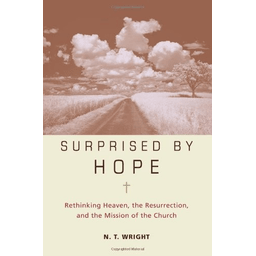 Surprised by HopeWright’s short, accessible case that Christian hope is bodily resurrection and new creation - same author and voice, focused on eschatology rather than Paul’s life.
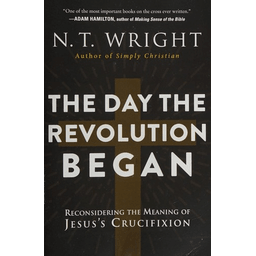 The Day the Revolution BeganWright’s focused argument about the meaning of Jesus’ crucifixion - denser and more thesis-driven, the next step once you want his reading of the cross.
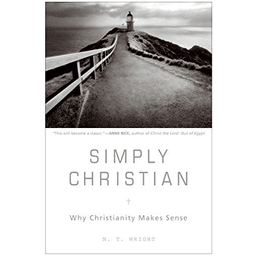 Simply ChristianWright’s broad introduction to the Christian faith - often called a Mere Christianity for a new generation, and the natural starting point before any single figure.
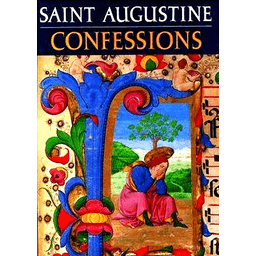 ConfessionsAugustine’s spiritual autobiography - a very different era and voice, but the towering example of a great Christian life told as a story, a fitting companion read.
Frequently asked questions
Is Paul: A Biography a commentary on Paul’s letters?
No. It is a narrative biography - the story of Paul’s life from Tarsus to Rome. The letters appear as events within that life, written into specific crises, rather than as texts walked through verse by verse. It is an excellent companion to reading the letters themselves, but it is not a commentary and is not meant to replace one.
What is the "New Perspective on Paul," and how does it affect the book?
The New Perspective is a school of New Testament interpretation, which Wright helped popularize, that reads Paul’s arguments about the law and justification with a particular emphasis on the inclusion of the nations into God’s people. It has been debated among scholars, including Reformed critics such as John Piper, who read Paul differently. Wright’s biography is told through that lens, so the historical reconstruction is widely useful while the interpretive conclusions reflect a view that other scholars contest.
Do I have to be Anglican, or agree with Wright’s theology, to get something out of it?
Not at all. Wright is Anglican and reads Paul through the New Perspective, and both leave their mark on the book. But the bulk of the value is in the narrative and the vivid reconstruction of Paul’s world, which readers across Catholic, Orthodox, Reformed, Wesleyan, and non-denominational traditions have found rewarding even when they would draw different doctrinal conclusions.
How much of the book is documented fact versus reconstruction?
Large stretches of Paul’s life are sparsely documented, so Wright fills the gaps with informed historical imagination - what the travel, the cities, and the relationships were plausibly like. He is honest about this, signaling clearly when he is inferring rather than reporting. The framework leans on the book of Acts, which Wright treats as broadly reliable; readers who view Acts differently will weigh some of the reconstruction accordingly.
Is this the same as Wright’s big academic book on Paul?
No. Wright also wrote a dense two-volume scholarly work on Paul’s theology for an academic audience. Paul: A Biography is the popular-level companion - the life rather than the systematic theology, written for general readers. If you want the full scholarly argument, that is the larger work; if you want the story of the man, this is the book.
How long is it, and what is the best format?
Around 450 pages. Most motivated readers finish it over a few weeks at a chapter a sitting. Paperback (around $20) is the pick if you want to mark it up and lend it out; Kindle (around $15) if you want to search and quote it; the audiobook (around 15 hours, narrated by Wright himself) works well for a narrative biography and travels nicely on a commute.
Where should I go after Paul: A Biography?
For more Wright in the same voice: Simply Christian for the big picture of the faith, The Day the Revolution Began for his reading of the cross, and Surprised by Hope for Christian hope and resurrection. For another great Christian life told as a story, Augustine’s Confessions is the classic. And the most natural next step is simply to reread Paul’s letters themselves with the life now in view.
Sources & further reading
More Christian Biographies
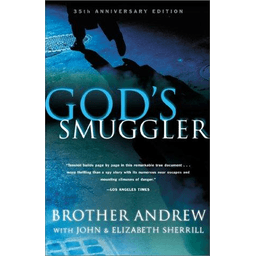 God’s SmugglerThe Dutch missionary’s 1967 memoir about driving a blue Volkswagen Beetle full of Bibles past Soviet border guards - and the prayer that became a generation’s shorthand for trusting God in impossible places.
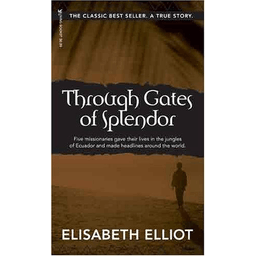 Through Gates of SplendorElisabeth Elliot’s account of five young missionaries killed reaching the Waorani of Ecuador in 1956 - the book that sent a generation toward the mission field, told by one of the widows.
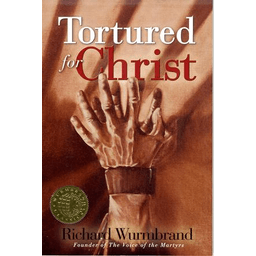 Tortured for ChristThe Romanian pastor’s 1967 account of fourteen years in communist prisons - written in three days after his release, and the book that launched Voice of the Martyrs.
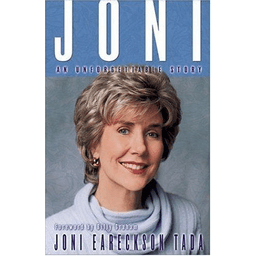 JoniJoni Eareckson Tada’s account of the diving accident that left her a quadriplegic at seventeen - and the long, unglamorous climb out of despair that followed - told without flinching and without tidy answers.
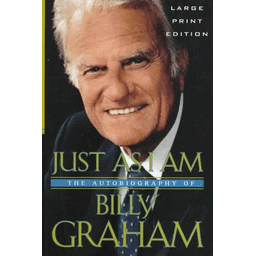 Just As I AmBilly Graham’s own account of a North Carolina farm boy who became the twentieth century’s best-known evangelist - the crusades, the presidents, and the doubts in between.
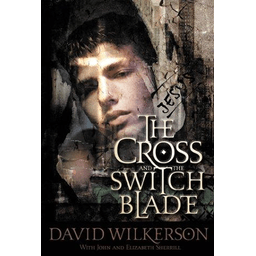 The Cross and the SwitchbladeThe skinny country preacher who left rural Pennsylvania for the gang-run streets of 1950s New York - and the conversion of switchblade-carrying gang leader Nicky Cruz that turned one man’s hunch into a worldwide ministry.