- Starting price
- Free (public domain); ~$15 Banner abridged ed.
- Free tier
- Yes
- Platforms
- Print · Kindle · Web (free) · Public domain
- Developer
- Various / Public domain
- Launched
- 1656
- Updated
- May 31, 2026
The verdict
The most searching book ever written on what a pastor’s ordinary work actually is - not preaching alone, but knowing, teaching, and personally shepherding every individual in the congregation. The title’s word "Reformed" means renewed pastoral practice, not a denomination, and that is why ministers across traditions keep returning to it. The 1650s prose and the era-specific catechizing model take some translating, but the charge underneath them has not aged.
Try The Reformed Pastor ↗Opens ccel.org
The Reformed Pastor has quietly become the book that ministers from very different traditions keep pressing on one another at ordinations and pastoral retreats. Written in 1656 by Richard Baxter - a largely self-taught Puritan minister who spent the bulk of his working life in the wool town of Kidderminster - it began as an address to his fellow clergy and grew into a full-length charge about the daily work of caring for souls. Nearly four centuries later it is still in print, still quoted in books on pastoral ministry, and still the title a lot of seasoned pastors name when a younger one asks what to read before taking a congregation.
It is not, despite the title, a book about a system of theology. It does not lay out doctrine. It does not give you a program to install. It does one thing: it takes a single line from Paul’s farewell to the Ephesian elders in Acts 20:28 - "Take heed therefore unto yourselves, and to all the flock" - and refuses to let a minister read past it. Baxter wants to know whether the pastor has taken heed to his own soul first, whether he actually knows the people in his care by name and by need, and whether the work of teaching them is happening in their homes and not only from the pulpit on Sunday.
The result is the book that produced Baxter’s most repeated charge: that a minister should be able to say of his people, as Paul did, that he had taught them "publicly, and from house to house." It is also the book that produces one of the most uncomfortable readerly reactions in pastoral literature - the sense, common among ministers who pick it up, of being personally examined by a man four hundred years dead who seems to know exactly how much of the work they have been quietly leaving undone.
✓ The good
- Unmatched on the minister’s personal life - Baxter spends the opening section on the pastor’s own soul before a word about the congregation, and the self-examination is relentless
- Anchored to a single text - the whole book is an exposition of Acts 20:28, so the argument stays on the work of shepherding and never drifts into abstraction
- The most practical Puritan book on the ordinary work of ministry - it is about visiting, teaching, and knowing real people, not theory
- Cross-tradition readership - pastors across Reformed, Anglican, Methodist, Baptist, and other traditions cite it for its picture of pastoral diligence
- Public domain - the full text is free in dozens of formats, including CCEL, Project Gutenberg, and Monergism
- A trustworthy abridged edition exists - the Banner of Truth abridgment trims the dated and the repetitive while keeping the heart of the charge
- Born out of real ministry - Baxter is describing what he actually did in Kidderminster, not an ideal he never tried, which gives the book its weight
✗ Watch out
- Written for ministers specifically - laypeople can read it with profit, but the charge is aimed squarely at clergy, and a general reader gets less directly out of it
- The 1656 English is genuinely difficult - long periodic sentences, theological vocabulary, and a 17th-century address structure most modern readers were never taught to follow
- Intense and convicting by design - Baxter does not flatter the reader; pastors commonly describe the book as exhausting to read honestly
- The catechizing model reflects its era - Baxter’s house-to-house plan assumed a settled parish where the minister knew every family, which maps awkwardly onto modern church life
- Repetitive in the unabridged text - Baxter circles his points and presses them hard, which is part of his method but tries a modern reader’s patience
- No turnkey program - the book supplies conviction and principle, not a step-by-step manual a pastor can simply implement on Monday
Best for
- Pastors and ministers wanting a searching book on the daily work of shepherding
- Seminarians and ordinands reading before they take a first congregation
- Elders and ministry leaders building a backbone of classic pastoral theology
- Readers who want a public-domain classic they can read for free in any edition
Avoid if
- You are a general reader looking for a devotional rather than a charge to ministers
- You bounce off 17th-century English even in lightly modernized form
- You want a practical workbook with steps, templates, and ready-made systems
- You want gentle encouragement rather than sustained, pointed conviction
What The Reformed Pastor is
The Reformed Pastor is a treatise on pastoral ministry - really an expanded ministerial address - by the English Puritan Richard Baxter, first printed in 1656. Baxter wrote it for a gathering of ministers in his county and then enlarged it for publication, drawing directly on his own work as the long-serving minister of Kidderminster, where he was known for personally instructing the families of the town. The book’s title can mislead a modern reader: "Reformed" here does not name a denomination or a party. Baxter means a minister, and a ministry, that has been revived and renewed in its actual practice - the work done as it ought to be done.
Structurally the book is an exposition of a single verse, Acts 20:28, where Paul charges the Ephesian elders to "take heed therefore unto yourselves, and to all the flock." Baxter works the verse in order. He spends the first major section on "take heed unto yourselves" - the minister’s own soul, motives, and life - before turning to "all the flock," the congregation that must be known, taught, and personally shepherded. The result is less a manual than an examination: Baxter is interested in what is actually happening in a minister who is doing the work, and in what is quietly going undone in one who only thinks he is.
Why ministers across traditions still reach for Baxter
Most books on ministry either reduce the pastor’s job to producing good sermons or expand it into an endless list of programs to run. Baxter does neither. He keeps the focus on a single, concrete picture: a minister who knows the people in his care one by one, who has taken responsibility for their souls the way a shepherd takes responsibility for actual sheep, and who teaches them not only in public but in their homes. That picture is why the book travels so far outside the Puritan world. Pastors in many traditions recommend it. Anglican, Methodist, Baptist, and other ministers have drawn on it for generations. What they share is not agreement with every line of 17th-century Puritan churchmanship; it is the recognition that Baxter is describing the heart of the work itself.
The book’s authority is not borrowed from a tradition or a title. It is earned by the fact that Baxter actually did what he describes. He labored at house-to-house instruction in Kidderminster for years and saw a town change under it, and he writes as a man reporting from the field rather than theorizing from a desk. When he names the temptations of the ministry - the laziness dressed up as busyness, the pride that hides behind doctrine, the neglect of the few souls in front of you for the applause of the many - ministers tend to have the same reaction readers have always had to Baxter: the discomfort of being seen.
The Acts 20:28 framework: "take heed to yourselves" first
Baxter builds the entire book on the order of Acts 20:28 - "Take heed therefore unto yourselves, and to all the flock." He refuses to let a minister rush past the first clause to get to the work. Before the congregation, Baxter insists, comes the pastor’s own soul: his conversion, his motives, his daily walk, his consistency between the pulpit and the rest of the week. He argues at length that a minister who neglects his own heart will do damage no amount of activity can repair, and that the gravest dangers of the ministry are not external opposition but the internal ones - sloth, vanity, and the slow substitution of professional religion for personal godliness. The opening section is, in effect, a sustained self-examination Baxter performs on himself out loud and then hands to the reader.
Only after that does Baxter turn to "all the flock." Here the framework becomes a charge to know the congregation comprehensively - not as a crowd to be addressed on Sunday, but as a set of individuals each of whom the minister is answerable for. Baxter presses the word "all": the poor, the difficult, the young, the dying, the ones who never come to ask. The structure of the verse becomes the structure of the duty. For ministers used to thinking of their work as primarily the sermon, the experience of being told that the sermon is only one part of a much larger, more personal responsibility is the book’s signature jolt.
Catechizing "from house to house": the Kidderminster method
The most distinctive practical proposal in the book is Baxter’s plan for personal instruction, or catechizing - meeting with the families of the parish individually and in their homes to teach them the faith and examine how it had taken root. Baxter did not invent the practice, but he organized it on a scale few had attempted, working systematically through the households of Kidderminster so that, by his account, he and an assistant spent the bulk of two days each week in this work. He describes the logistics frankly: how to divide the town, how long to spend with each family, how to handle the reluctant, how to teach the slow without shaming them. For Baxter this was not an add-on to preaching but its necessary complement - the place where general truths preached to many became personal truths pressed on one.
It is also the part of the book that most plainly shows its age, and an honest review has to say so. Baxter’s model assumes a settled parish where the minister was responsible for an entire geographic community and could expect to be received in nearly every home - a social arrangement that no longer holds in most places. A modern reader cannot simply transplant the method. But the principle underneath it travels intact: that people are taught and shepherded best one at a time, that knowing your congregation personally is not optional, and that a ministry which never touches individuals in their actual lives has left its central work undone. Readers across traditions have adapted the principle to settings Baxter never imagined.
Original vs. abridged: which edition to actually buy
The honest review of any 17th-century Puritan work has to address the prose, and Baxter’s is a particular case. He writes in long, periodic sentences with embedded clauses and the theological vocabulary of his day, and - unlike some Puritans - he also tends to repeat and circle, pressing each point harder than a modern reader expects. The unabridged text contains substantial sections of doctrinal argument and direct exhortation to ministers that reward close study but can wear down a first-time reader. This is not a failing in the reader; it is a genuine gap between 1656 prose habits and 2026 ones, and pretending otherwise has caused more than one person to give up on Baxter early.
The good news is that the standard modern edition solves most of this. The Banner of Truth paperback is built on William Brown’s classic 19th-century abridgment, lightly updated, which trims the dated and the most repetitive material while preserving the substance of Baxter’s charge - and it is the version most pastors actually own. For nearly every first-time reader the Banner abridgment is the right starting point, which is why it is marked best value here. The full public-domain text is freely available for those who want every word, and it rewards a second reading once you already know the shape of Baxter’s argument; but the abridgment is the copy most readers will keep on the shelf and return to.
Pricing
Free original (public domain)
Free
The 1656 text is in the public domain - CCEL, Project Gutenberg, and Monergism all host clean HTML, EPUB, and PDF versions of the full work. Best for readers who can handle Puritan prose unaided and want every word.
Banner of Truth abridged paperback
~$15
The standard modern edition - William Brown’s classic abridgment, lightly updated, which trims the dated and the repetitive while keeping the heart of Baxter’s charge. The version most pastors own and the easiest way in.
Unabridged print editions
~$20-30
Several publishers offer the complete text for readers who want everything Baxter wrote, including the longer doctrinal and exhortation sections the abridgment trims. Best for those reading Baxter closely or for study.
Kindle / ebook
Free-$10
Free public-domain ebook files exist alongside paid, edited Kindle editions with cleaner formatting and modernized spelling. Quality varies by publisher more than by price.
Audiobook
~$10
Several narrations exist, from straight readings of the public-domain text to recordings of edited editions. The cadence of 17th-century prose rewards an unhurried narrator, so sample before you commit.
The original 1656 text is public domain and free in every format you would want - CCEL has clean HTML, Project Gutenberg has EPUB and Kindle files, Monergism has PDF. If you can handle Puritan prose unaided and want every word Baxter wrote, you never have to pay for this book.
For most readers the Banner of Truth abridged paperback at around $15 is the workhorse copy - William Brown’s classic abridgment, lightly updated, in the small format the Puritan Paperbacks series is known for. It is the edition marked best value here because it is the one most pastors keep on the shelf, and the abridgment removes precisely the dated and repetitive material that causes first-time readers to stall.
Unabridged print editions run roughly $20-30 and exist for readers who want the complete text, including the longer doctrinal and exhortation sections the abridgment trims. If you are reading Baxter closely or for study rather than for the first time, the full text is the cleaner choice.
Ebook editions range from free public-domain files to paid Kindle versions with modernized spelling and cleaner formatting, and an audiobook runs around $10. As with most public-domain classics, quality depends on the publisher and the narrator more than on the price - sample before you commit.
Where The Reformed Pastor falls behind
Aimed at pastors, not the general reader. Baxter wrote to ministers, and the charge assumes a reader who carries pastoral responsibility for others. A layperson can read it with real profit, but much of the book’s force - the conviction about visiting, examining, and answering for souls - lands most directly on someone whose job it actually is.
A dated parish model. The house-to-house catechizing Baxter organized assumed a settled community where the minister knew every family and could expect to be welcomed in. That social arrangement no longer holds in most places, so the method cannot be transplanted whole; the principle survives the era, but the mechanics do not.
No application machinery. There are no templates, no sample schedules adapted to modern settings, no end-of-chapter questions in the original. Baxter supplies conviction and a worked example from his own ministry, but a reader looking for a ready-to-run program will have to build it themselves.
The unabridged prose is hard and repetitive. Even setting aside the difficulty common to 17th-century English, Baxter circles and presses his points in a way that can feel relentless over the length of the full text. The abridgment fixes most of this, but the original asks for patience the way a long sermon does.
Intensity without warm-up. Baxter does not coax the reader in or soften the cost. He assumes you already grant that the work of souls is serious and proceeds to examine whether you are doing it. Read honestly, the book is convicting to the point of being uncomfortable, which is part of its value but worth knowing going in.
The Reformed Pastor vs. The Saints’ Everlasting Rest vs. The Mortification of Sin
These three often get recommended in the same breath - two of them are Baxter’s own - but they do very different work. The Reformed Pastor (1656) is a charge to ministers about the daily labor of shepherding a congregation; it is at its best in the hands of someone who carries responsibility for other souls. The Saints’ Everlasting Rest (1650), also by Baxter, is a long devotional meditation on heaven and the believer’s rest in God - warmer, more contemplative, written for every Christian rather than for clergy specifically. The Mortification of Sin (1656) by John Owen is a diagnostic on fighting a particular known sin in one’s own life - narrower, more clinical, and aimed at the individual believer’s inner battle.
Different strengths. The Reformed Pastor is the charge to the shepherd. The Saints’ Everlasting Rest is the meditation for the pilgrim. The Mortification of Sin is the surgery on the self. A reader who picks up The Reformed Pastor expecting the devotional warmth of the Rest will find it pointed and demanding; a reader who picks up Owen expecting Baxter’s focus on congregational work will find a book about the individual instead. The honest recommendation is that the three serve distinct purposes, and a minister in particular eventually benefits from all three for the different parts of the work each one addresses.
If you are going to read only one, let the question you are asking decide. If the question is "what is my actual work as a pastor, and am I doing it," The Reformed Pastor. If the question is "how do I keep heaven in view," The Saints’ Everlasting Rest. If the question is "how do I kill this particular sin," Owen. None of the three substitutes for the others, and reading one expecting the work of another tends to disappoint in all three directions.
The bottom line
The Reformed Pastor is not the right book for everyone, and it is squarely a book for those who carry responsibility for other people’s souls. But for the minister, elder, or ordinand who genuinely wants to know whether the central work is being done - not the preaching alone, but the knowing, teaching, and personal shepherding of real people - there is still nothing quite like it. Start with the Banner of Truth abridgment, read it slowly, expect to be examined rather than encouraged, and keep a pen handy. Then, if Baxter has earned your trust, go back to the unabridged text. Nearly four centuries on, the charge still does its work.
Alternatives to The Reformed Pastor
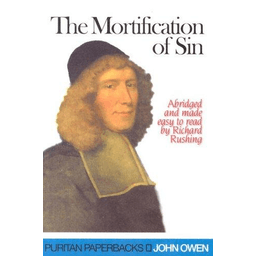 The Mortification of SinJohn Owen’s 1656 diagnostic on fighting indwelling sin - narrower and more clinical than Baxter, aimed at the individual believer’s inner battle rather than the work of the ministry.
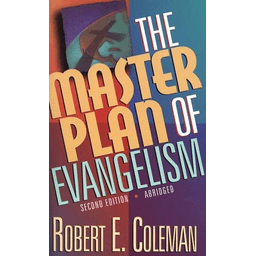 The Master Plan of EvangelismRobert Coleman’s study of how Jesus trained the Twelve - the modern complement to Baxter on the few-over-many, person-to-person work of discipleship and ministry.A Body of DivinityThomas Watson’s 1692 exposition of the Westminster Shorter Catechism - the warmest, most readable Puritan systematic theology, and a natural shelf-mate for readers working through the era’s classics.
Frequently asked questions
Does "Reformed" in the title mean a denomination?
No. Baxter uses "Reformed" to mean renewed or revived in practice - a minister and a ministry doing the work as it ought to be done. It is not a denominational label and does not signal a particular church party. The book is about reforming pastoral practice, which is why ministers across many traditions read it without difficulty.
Do I need the unabridged text, or is the abridged edition fine?
For most readers the Banner of Truth abridgment is the better choice. It is built on William Brown’s classic abridgment, lightly updated, and it trims the dated and repetitive material while keeping the substance of Baxter’s charge. The full public-domain text is free for those who want every word, and it rewards a second reading once you know the shape of the argument.
Is The Reformed Pastor only for clergy?
It is written to ministers, and the charge lands most directly on people who carry pastoral responsibility - pastors, elders, ministry leaders, and ordinands. Laypeople can read it with profit, especially to understand what faithful pastoral work involves, but a general reader looking for a devotional will get more out of Baxter’s The Saints’ Everlasting Rest.
What is the catechizing method Baxter describes?
It is his plan for personal instruction - meeting with the families of the parish individually, often in their homes, to teach the faith and examine how it had taken hold. Baxter organized this systematically in Kidderminster. The specific parish model reflects its era and cannot be transplanted whole, but the principle - that people are taught and shepherded best one at a time - carries across to modern settings.
Is it really in the public domain?
Yes - the original 1656 text is long out of copyright and freely available from CCEL, Project Gutenberg, Monergism, and others in HTML, EPUB, and PDF. Modern editions such as the Banner of Truth abridgment hold their own editorial copyright on the abridgment, introductions, and any modernized text.
Is it hard to read?
The original 1656 English is genuinely difficult - long periodic sentences, period vocabulary, and a tendency to repeat and press each point. The Banner of Truth abridgment is considerably easier and is the recommended starting point for most readers. The unabridged text rewards patience but asks for it the way a long sermon does.
What should I read after Baxter?
Two natural next steps. If you want more Baxter in a warmer, devotional key, The Saints’ Everlasting Rest is his meditation on heaven written for every Christian. If you want to move from pastoral work to the inner life, John Owen’s The Mortification of Sin is the classic diagnostic on fighting personal sin, and Thomas Watson’s A Body of Divinity is the most readable Puritan systematic theology for filling in the doctrine underneath the charge.
Sources & further reading
More Christian Classics (Pre-1900)
The Mortification of SinThe 1656 Puritan handbook on fighting indwelling sin - still the most rigorous spiritual diagnostic in print, four centuries on. The Imitation of ChristA 600-year-old devotional that has outsold almost every Christian book ever written - and still rearranges the modern reader who is willing to sit with it.
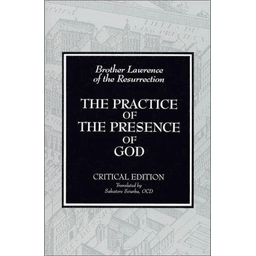 The Practice of the Presence of GodA 17th-century Carmelite kitchen monk’s short, plain talks and letters on staying aware of God in the middle of ordinary work - the smallest devotional classic that keeps outlasting bigger books.The Treasury of DavidSpurgeon spent two decades on a verse-by-verse commentary on all 150 Psalms - his own exposition, centuries of collected commentators, and notes for preachers - and the result is still the first book many turn to when they open the Psalter.All of GraceSpurgeon's short 1886 book explaining salvation by grace through faith - written for the anxious and the seeking, given away by the millions, and still the booklet people press into a searching friend's hands.The Bruised ReedRichard Sibbes built an entire book out of half a verse - "a bruised reed he will not break" - and four centuries on it is still the tenderest page the Puritans ever wrote.