- Starting price
- Free; $14 abridged print ed.
- Free tier
- Yes
- Platforms
- Print · Kindle · Web (free)
- Developer
- Various / Public domain
- Launched
- 1650
- Updated
- May 31, 2026
The verdict
The most thorough book ever written on the Christian hope of heaven and the practice of meditating on it. The full original is enormous and discursive; for almost every modern reader an abridged or modernized edition is the right entry point, and the practice it teaches - sustained, deliberate meditation on the life to come - is the reason it has lasted nearly four centuries.
Try The Saints' Everlasting Rest ↗Opens ccel.org
The Saints' Everlasting Rest has quietly remained the book Christians reach for when they want to think seriously about heaven and find that most writing on the subject is either thin or sentimental. Written in 1650 by Richard Baxter - a Puritan pastor at Kidderminster who would go on to become one of the most prolific English writers of his century - it began as the private exercise of a sick man. Baxter, then in his early thirties, fell gravely ill on a journey and was convinced he was dying. With no books to consult and no expectation of recovery, he turned his attention to the one subject that seemed to matter, and wrote, as he later put it, as a dying man to dying men.
It is not a short book, and it does not move quickly. It does not offer techniques. It does not promise a transformed life in thirty days. It does one thing across its enormous length: it takes the Christian hope of a coming 'rest' - the believer's eternal life with God - and turns it over and over until the reader can feel its weight. Baxter wants to prove the rest is real, describe what it is and is not, diagnose why Christians so rarely think about it, and then teach, in painstaking detail, how to make heavenly-mindedness a deliberate daily practice rather than a vague Sunday sentiment.
The result is the book that gave the English language its most famous extended treatment of meditation on heaven, and one of the most quietly demanding devotional works in print. Baxter recovered from the illness and lived another four decades, but he kept the book, expanded it, and abridged it himself more than once. Its readers have done the same ever since - which is why the version most people meet today is shorter than the one Baxter first set down, and why the practice at its center has outlived almost everything else written alongside it.
✓ The good
- The most thorough treatment of heaven and the believer’s eternal rest in the devotional canon - nothing else works the subject at this depth
- Teaches an actual practice - the long final section is a step-by-step method for deliberate, sustained meditation on the life to come, not just an argument that you should
- Written from inside real suffering - composed when Baxter expected to die, which gives the comfort it offers an unusual weight and credibility
- Cross-tradition readership - read with appreciation far beyond its Puritan origins for the seriousness of its devotional method
- Public domain - the full text is free in many formats, including CCEL, Project Gutenberg, and Monergism
- Abridged and modernized editions are widely available - several good shorter versions make the practice accessible without wading through the whole original
- Pastoral as well as rigorous - Baxter is unusually direct about the reader’s reluctance to think about death and heaven, and unusually warm about why it matters
✗ Watch out
- The full original is very long and discursive - the unabridged text runs to hundreds of dense pages and digresses repeatedly, which is why most readers use an abridgement
- The 1650s prose is genuinely difficult - long periodic sentences and 17th-century vocabulary that most modern readers were never taught to follow
- The sustained focus on death and the afterlife reflects its origin in Baxter’s illness - readers expecting a general devotional may find the concentration on dying relentless
- Demands real meditative discipline - the central practice asks for deliberate, undistracted reflection that does not suit quick or fragmented reading
- Little application to everyday circumstances - Baxter works the doctrine and the inner discipline, not practical guidance on daily problems
Best for
- Readers who want a serious, sustained treatment of the Christian hope of heaven
- Christians trying to build a real habit of meditation rather than read about it
- People facing illness, grief, or mortality who want substantial rather than sentimental comfort
- Anyone who wants a public-domain devotional classic they can read for free in any edition
Avoid if
- You want a quick, light, or easily fragmented daily devotional
- You bounce off 17th-century English even in modernized form
- You want practical guidance on everyday problems rather than meditation on the life to come
- You find a sustained focus on death and the afterlife heavy rather than comforting
What The Saints' Everlasting Rest is
The Saints' Everlasting Rest is a long devotional treatise by the English Puritan Richard Baxter, first published in London in 1650. Baxter wrote it as a young pastor while seriously ill and expecting to die, and the book carries that origin throughout: it is a sustained meditation on the believer's eternal 'rest' - the life to come with God - written, in his words, by a dying man for dying men. The original is large, built in several parts, and was abridged by Baxter himself in later years; it has remained in print, usually in shortened form, ever since.
The book moves through four broad movements. It first sets out what the 'rest' is and who it is for; then argues why every Christian should fix their attention on it; then diagnoses the reasons people fail to do so and warns against neglecting it; and finally - in the section most readers remember - lays out a detailed, practical method for the deliberate daily meditation on heaven that gives the book its enduring purpose. It is less a book to be read once than a manual for a discipline to be practiced.
Why readers still reach for Baxter on heaven
Most writing on heaven falls into one of two traps. It either stays abstract - a doctrine affirmed and quickly left behind - or it turns sentimental, trading in reunions and clouds and soft focus. Baxter does neither. He treats heaven the way a serious teacher treats a subject worth a lifetime: defining it carefully, defending its reality, and then insisting that the reader actually dwell on it through a structured discipline rather than a passing thought. That combination of doctrinal weight and practical method is rare, and it is the reason the book has been picked up by readers far outside the Puritan world where it began.
What draws those readers is not agreement with every line of 17th-century theology. It is the recognition that Baxter is teaching something most modern Christians have never been taught: how to meditate. He does not assume the skill; he builds it, step by step, with the patience of a man who had practiced it himself when he thought he was dying. When he describes the mind's drift away from eternal things and the deliberate work of pulling it back, readers across traditions tend to have the same reaction - that no one had ever explained the practice to them so concretely before.
The doctrine of the rest: what Baxter means by heaven
The first movements of the book are devoted to establishing and describing the 'rest' itself. Baxter is precise about his terms. The rest is not mere inactivity or sleep; it is the believer's final and complete enjoyment of God, the end for which the whole Christian life is a preparation. He works through what the rest will be, who it is promised to, and what its excellence consists of, accumulating descriptions the way a careful expositor builds a case - not to dazzle the reader but to make the hope substantial enough to bear real weight. For Baxter, a hope you cannot describe is a hope you will not lean on.
This is the section that gives the book its theological backbone, and it is also where its origin shows most clearly. A man who expected to die wrote these chapters, and the seriousness is not performed. Baxter is not speculating about the furniture of heaven; he is trying to make the central Christian promise real enough to comfort a dying believer and to reorder the priorities of a living one. Readers who come expecting vague consolation find instead a sustained, deliberate argument that the life to come is the most solid fact a Christian has, and that everything else should be measured against it.
The practice of heavenly meditation: the method at the book’s core
The final and most influential part of the book is a detailed instruction in what Baxter calls the heavenly life upon earth - the deliberate, daily practice of meditating on the coming rest. This is the section that sets the work apart from almost everything written alongside it. Baxter does not merely urge the reader to think about heaven; he teaches a method. He counsels setting apart regular time, choosing a fit place, engaging the understanding to consider the rest and then the affections to be moved by it, and using soliloquy - speaking to one's own heart - to press the truth home until it warms and not merely informs. It is meditation treated as a learnable skill, broken into its parts and taught patiently.
What makes the method endure is that Baxter is honest about how hard it is. He knows the mind wanders, that the practice feels mechanical at first, that the heart resists being turned toward eternal things. He addresses each obstacle directly, with the realism of someone who had fought the same distraction. The reason this section has outlived its 1650s context is that the difficulty it describes has not changed; a reader in 2026 who tries the practice recognizes both the resistance Baxter names and the value of the discipline he teaches. The method is the book's living core, and the part most readers return to.
Original vs. abridged: which edition to actually read
The honest review of any 17th-century Puritan work has to address the length and the prose, and with Baxter both are real. The full original is enormous - hundreds of dense pages - and genuinely discursive; Baxter digresses, doubles back, and elaborates at a scale that suited his century and tries the patience of modern readers. The prose compounds the challenge: long periodic sentences, theological vocabulary, and a sermon-shaped structure most readers were never taught to follow. Baxter himself recognized the problem and produced shorter versions in his lifetime, so abridging the book is not a modern imposition but something its own author began.
The good news is that the abridgements are where the book lives for most readers, and several are very good. Condensed public-domain versions circulate online for free, and contemporary publishers offer lightly modernized and abridged paperbacks that keep the doctrine of the rest and the meditation method while trimming the digressions. For most first-time readers, an abridged or modernized edition is plainly the right starting point - it preserves what is essential and removes the main barrier to finishing. Readers who find the practice valuable and want more of Baxter's own voice can then go to a fuller reprint, which rewards the second visit once you already know what he is doing.
Pricing
Free original (public domain)
Free
The full 1650 text is in the public domain - CCEL, Project Gutenberg, and Monergism host clean HTML, EPUB, and PDF versions. Best for readers who want the complete work and can handle Puritan prose unaided.
Free abridged (public domain)
Free
Baxter abridged his own book, and several condensed public-domain versions circulate freely online. The most practical free option for first-time readers who want the heart of the work without the full length.
Modernized / abridged print edition
~$14
Contemporary publishers offer lightly modernized and abridged paperbacks that keep Baxter’s argument and meditation method intact while trimming the digressions. The standard shelf copy for most readers.
Banner of Truth / classic reprint
~$28
A fuller scholarly or near-complete reprint with original sentence structure, for readers who want as much of Baxter’s own text as possible. Heavier reading and a longer commitment.
Kindle edition
~$3
Numerous inexpensive ebook versions exist, from public-domain scans to edited modern editions. Quality and completeness vary widely by edition - check whether it is full or abridged before buying.
The full 1650 text is public domain and free in every format you would want - CCEL has clean HTML, Project Gutenberg has EPUB and Kindle files, Monergism has PDF. If you want the complete work and can handle Puritan prose unaided, you never have to pay for this book.
For most readers, though, the practical free option is an abridgement. Baxter shortened the book himself, and several condensed public-domain versions circulate online - that is the edition marked best value here, because it gives first-time readers the heart of the work, the doctrine of the rest and the meditation method, without the full length that causes so many people to stall.
If you prefer print, a modernized and abridged paperback at around $14 is the workhorse copy - trimmed of the digressions, lightly updated in language, and easy to keep on the shelf. A fuller scholarly or near-complete reprint at around $28 is the buy for readers who want as much of Baxter's own text as possible and do not mind the heavier commitment.
Kindle editions are plentiful and often only a few dollars, but completeness varies enormously - some are full, many are abridged, and a few are rough public-domain scans. Whatever the format, check before buying whether the edition is the full original or an abridgement, because the reading experience differs sharply between the two.
Where The Saints' Everlasting Rest falls behind
Sheer length and digression. The unabridged original is long and wandering by modern standards - Baxter elaborates at a scale his century expected and ours does not. The full text is a real commitment, and readers who want it tight and linear are better served by an abridgement than by fighting the original to a finish.
Difficult 1650s prose. Even motivated readers find the periodic sentences and 17th-century vocabulary slow going at first. Modernized editions ease this considerably, but the original is unmistakably a Puritan artifact and never pretends otherwise. Skim-reading produces almost nothing; the book has to be read slowly to be read at all.
A sustained concentration on death and the afterlife. The book was written by a man who expected to die, and that focus runs through it. For a reader facing mortality the concentration is exactly the point and a great comfort; for a reader wanting a general, life-facing devotional, the steady attention to dying can feel heavy across the length of the book.
Little everyday application. Baxter works at the level of doctrine and inner discipline, not practical circumstance. There are no chapters on specific daily problems, no exercises, no journaling prompts in the original. The meditation method is meant to be practiced; it is not packaged as a workbook, and readers wanting application machinery will need to supply it themselves.
Demands undistracted time. The central practice asks for sustained, deliberate meditation - set-apart time, a quiet place, focused reflection. That requirement is the book's strength and its barrier at once; readers who can only manage a few fragmented minutes will struggle to do what Baxter is actually asking.
The Saints' Everlasting Rest vs. The Pursuit of God vs. The Imitation of Christ
These three devotional classics get shelved together and recommended in the same breath, but they do very different work. The Saints' Everlasting Rest (1650) is the great treatment of heaven and the practice of meditating on it - long, methodical, and at its best when the reader actually takes up the discipline it teaches. The Pursuit of God (1948) by A.W. Tozer is a short meditation on the felt knowledge of God - warmer, far briefer, aimed at reawakening hunger rather than teaching a structured practice. The Imitation of Christ (c. 1418-1427) by Thomas à Kempis is a daily devotional in the late-medieval contemplative tradition - short readings, a quiet tone, centuries of wide use.
Different strengths. Baxter is the teacher of a discipline. Tozer is the reawakener of desire. à Kempis is the daily companion. A reader who picks up Baxter expecting Tozer's brevity will find him long; a reader who picks up Tozer expecting Baxter's method will find him impressionistic; a reader who picks up à Kempis expecting either will find a different genre. Each does something the others do not, and serious readers tend, over time, to keep all three for the distinct work each one does.
If you are going to read only one, the choice tracks the question you are actually asking. If the question is 'how do I learn to meditate on the life to come,' Baxter - in an abridged edition. If the question is 'how do I want God again,' Tozer. If the question is 'how do I form a quiet daily habit,' à Kempis. None substitutes for the others, and choosing by the practice you actually want avoids the mismatch that disappoints readers in all three directions.
The bottom line
The Saints' Everlasting Rest is not the right book for everyone, and the full original is not the right starting point even for many serious readers. But for the Christian who wants a substantial, unsentimental treatment of heaven and - more than that - wants to actually learn the discipline of meditating on it, there is still nothing else in the devotional canon quite like it. Start with an abridged or modernized edition, read it slowly, and treat the final section as a method to practice rather than a chapter to finish. Written by a man who thought he was dying, it has gone on comforting and reorienting readers for nearly four centuries.
Alternatives to The Saints' Everlasting Rest
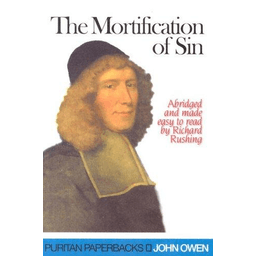 The Mortification of SinJohn Owen's 1656 Puritan handbook on fighting indwelling sin - a diagnostic of the inner life that pairs naturally with Baxter's discipline of meditation as the other half of Puritan spiritual practice.
 The Pursuit of GodTozer's 1948 devotional on felt hunger for God - shorter and warmer than Baxter, aimed at reawakening desire rather than teaching a structured method. A gentler companion piece.
 The Valley of VisionA collection of Puritan prayers and devotions in modern, readable form - the easiest doorway into the same tradition Baxter wrote from, in short pieces rather than a sustained treatise.
Frequently asked questions
Do I need to read the full original, or is an abridged edition fine?
For almost every modern reader an abridged or modernized edition is the better choice. The full 1650 text is very long and discursive, and Baxter abridged it himself in his own lifetime, so a shorter version is faithful to how the book was actually used. Abridgements keep the doctrine of the rest and the meditation method while removing the main barrier to finishing.
What is the book actually about?
It is about heaven - the believer's eternal 'rest' with God - and about the practice of meditating on it. Baxter establishes what the rest is, argues why Christians should fix their attention on it, diagnoses why they so often fail to, and then teaches a detailed method for making heavenly-mindedness a deliberate daily discipline. The meditation method in the final section is the part most readers remember.
Why is there so much focus on death and dying?
Baxter wrote the book while gravely ill and convinced he would die, describing himself as a dying man writing to dying men. That origin runs through the whole work and gives its treatment of heaven unusual weight. For readers facing illness or grief the focus is a real comfort; readers wanting a lighter, life-facing devotional should know the concentration on mortality is sustained.
Is it really in the public domain?
Yes - the original 1650 text is long out of copyright and freely available from CCEL, Project Gutenberg, Monergism, and others in HTML, EPUB, and PDF. Modern editions have their own editorial copyright on introductions, notes, and any modernized or abridged text, but the underlying work is free.
Is Baxter only for readers in his own tradition?
No. Baxter wrote within the English Puritan tradition, but the book has been read with appreciation well beyond it for the seriousness of its treatment of heaven and the practicality of its meditation method. Specific theological commitments surface in places, but the central practice the book teaches speaks across traditions.
How should I read it to get the most out of it?
Slowly, and as a practice rather than a single read-through. Start with an abridged edition, give the final section on heavenly meditation real time, and try the method Baxter describes - set-apart time, a quiet place, deliberate reflection - rather than only reading about it. The book is built to train a discipline, and it rewards being used that way.
What should I read after Baxter?
Two natural next steps. For more Baxter, The Reformed Pastor turns from the inward life of the believer to the work of pastoral ministry. For a wider sense of the same tradition in shorter form, The Valley of Vision collects Puritan prayers in readable modern language, and John Owen's The Mortification of Sin supplies the diagnostic of the inner life that pairs with Baxter's discipline of meditation.
Sources & further reading
More Christian Classics (Pre-1900)
The Mortification of SinThe 1656 Puritan handbook on fighting indwelling sin - still the most rigorous spiritual diagnostic in print, four centuries on. The Imitation of ChristA 600-year-old devotional that has outsold almost every Christian book ever written - and still rearranges the modern reader who is willing to sit with it.
 The Practice of the Presence of GodA 17th-century Carmelite kitchen monk’s short, plain talks and letters on staying aware of God in the middle of ordinary work - the smallest devotional classic that keeps outlasting bigger books.The Treasury of DavidSpurgeon spent two decades on a verse-by-verse commentary on all 150 Psalms - his own exposition, centuries of collected commentators, and notes for preachers - and the result is still the first book many turn to when they open the Psalter.All of GraceSpurgeon's short 1886 book explaining salvation by grace through faith - written for the anxious and the seeking, given away by the millions, and still the booklet people press into a searching friend's hands.The Bruised ReedRichard Sibbes built an entire book out of half a verse - "a bruised reed he will not break" - and four centuries on it is still the tenderest page the Puritans ever wrote.