- Starting price
- Free (public domain)
- Free tier
- Yes
- Platforms
- Print · Kindle · Web (free)
- Developer
- Various / Public domain
- Launched
- 1548
- Updated
- May 31, 2026
The verdict
Not a book you read so much as a program you do - usually over thirty days under a spiritual director, sometimes spread across months in daily life. The text on the page is terse, technical, and written for the director, not the retreatant. But the methods inside it - the examen, imaginative contemplation of Gospel scenes, discernment of spirits - have spread far beyond their Jesuit origin and now turn up everywhere from monasteries to apps to therapy-adjacent prayer practices.
Try The Spiritual Exercises ↗Opens ccel.org
The Spiritual Exercises has quietly become the engine behind a startling amount of modern prayer - far more than most of the people using its methods realize. The daily examen that shows up in countless devotional apps, the practice of placing yourself inside a Gospel scene and watching it unfold, the careful attention to which inner movements draw you toward God and which pull you away: all of it traces back to a small, strange manual that St. Ignatius of Loyola assembled in the first half of the 16th century and published in 1548. It is one of the most consequential books in the history of Christian spirituality. It is also one of the least read straight through, and for a good reason.
It is not a devotional. It doesn’t narrate. It doesn’t explain itself. What it is, instead, is a director’s handbook - a set of instructions, week-by-week outlines, prayer methods, rules, and annotations written so that one experienced person can guide another through a structured, weeks-long encounter. Ignatius compares it directly to physical exercise: just as walking and running are bodily exercises, the Exercises are "every way of preparing and disposing the soul to rid itself of all the disordered tendencies, and after it is rid, to seek and find the divine will." The whole text is built around something you do, with someone, over time - not something you sit and read in an armchair.
Classically, the full program is the "Long Retreat" - roughly thirty days of silence, four or five hour-long periods of prayer a day, daily meetings with a director, organized into four "Weeks" (which are movements, not calendar weeks). Ignatius also wrote, in the manual’s opening annotations, an adaptation for people who cannot drop their lives for a month: the so-called Nineteenth Annotation retreat, made over many months in the middle of ordinary work, with regular meetings instead of a cloister. Understanding that the book is a script for an experience - and choosing how you intend to encounter it - is the single most important thing to get right before you open it.
✓ The good
- The most influential prayer manual in the Western church - the examen, imaginative contemplation, and discernment of spirits all flow from these pages into far wider use
- Genuinely transformative as designed - people who make the full retreat under a good director routinely describe it as among the most significant experiences of their lives
- Methods travel across traditions - the examen and Gospel imagination are increasingly taught and practiced well outside their Jesuit origin
- Highly structured - for readers who want a defined program of prayer rather than a vague "spend time with God," the Exercises is the gold standard
- Public domain - the full text is free online, and capable modern annotated editions cost only $10-18
- Endlessly adaptable - the Nineteenth Annotation "retreat in daily life" lets working people make the full Exercises over months without leaving home
- Five centuries of accumulated guidance - a vast literature of director’s commentaries, companions, and adapted versions surrounds the bare text
✗ Watch out
- Not a read-through book - the bare text is terse and technical, and reading it alone gives almost no sense of what the experience is actually like
- Assumes a director - the manual is written for the person guiding the retreat, not the person making it, and large parts are instructions about how to instruct
- Hard to do well solo - the discernment, pacing, and adaptation Ignatius builds in really want a trained guide, which is a real barrier of time and access
- Demanding by design - the full retreat asks for thirty days of silence or many months of daily commitment; even adapted forms require serious follow-through
- Specific 16th-century vocabulary - "colloquy," "composition of place," "consolation," "desolation," and the meditations on sin and hell need context to land as intended
- Editions vary enormously - a bare literal translation, a director’s guide, and a retreatant’s companion are very different books, and buying the wrong one for your situation leads to confusion
Best for
- Anyone preparing to make a directed Ignatian retreat, long or adapted
- Spiritual directors, retreat leaders, and clergy who guide others in prayer
- Readers who want a structured, defined program of prayer rather than open-ended devotion
- People drawn to imaginative, scene-based contemplation of the Gospels
Avoid if
- You want a book to read cover-to-cover for inspiration on its own
- You have no access to a director or retreat structure and won’t seek one
- You prefer free-form prayer to a methodical, week-by-week program
- You want first-person devotional writing rather than a technical manual
What The Spiritual Exercises is
The Spiritual Exercises (Exercitia Spiritualia) is a manual of structured prayer assembled by Ignatius of Loyola - a Basque soldier turned founder of the Society of Jesus (the Jesuits) - out of notes he kept during his own conversion and the years he spent guiding others. He worked on it from the 1520s onward; it received papal approval and was first printed in 1548. It is not a treatise and not a devotional. It is a practical handbook for leading a person through a progressive, weeks-long retreat of meditation, contemplation, examination of conscience, and decision-making.
The material is organized into four "Weeks" - movements rather than fixed seven-day blocks. The First Week confronts sin and God’s mercy; the Second contemplates the life of Christ and discernment of one’s path; the Third enters Christ’s passion; the Fourth, the resurrection and a culminating "Contemplation to Attain Love." Surrounding the Weeks are the famous toolkit pieces: the examen, prayer methods, the "composition of place," the Rules for the Discernment of Spirits, and twenty opening Annotations that tell the director how to adapt everything to the individual.
Why the Exercises is a program, not a book
The single biggest practical difference between the Spiritual Exercises and almost every other spiritual classic is that the text is not the point - the experience the text orchestrates is the point. Brother Lawrence and Thomas à Kempis wrote words meant to be read and absorbed directly. Ignatius wrote stage directions. He tells the director how long each prayer period should run, what to say and what pointedly not to say, how to adjust for a retreatant who is consoled versus one who is struggling, when to repeat a meditation and when to move on. Reading the manual without doing the Exercises is a bit like reading a recipe and believing you have tasted the meal.
That is also why the methods inside it have outrun the book itself. A working person rarely reads the Spiritual Exercises and rarely has thirty silent days to give - but they can learn the examen in five minutes, can be taught to imagine themselves into a Gospel scene, can be coached to notice the difference between movements that draw them toward life and movements that pull them toward isolation. Those portable practices are the model that respects an ordinary, interrupted life: they ask for attention and honesty rather than a monastery. The full retreat is the deep end; the methods are the doorway most people actually walk through.
Imaginative contemplation: placing yourself inside the Gospel scene
One of Ignatius’s signature methods is what he calls the "composition of place" - and the imaginative contemplation that grows out of it. Instead of analyzing a Gospel passage, the retreatant is asked to enter it: to picture the road to Bethlehem, the smell of the stable, the faces in the crowd around Jesus, the sound of the storm on the lake. You become a participant rather than a reader. You watch what the people do, listen to what they say, notice where you find yourself standing, and let the scene work on you. Ignatius then directs the retreatant into a "colloquy" - a frank, personal conversation with Christ at the end, "speaking as one friend speaks to another."
This is the method that has spread furthest beyond its origin. It asks nothing technical - no theology degree, no special vocabulary - only an active imagination and a willingness to be present. That accessibility is exactly why it now appears far outside Jesuit retreat houses: in parish prayer groups, in devotional podcasts, in apps that walk users through a scene, and among Christians from many traditions who have never heard the word "Ignatian." The premise is simple - the Gospels were written to be encountered, not just parsed - and in practice it reliably moves a passage from the head to the gut.
The examen: a five-step daily review of the day
The Examen (or examination of conscience) is the small, repeatable practice at the heart of the Exercises, and the one Ignatius most wanted people to keep doing for life - he reportedly insisted his Jesuits never omit it, even when other prayer had to be set aside. In its common modern form it is a short daily review with roughly five movements: become aware of God’s presence; review the day with gratitude; pay attention to the emotions and movements that surfaced; choose one of those moments and pray from it; and look toward tomorrow. It takes ten or fifteen minutes and needs nothing but honesty and a little quiet.
Its reach is remarkable for something so modest. Because it requires no retreat, no director, and no special setting, the examen has become the single most widely transplanted piece of the Exercises - taught in spiritual-direction programs, built into journaling and prayer apps, and adopted by Christians well outside the Jesuit world who appreciate a structured way to notice God in the ordinary texture of a day. It is, in effect, Ignatius’s version of the practice of the presence of God: a disciplined, recurring turn of attention that treats the actual events of your life - the meeting, the argument, the small kindness - as the raw material of prayer.
Discernment of spirits and the four Weeks: the architecture of a decision
Underneath the meditations runs the machinery that makes the Exercises more than a collection of prayer techniques: the Rules for the Discernment of Spirits and the progression of the four Weeks. Ignatius is deeply interested in the inner movements he calls "consolation" and "desolation" - the pulls toward faith, hope, and love versus the pulls toward despair, isolation, and self-absorption - and he gives the director concrete rules for reading them, testing them, and helping the retreatant respond. Much of the Second Week is built to support an "election," a major life decision made in the light of that discernment. This is why the Exercises has historically been used at hinges of life: vocation, calling, a fork in the road.
The four Weeks give the whole thing its shape and its emotional logic. You begin by facing your own disorder and God’s mercy (First Week), then walk through the life and call of Christ while learning to discern (Second), accompany him into suffering (Third), and arrive at resurrection joy and a contemplation meant to set love in motion (Fourth). It is a deliberate arc - descent, companionship, death, and rising - and it does not really work as isolated parts. That integrated design is both the Exercises’ great strength and the reason it resists casual reading: the architecture is meant to be lived through in sequence, with a guide watching how each movement is landing.
Pricing
Free (CCEL / public domain)
Free
The full text - typically the classic Elder Mullan translation - in HTML, ePub, and PDF. Complete and accurate, but bare: no director’s notes, no orientation for the first-time reader. Best for reference or for someone already working with a guide.
Modern annotated edition
~$10-14
A contemporary translation (George Ganss’s edition is the standard) with an introduction, footnotes, and explanations of Ignatian vocabulary. The single most useful version for most readers who want to understand what they’re looking at.
Retreatant’s companion / adapted guide
~$15-18
A reworked version arranged for the person actually praying the Exercises - daily Scripture passages, reflection points, and a workable structure for the Nineteenth Annotation retreat in daily life. Examples include David Fleming’s "literal and contemporary" reading and various parish-tested guides.
Director’s manual
~$16-25
A version aimed at the person giving the retreat - with commentary on adapting the Weeks, pacing, and discernment. Overkill for a solo reader; essential for anyone who will guide others.
Ebook (Kindle)
~$5-10
Most modern translations are available as ebooks at a few dollars below print. Convenient, though the manual’s outline-heavy structure can read awkwardly on a small screen.
There is no version of the Spiritual Exercises you are required to pay for. The text entered the public domain long ago, and the classic Elder Mullan translation is freely available in full from the Christian Classics Ethereal Library and elsewhere in HTML, ePub, and PDF. If you only want to see what the manual actually says - to read the Annotations, the examen, the Discernment rules in Ignatius’s own outline - the free text does the job completely.
What you are buying, if you spend money, is orientation. The bare manual is famously hard to make sense of cold, so the modern annotated edition - George Ganss’s translation with introduction and footnotes is the standard, usually $10-14 - is the single most useful version for most readers, because it explains the vocabulary and the structure while keeping Ignatius’s actual text. That is the one to reach for first.
If you intend to pray the Exercises rather than study them, a retreatant’s companion or adapted guide ($15-18) is the better buy: these arrange the material as a workable day-by-day path, often built explicitly for the Nineteenth Annotation "retreat in daily life," with Scripture passages and reflection points supplied. A director’s manual ($16-25) goes the other direction, toward the person guiding others, and is overkill for a solo reader. Kindle editions of most translations run a few dollars cheaper than print.
As with any public-domain title, be wary of bargain reprints with no translator named and no introduction - they tend to reproduce the bare text with none of the help a first-time reader needs, which is exactly the help that makes the Exercises usable. Most readers do not need more than one edition: the Ganss annotated text for understanding, or a single good companion if you are actually making the retreat.
Where The Spiritual Exercises falls behind
Not a read-through book. This is the thing to know before anything else: the Spiritual Exercises is not built to be read for inspiration the way Brother Lawrence or à Kempis is. The page is terse, schematic, and addressed largely to the director. A reader who picks it up expecting devotional prose will find outlines, rules, and instructions about instruction - and will likely conclude, wrongly, that there is nothing here. Almost everyone experiences the Exercises as a guided retreat, not as a text consumed alone.
It assumes a director and a structure. Ignatius wrote the manual on the premise that one experienced person is accompanying another, adapting the pacing, helping with discernment, deciding when to repeat or move on. Strip that away and a great deal of the design simply cannot function as intended. Access to a trained director or a retreat program is therefore a real prerequisite for the full experience, and not everyone can easily find one - a barrier of time, geography, and cost more than of money.
Terse and technical on the page. The vocabulary is specific and 16th-century: "composition of place," "colloquy," "election," "consolation," "desolation," and the vivid First Week meditations on sin and hell. Without notes, modern readers often misread the tone of these sections. The annotated editions exist precisely to bridge this gap, and reading the bare free text without them is the most common way people get the wrong impression of the whole.
Demanding even in adapted form. The Long Retreat asks for thirty days of silence; the Nineteenth Annotation version asks for many months of near-daily prayer and regular meetings. Either is a serious commitment, and the Exercises does not pretend otherwise. Readers looking for a low-effort devotional habit will find the methods (the examen especially) approachable, but the full program is genuinely strenuous and is meant to be.
Best understood through its offspring. For many people the most realistic on-ramp is not the manual at all but its widely transplanted practices - the examen, imaginative contemplation, discernment language - encountered first in a companion book, an app, or a parish group, and only later traced back to the source. That is not a flaw so much as a feature of how this particular classic actually reaches readers.
The Spiritual Exercises vs. Introduction to the Devout Life vs. The Interior Castle
These three are among the most recommended works of structured Western spirituality, and they are often weighed against one another by readers wanting a serious path of prayer. Different strengths. The Spiritual Exercises is a director-led program of meditation and discernment built around an intensive retreat; St. Francis de Sales’s Introduction to the Devout Life is a warm, readable guidebook written for ordinary laypeople living in the world; St. Teresa of Ávila’s The Interior Castle is a contemplative map of the soul’s journey toward union with God.
Introduction to the Devout Life is the gentlest and most immediately readable of the three. De Sales wrote it as letters of counsel to a laywoman and then expanded it for everyone, and it works beautifully read straight through - practical advice on prayer, the virtues, and ordinary temptations for people who are not monks. Where Ignatius hands the reader a program to be guided through, de Sales hands the reader a wise, encouraging companion they can absorb directly. It is the better starting point for someone who simply wants to read a classic of the spiritual life.
The Interior Castle is the most mystical and the most descriptive. Teresa maps the interior life as seven "mansions" leading inward toward union with God, and she is writing about contemplative prayer at its heights rather than handing out a method anyone can immediately practice. If you want a defined, step-by-step program with a guide, the Exercises is the one - provided you can do it as designed. If you want a readable, do-it-yourself classic on living devoutly in the everyday, start with de Sales. If you want a profound interior map of prayer’s deeper stages, Teresa is the one to sit with.
The bottom line
The Spiritual Exercises is one of the most influential things ever written about how to pray - but it is a manual for an experience, not a book to be read, and treating it as the latter is the surest way to miss it. If you can make a directed retreat, long or adapted, do it; people rarely regret it. If you can’t, read a modern annotated edition (Ganss’s is the standard) to understand the architecture, then practice the parts that travel - the examen and imaginative contemplation - which have spread far beyond their Jesuit origin for the simple reason that they work. The free text is fine for reference, but here, more than with almost any classic, the help around the text is the point.
Alternatives to The Spiritual Exercises
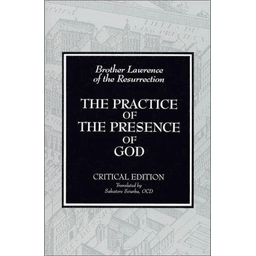 The Practice of the Presence of GodBrother Lawrence’s tiny classic on staying aware of God in ordinary work - far shorter and simpler than the Exercises, and a book you absorb directly rather than a program you’re guided through.
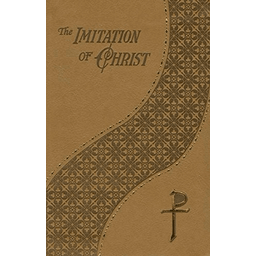 The Imitation of ChristThomas à Kempis’s 15th-century meditations on following Jesus - like the Exercises, rooted in late-medieval Catholic devotion, but written to be read slowly on its own rather than enacted as a retreat.
Frequently asked questions
Is The Spiritual Exercises a book you read, or something you do?
Primarily something you do. Ignatius wrote it as a manual for a director to guide a person through a structured retreat of prayer, meditation, and discernment - classically about thirty days, or spread over many months in the adapted "Nineteenth Annotation" form. Reading the text alone gives you the outline but very little of the actual experience. Most people encounter the Exercises as a guided retreat, and many first meet its methods (like the examen) outside the manual entirely.
Do I need a spiritual director to make the Spiritual Exercises?
For the full Exercises as Ignatius designed them, yes - much of the manual is written for the director, who adapts the pacing, helps with discernment, and decides when to repeat or move on. Some people work through adapted, self-guided versions or apps, and that can be genuinely valuable, but the complete retreat really assumes a trained guide and a structure. Retreat houses, Jesuit parishes, and many dioceses offer directed retreats, including the adapted "retreat in daily life."
What is the Ignatian examen?
The examen is a short daily review of the day - usually around five movements: become aware of God’s presence, review the day with gratitude, notice the emotions and inner movements that came up, pray from one of those moments, and look toward tomorrow. It takes ten or fifteen minutes and needs no director. Ignatius considered it essential, and it is the most widely adopted piece of the Exercises today, used well beyond Jesuit and Catholic settings.
Which edition or translation should I buy?
For most readers, a modern annotated edition - George Ganss’s translation with introduction and footnotes is the standard, usually $10-14 - is the most useful, because it explains Ignatian vocabulary while keeping the actual text. If you intend to pray the Exercises rather than study them, a retreatant’s companion or adapted guide ($15-18) lays the material out as a workable path. The free public-domain text (the Mullan translation) is fine for reference but offers no orientation for a first-time reader.
Is the Spiritual Exercises a Catholic book?
Yes - it was written by St. Ignatius of Loyola, founder of the Jesuits, in the Catholic tradition, and the full retreat developed within it. At the same time, several of its methods, especially the examen and imaginative contemplation of Gospel scenes, are increasingly taught and practiced across a range of Christian traditions, often without the "Ignatian" label attached. The manual itself is rooted in 16th-century Catholic devotion; many of the practices it contains have traveled well beyond it.
How long does it take to do the Spiritual Exercises?
The classic "Long Retreat" runs about thirty days in silence, with four or five hour-long prayer periods a day organized into four "Weeks" (which are movements, not strict calendar weeks). Because that is impossible for most people, Ignatius built in the Nineteenth Annotation adaptation - the full Exercises made over many months in daily life, with shorter daily prayer and regular meetings with a director. Reading the manual itself takes only a few hours, but that is not the same as making the Exercises.
Is there a free version of the Spiritual Exercises?
Yes. The text has long been in the public domain, and the Elder Mullan translation is freely available in full from the Christian Classics Ethereal Library (ccel.org) and other sites in HTML, ePub, and PDF. It is complete and accurate. The catch is that it is the bare manual with no notes - useful as a reference, but most first-time readers benefit from spending around $10-14 on a modern annotated edition that explains what they are looking at.
Sources & further reading
More Catholic Books
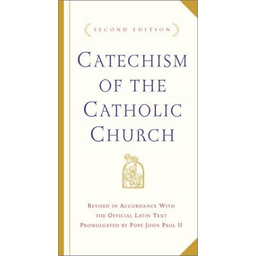 Catechism of the Catholic ChurchThe official, full-length compendium of Catholic doctrine - four pillars, ~2,865 numbered paragraphs, free online at the Vatican, and the reference nearly every other Catholic resource quotes.
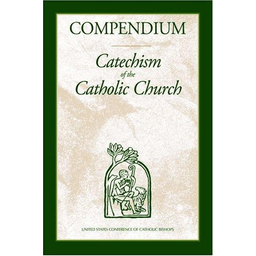 Compendium of the Catechism of the Catholic ChurchThe official 598-question summary of the full Catechism - Catholic doctrine in a portable question-and-answer format, with the complete text free at vatican.va.
 CatholicismBishop Robert Barron's richly illustrated tour of the Catholic faith - the companion book to the Word on Fire documentary series, written to walk a curious reader from Jesus to the last things.
 Introduction to ChristianityThe 1968 lectures that a young Joseph Ratzinger - later Pope Benedict XVI - turned into one of the 20th century's most cited works of Catholic theology, built section by section on the Apostles' Creed.
 Jesus of NazarethA sitting pope's personal, scholarly reading of the Gospels - three volumes that engage modern biblical criticism while searching for the Jesus the Gospels actually present.
 Story of a SoulThe spiritual autobiography of a young Carmelite nun who died at 24 - the small, warm book that taught a century of readers a path of holiness through little things done with great love.