- Starting price
- Free (public domain)
- Free tier
- Yes
- Platforms
- Print · Kindle · Web (free)
- Developer
- Various / Public domain
- Launched
- 1670
- Updated
- May 31, 2026
The verdict
Pensées has quietly become the one apologetics book that thinkers of every persuasion keep returning to, precisely because Pascal never finished arguing. What survives is a box of brilliant fragments - the wager, the heart's reasons, the meditation on human greatness and wretchedness - and the edition you choose decides how readable that box turns out to be. For most first-time readers the Penguin Krailsheimer at around fourteen dollars is the right call.
Try Pensées ↗Opens gutenberg.org
Pensées is one of the strangest landmark books in the Christian canon: it is famous, it is constantly quoted, and it was never actually written. When Blaise Pascal died in 1662 at thirty-nine, he left behind hundreds of slips of paper - some long, some a single line - notes toward a grand defense of the Christian faith he never lived to assemble. His friends at Port-Royal gathered the scraps, arranged them as best they could, and published them in 1670 under the title Pensées, French for "Thoughts." What you hold in your hands, in any edition, is a reconstruction of a building that was only ever sketched.
It does not read like a finished book. It does not move in a straight line. It does not build one argument from start to finish. Many of the entries are a single arresting sentence - "The heart has its reasons which reason knows nothing of" - set down with no surrounding paragraph to explain it. Others run for pages. The most famous piece, the so-called wager, is one fragment among roughly nine hundred, and Pascal almost certainly meant it as a single move in a much larger strategy rather than the centerpiece it has become. Reading Pensées means reading a mind at work, mid-thought, rather than a case neatly closed.
And yet it endures. Pascal was a mathematical prodigy, a pioneer of probability theory, an inventor, and a physicist before he turned the full force of that intellect toward the human condition and the question of God. Writing as a Catholic shaped by the austere Jansenist movement at Port-Royal, he set out to unsettle the comfortable skeptic - to show that the human being is at once magnificent and miserable, and that this paradox points somewhere. The fragments that survive are read today by Catholics, Protestants, Orthodox readers, Latter-day Saints, and secular philosophers alike, which is a rare piece of common ground for a seventeenth-century book of religious apologetics to occupy.
✓ The good
- One of the most quotable books ever written - "the heart has its reasons," the thinking reed, the wager, the hidden God all live in the wider culture
- Genuinely public domain - the full text is free at Project Gutenberg, CCEL, and in dozens of inexpensive Kindle editions
- Written by a first-rank mind - Pascal pioneered probability theory and projective geometry, and that rigor shows in how he reasons about belief and chance
- The diagnosis of the human condition (greatness and wretchedness) lands as hard in 2026 as it did in 1660 - Pascal on distraction and boredom reads like contemporary commentary
- Short fragments make it unusually approachable - you can read three entries on a coffee break and find one of them lodged in your head for a week
- Shared ground across traditions - Catholic, Protestant, Orthodox, and Latter-day Saint readers, and secular philosophers, all engage Pascal seriously
- Modern translations are excellent - Krailsheimer, Levi, and Ariew give you crisp, readable English rather than stiff Victorian prose
✗ Watch out
- It is fragmentary and unfinished - there is no single argument that flows from start to finish, and first-time readers expecting a built case can feel adrift
- Editions order the fragments differently - Lafuma, Brunschvicg, and Sellier each number and sequence them their own way, so two copies can feel like two different books
- Seventeenth-century references abound - disputes with the Jesuits, the science of Pascal’s day, and figures like Montaigne are assumed knowledge that footnotes have to supply
- The wager is famous but only one piece - readers who come for it alone often miss that Pascal meant it as a single step within a much larger design
- Some fragments are cryptic by nature - a one-line note Pascal never expanded can leave you guessing at what he intended to say next
Best for
- Readers who want a classic of Christian apologetics from outside the modern era
- Anyone drawn to short, aphoristic reading they can dip into rather than read straight through
- Philosophy and history students working on belief, probability, or the seventeenth century
- Thoughtful skeptics who prefer being provoked to being lectured
Avoid if
- You want a single continuous argument built tidily from premise to conclusion
- You dislike fragmentary or aphoristic books and need sustained narrative or exposition
- You want a contemporary, footnote-free apologetic in modern cultural vocabulary
- You want a verse-by-verse Bible study rather than philosophical reflection on the faith
What Pensées is
Pensées is a posthumously assembled collection of fragments by Blaise Pascal (1623-1662), first published in 1670, eight years after his death. The notes were intended as raw material for an unwritten work of Christian apologetics - an "Apology for the Christian Religion" Pascal planned but never completed. What survives is roughly nine hundred fragments ranging from single sentences to multi-page essays, covering the human condition, the limits of reason, the evidence for and hiddenness of God, the figure of Jesus, and the famous wager about belief.
Because Pascal left no final order, every edition is a reconstruction. The Port-Royal editors imposed their own arrangement in 1670; later scholars - Brunschvicg in 1897, Lafuma in 1951, Sellier in 1976 - each proposed different sequences based on study of the surviving paper bundles. The result is a book that exists in several legitimate shapes at once. Reading Pensées is less like reading a treatise and more like walking through a great thinker’s notebook, with the understanding that he never got to write the fair copy.
Why readers across traditions still reach for Pascal
Most apologetics aims at the intellect: here is the argument, here is the evidence, here is the conclusion. Pascal aims somewhere more disorienting - at the whole person, including the parts that reason cannot reach. His starting move is not a proof of God but a portrait of the reader: a creature capable of contemplating the infinite yet unable to sit alone in a quiet room, magnificent in thought and wretched in practice, forever distracting himself from questions he cannot answer. Pascal wants you to feel the contradiction before he offers anything to resolve it. That is why the book unsettles people who are immune to ordinary apologetics.
It also helps explain the book’s unusual reach. Pascal wrote as a Catholic shaped by Jansenism, but the fragments that survive spend far more time on the human predicament than on the doctrinal disputes of his day, and that gives them a wide hospitality. A Protestant reader, an Orthodox reader, a Latter-day Saint reader, and a secular philosopher can each find Pascal pressing on something real - the hunger for meaning, the fear of the silent heavens, the gamble that any commitment involves - without first having to clear a denominational hurdle. The fragments are unfinished enough, and human enough, to hold all of those readings at once.
The wager: probability turned on the question of God
The most famous fragment in Pensées is the one usually called "Pascal’s wager." Pascal, who helped invent the mathematics of probability, frames belief in God as a decision made under uncertainty, the way a gambler weighs a bet. Reason alone, he argues, cannot settle whether God exists - the question lies beyond proof. But you must wager all the same, because living itself is a kind of bet one way or the other. He then lays out the stakes as a decision matrix: if you wager on God and are right, the gain is infinite; if you wager on God and are wrong, you lose little. Given those payoffs, he concludes, the rational move is to stake yourself on belief and to begin living as though it were true.
It is worth being precise about what the wager is and is not. It is not a proof that God exists, and Pascal never claims it is - he explicitly grants that reason cannot decide the matter. It is an argument about how to act when proof is unavailable, aimed squarely at the worldly skeptic who treats indifference as the safe option. It is also only one fragment among hundreds, almost certainly intended as a single step within the larger work Pascal never finished, not the summary of his whole case. Philosophers have debated it for three centuries - questioning the payoff math, the assumption of a single God, the idea that belief can be chosen - and it remains one of the most discussed arguments in the philosophy of religion precisely because it reframed the question rather than answered it.
Greatness and wretchedness: the thinking reed
Running underneath the whole collection is Pascal’s diagnosis of the human being as a creature of contradiction - at once great and wretched, noble and miserable. The image he is best remembered for is the "thinking reed": the human being is a reed, the most fragile thing in nature, which the smallest accident can crush, and yet a reed that thinks, that knows it is dying, that can hold the universe in its mind even as the universe crushes it. Our greatness, for Pascal, lies precisely in this awareness; a stone is not wretched, because it knows nothing. We are wretched because we are great enough to see what we have lost.
From this Pascal builds his famous analysis of distraction. Human beings, he observes, cannot bear to sit quietly with themselves, so they fill their lives with diversion - hunting, gambling, war, ambition, busyness - anything to avoid the silence in which the hard questions surface. "All of humanity’s problems," runs one of the most quoted lines, "stem from man’s inability to sit quietly in a room alone." Three and a half centuries before the smartphone, Pascal described the modern condition with uncomfortable accuracy, and this section is the reason many readers who come for the wager stay for everything around it.
The hidden God and the reasons of the heart
Pascal does not present a God who is obvious. One of his recurring themes is the "hidden God" - a God who gives enough light for those who seek to find, and enough obscurity for those who refuse to be left in the dark. For Pascal this hiddenness is not a flaw in the evidence but a feature of the relationship: God remains hidden enough that belief is a matter of the will and the heart, not a conclusion forced on a neutral observer. This is the setting for his most quoted line of all - "The heart has its reasons which reason knows nothing of" - by which he means that there is a mode of knowing, an intuition deeper than logical demonstration, through which the most basic truths are grasped.
This is where Pascal parts company with the rationalist apologetics of his century, and where readers across traditions tend to find him most resonant. He is not anti-reason - he was one of the great mathematicians of the age - but he insists reason has limits, and that the deepest questions are settled in a register reason cannot reach on its own. Faith, in Pascal’s account, is not credulity and not pure logic; it is the heart’s assent to what the mind cannot prove but cannot dismiss. That account of belief - humbler than proof, larger than feeling - is part of why the fragments still speak to readers who would agree on little else.
Pricing
Public domain editions
Free
Project Gutenberg, CCEL, and the Internet Archive carry the older Trotter translation (based on the Brunschvicg arrangement) in full. Complete and free, though the numbering and the prose are from an earlier era.
Penguin Classics (Krailsheimer)
~$14
A. J. Krailsheimer’s translation, ordered by the Lafuma sequence. Accurate, readable, and the version most widely assigned. The safest entry point for most first-time readers.
Oxford World’s Classics (Levi)
~$13
Honor Levi’s translation with Anthony Levi’s introduction and notes. Crisp modern English and strong scholarly apparatus for readers who want the historical context filled in.
Hackett (Ariew)
~$16
Roger Ariew’s translation, favored in philosophy courses. Careful, well-annotated, and keyed to the Sellier arrangement, which many scholars now consider the most faithful to Pascal’s manuscripts.
Audiobook
~$15
Several narrated editions exist on Audible and free at LibriVox. Pensées is unusual on audio - the fragmentary form means it works well in short listening sessions rather than long stretches.
Pensées is public domain, so it is genuinely free. The older Trotter translation - built on the nineteenth-century Brunschvicg arrangement - is out of copyright and available in full at Project Gutenberg, CCEL, the Internet Archive, and in dozens of free or near-free Kindle editions. If your budget is zero you can read the whole collection today, with the caveat that the Brunschvicg numbering and the older prose differ from the modern scholarly editions.
For a first-time reader, though, the Penguin Classics edition translated by A. J. Krailsheimer at around fourteen dollars is almost always the right call. It uses the Lafuma sequence, the prose is accurate and readable, and it is the version most widely assigned. Most readers do not need anything more specialized than this to get the full force of the book.
Beyond Penguin, the choice is mostly about apparatus and arrangement. The Oxford World’s Classics edition (Honor Levi, around thirteen dollars) pairs a clean modern translation with a strong introduction and notes. The Hackett edition (Roger Ariew, around sixteen dollars) is favored in philosophy courses and follows the Sellier arrangement, which many scholars now regard as closest to Pascal’s manuscripts. Any of the three is a sound modern reading copy; which you pick depends on whether you want Penguin’s ubiquity, Oxford’s context, or Hackett’s scholarly precision.
Audiobook listeners have several options on Audible at around fifteen dollars or one credit, and free public-domain recordings exist at LibriVox. Pensées is an unusual audio title - because it is built from short fragments rather than continuous chapters, it suits brief listening sessions and bears repetition well, but it does not carry a long commute the way a narrative would.
Where Pensées falls behind
It is unfinished, and it reads unfinished. Pensées was never assembled into the book Pascal intended, so there is no single argument that flows from beginning to end. Readers who expect a built case - premise, development, conclusion - hit a wall of disconnected fragments and can feel adrift. That is not a flaw in any edition; it is the nature of what Pascal left behind, and it is worth knowing going in.
The editions disagree on order. Because Pascal left no final sequence, the major modern arrangements - Brunschvicg, Lafuma, and Sellier - number and order the fragments differently, and the old free editions use Brunschvicg while most new ones use Lafuma or Sellier. The practical effect is that a quotation cited by fragment number in one edition can be hard to locate in another, and two readers with two copies can feel like they are reading two different books.
Seventeenth-century context is assumed throughout. Pascal wrote for his own moment, and the fragments take for granted his readers’ familiarity with the science of his day, with Montaigne and the skeptical tradition he was answering, and with the religious controversies between Port-Royal and the Jesuits. Good modern editions footnote all of this - Levi and Ariew especially - but the references are dense, and a reader without the notes will miss layers of what Pascal is doing.
The famous bits can overshadow the whole. The wager and a handful of aphorisms are so well known that many readers arrive expecting them to be the book, when in fact they are isolated pieces of a much larger and more interesting design. Coming for the wager alone is a bit like visiting a cathedral to see one stained-glass window - you will get something, but you will miss the structure it was meant to sit inside.
Some fragments simply stop. Among the nine hundred entries are notes Pascal jotted and never developed - a single line, a list, a half-formed thought. In the finished work these would have grown into arguments; as they stand, a few are genuinely cryptic, and the reader is left to reconstruct what Pascal might have meant. Most editions flag the more elliptical ones, but the open-endedness is part of the texture.
Pensées vs. Confessions vs. The Everlasting Man
These three are among the most-recommended works of pre-modern and early-modern Christian apologetics and reflection in English, and they go about the task in very different ways.
Different strengths. Pensées (Pascal, 1670) is the fragmentary, aphoristic approach - short flashes of insight about the human condition and the gamble of belief, brilliant but unassembled. Confessions (Augustine, c. 400) is the first-person interior account - a conversion narrative and prayer that argues by showing what it is like to seek God from the inside. The Everlasting Man (Chesterton, 1925) is the sweeping historical argument - a retelling of human history and the story of Christ designed to make a familiar subject strange and striking again.
For a new reader wanting one entry point, Confessions is the most immersive and Chesterton the most continuously argued, while Pensées is the one you dip into rather than read straight through. Pascal is the sharpest on the psychology of belief and unbelief; Augustine is the deepest on the inner life; Chesterton is the most exhilarating as a single sustained case. Many well-built shelves carry all three, since they cover different ground rather than competing for the same one.
The bottom line
Pensées is one of the great unfinished books - a box of brilliant fragments from a first-rank mind who died before he could assemble them into the apology for the faith he planned. What survives is the wager, the thinking reed, the hidden God, and the heart’s reasons, scattered across nine hundred entries that no two editions order the same way. Read it as a notebook, not a treatise; come for more than the wager; and for most first-time readers, spend the fourteen dollars on the Penguin Krailsheimer. Few books this old still press this directly on the questions a thoughtful reader is actually asking.
Alternatives to Pensées
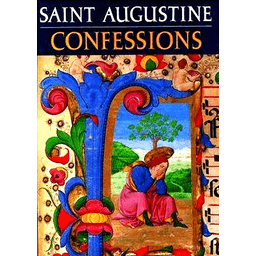 ConfessionsAugustine’s c. 400 AD spiritual autobiography - the book that invented the conversion narrative and still anchors how every Western tradition thinks about grace, time, and the inner life.
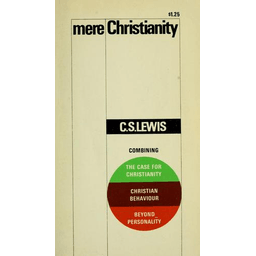 Mere ChristianityC. S. Lewis’s wartime BBC broadcasts on shared Christian belief - the easiest modern entry point to classic Christian thought, short chapters and plain English.
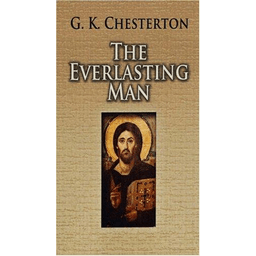 The Everlasting ManG. K. Chesterton’s 1925 apologetic that retells human history and the story of Christ to make the familiar strange - the book Lewis credited with helping his own conversion.
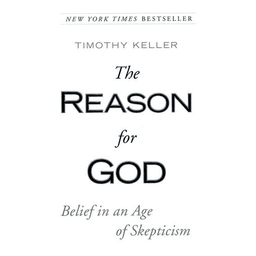 The Reason for GodTim Keller’s 2008 engagement with contemporary objections - suffering, exclusivism, science, hell - in the vocabulary of a modern skeptic, and a frequent quoter of both Lewis and Pascal.
Frequently asked questions
What does "Pensées" mean, and did Pascal write it as a book?
Pensées is French for "Thoughts." Pascal did not write it as a finished book - he left hundreds of notes toward an unfinished defense of the Christian faith, and after his death in 1662 his friends at Port-Royal gathered and arranged the fragments, publishing them in 1670. Every edition you can buy is a reconstruction of a work Pascal never completed.
What exactly is Pascal’s wager?
It is an argument that since reason cannot prove whether God exists, and since you must effectively bet one way or the other by how you live, the rational choice is to wager on belief: if you are right the gain is infinite, and if you are wrong you lose little. Pascal, a pioneer of probability theory, frames it as a decision under uncertainty. It is not a proof that God exists - Pascal grants reason cannot settle that - and it is only one fragment among many.
Why do different editions of Pensées seem so different?
Because Pascal left no final order for his fragments. Scholars have proposed several arrangements - Brunschvicg (1897), Lafuma (1951), and Sellier (1976) - each numbering and sequencing the entries differently. Free public-domain editions usually follow Brunschvicg, while most modern translations use Lafuma or Sellier, so a fragment cited by number in one edition can be hard to find in another.
Which edition should I actually buy?
For most first-time readers the Penguin Classics translation by A. J. Krailsheimer, at around fourteen dollars, is the safest bet - accurate, readable, and widely assigned. Choose the Oxford World’s Classics (Honor Levi) if you want a strong introduction and notes, or the Hackett (Roger Ariew) if you want the scholarly precision and the Sellier arrangement favored in philosophy courses.
Was Pascal Catholic, and what was Jansenism?
Pascal was a Catholic, closely associated with Port-Royal, a center of the Jansenist movement - a rigorous, Augustinian-leaning current within seventeenth-century French Catholicism that emphasized grace and human dependence on it. That context shapes the fragments, though the surviving Pensées spend far more time on the human condition than on the doctrinal disputes of his day, which is part of why readers across many traditions engage the book.
Do I need a background in philosophy or math to read it?
No. Pascal’s sentences are clear and many fragments are a few lines long, so the reading itself is accessible. A good modern edition’s notes will fill in the seventeenth-century references - the science of his day, his dispute with the Jesuits, his answer to Montaigne - that the fragments assume. You can get a great deal from Pensées without any technical background.
Is there a good free version of Pensées?
Yes. The full text in the older W. F. Trotter translation is free at Project Gutenberg, CCEL, and the Internet Archive, and LibriVox has free public-domain audio. These editions follow the Brunschvicg arrangement and use an earlier English style - complete and accurate, just less crisp than the modern Penguin, Oxford, or Hackett translations.
Sources & further reading
More Christian Classics (Pre-1900)
 The Mortification of SinThe 1656 Puritan handbook on fighting indwelling sin - still the most rigorous spiritual diagnostic in print, four centuries on.
 The Imitation of ChristA 600-year-old devotional that has outsold almost every Christian book ever written - and still rearranges the modern reader who is willing to sit with it.
 The Practice of the Presence of GodA 17th-century Carmelite kitchen monk’s short, plain talks and letters on staying aware of God in the middle of ordinary work - the smallest devotional classic that keeps outlasting bigger books.The Treasury of DavidSpurgeon spent two decades on a verse-by-verse commentary on all 150 Psalms - his own exposition, centuries of collected commentators, and notes for preachers - and the result is still the first book many turn to when they open the Psalter.All of GraceSpurgeon's short 1886 book explaining salvation by grace through faith - written for the anxious and the seeking, given away by the millions, and still the booklet people press into a searching friend's hands.The Bruised ReedRichard Sibbes built an entire book out of half a verse - "a bruised reed he will not break" - and four centuries on it is still the tenderest page the Puritans ever wrote.