Painter of the Bible
Hendrick Goltzius
Hendrick Goltzius was the dominant Dutch printmaker of the late sixteenth century and the founding figure of the Haarlem school.

Their faith
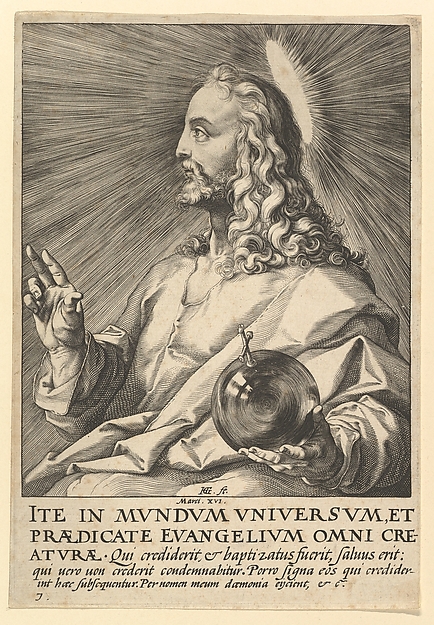
Why Hendrick Goltzius painted Christ
Hendrick Goltzius was a prominent figure in the Dutch art scene of the late sixteenth century, known not only for his technical mastery in printmaking but also for his deep engagement with religious themes. Raised in a family that valued artistic expression, Goltzius was influenced by his father's work as a glass painter and the humanist teachings of his mentor, Dirck Volckertszoon Coornhert. His faith is reflected in the sheer volume of his religious output, which includes engravings that depict key biblical narratives and figures. Goltzius's dedication to scripture and the sacred was evident in his workshops, where he produced works that circulated widely among both Catholic and Protestant communities, demonstrating a commitment to sharing the Christian message through art.
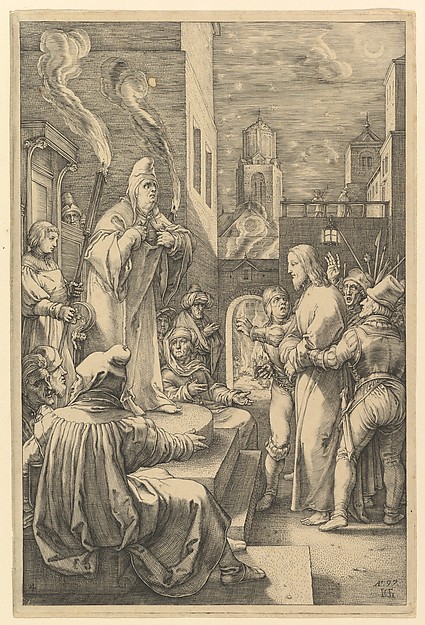
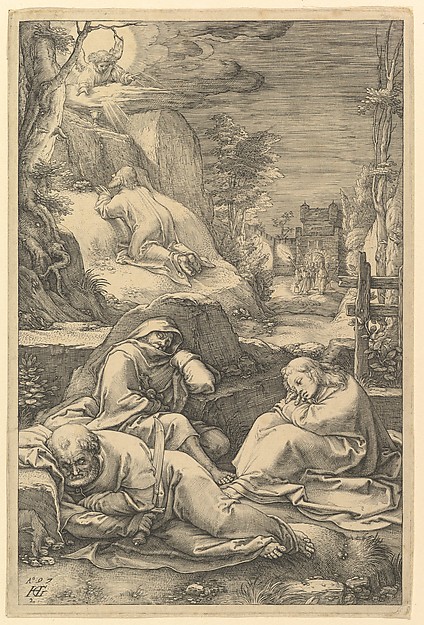
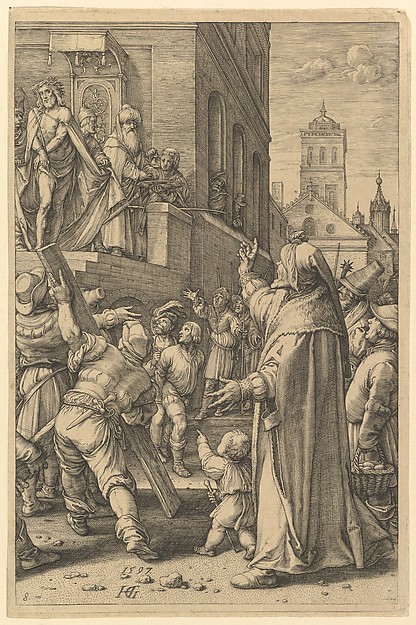
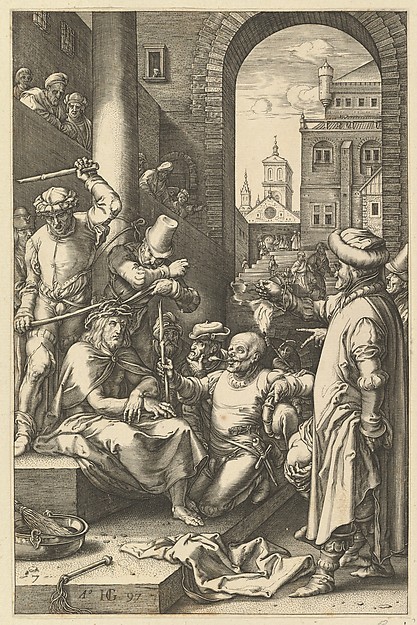
Goltzius's faith profoundly shaped his artistic vision, as seen in masterpieces such as "The Life of the Virgin" and "The Passion of Christ." These works not only showcase his technical prowess but also reveal a deep reverence for the stories and figures of the Bible. His ability to imitate the styles of earlier masters while infusing them with his unique perspective speaks to his devotion and understanding of the spiritual significance of his subjects. The engravings of the Apostles and the Evangelists, along with narratives from the Old Testament, serve as a testament to his belief in the power of art to convey divine truths. Even today, Goltzius's works continue to inspire viewers, inviting them to reflect on the beauty of faith and the timeless stories of Christianity.
Life & work
Hendrick Goltzius was the dominant Dutch printmaker of the late sixteenth century and the founding figure of the Haarlem school. Born in Bracht-am-Niederrhein in 1558, raised in Duisburg where his father painted glass, and trained first by his father and then by the engraver Dirck Volckertszoon Coornhert (a humanist polymath who became Goltzius's intellectual as well as professional mentor), he settled in Haarlem in 1577 and ran the most influential printmaking workshop in the Netherlands for the next thirty years. He died in Haarlem in 1617.
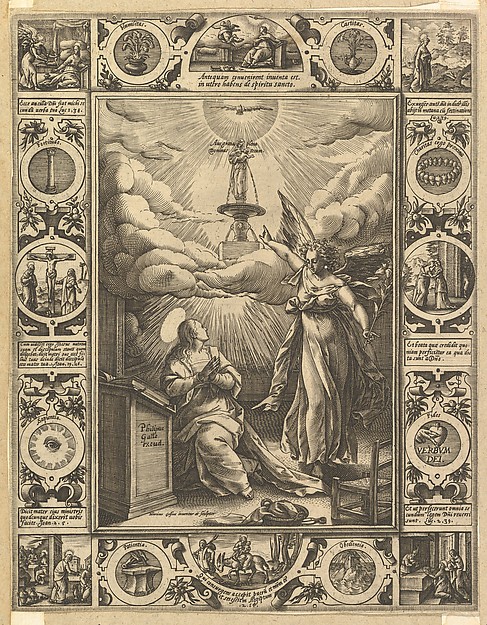
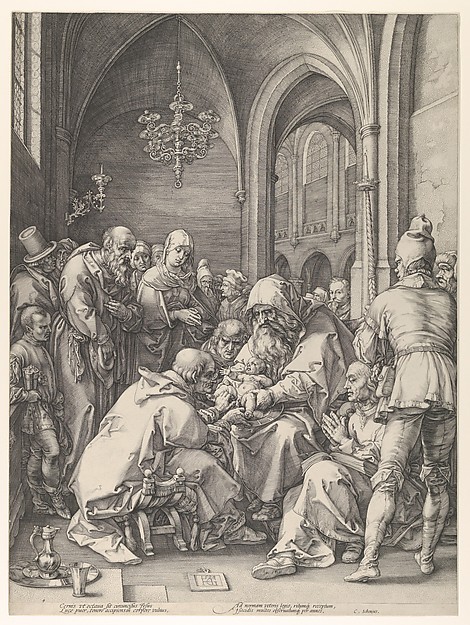
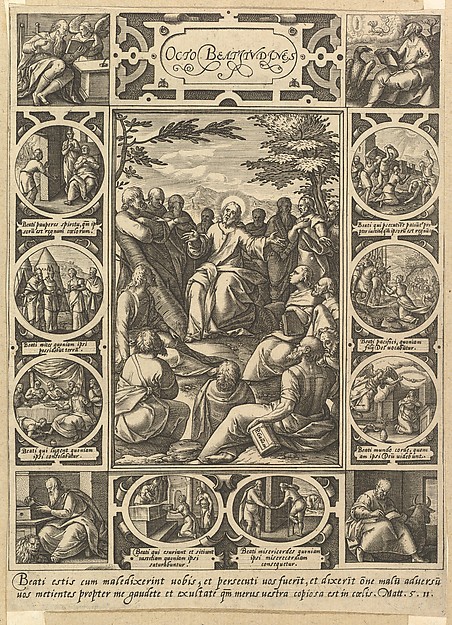
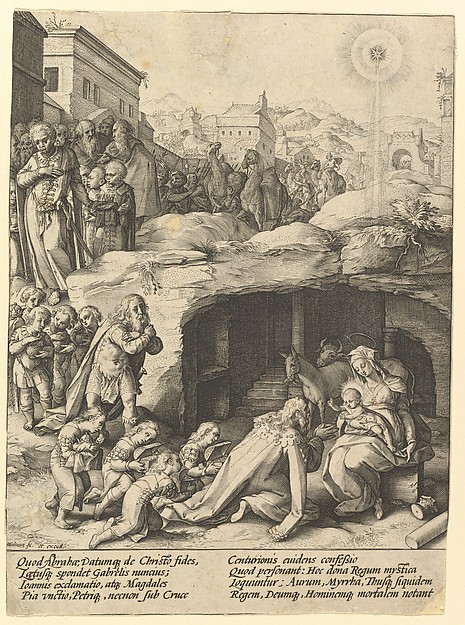
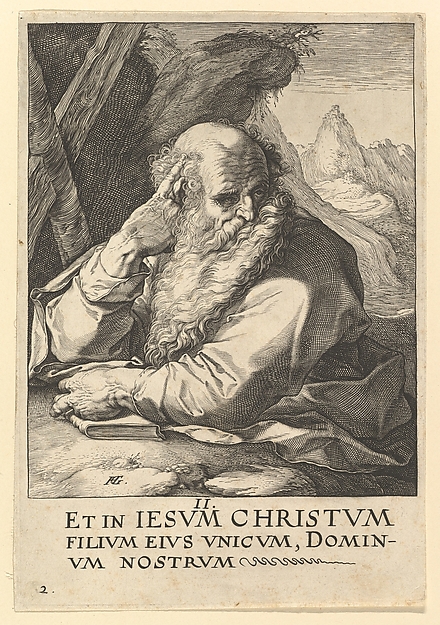
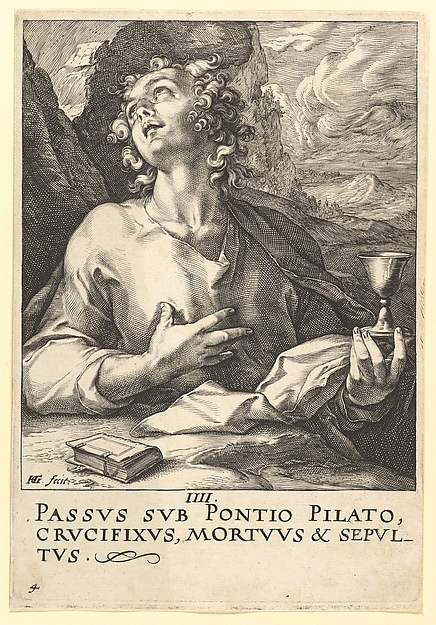
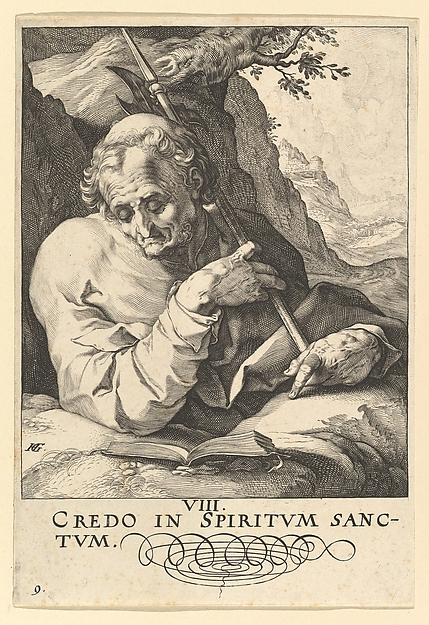
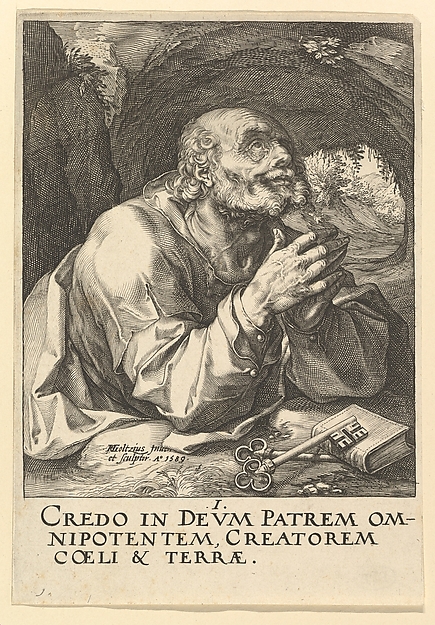
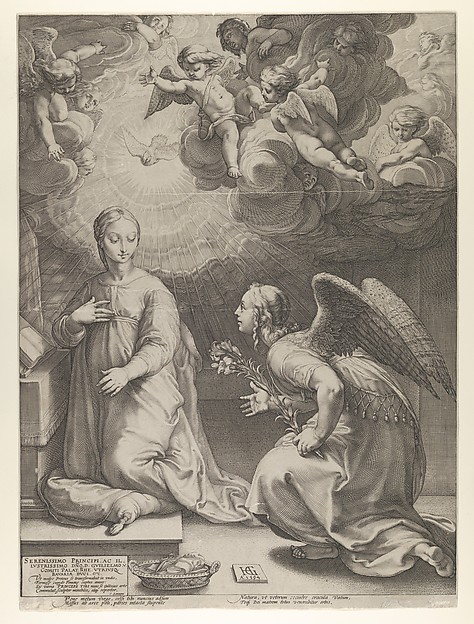
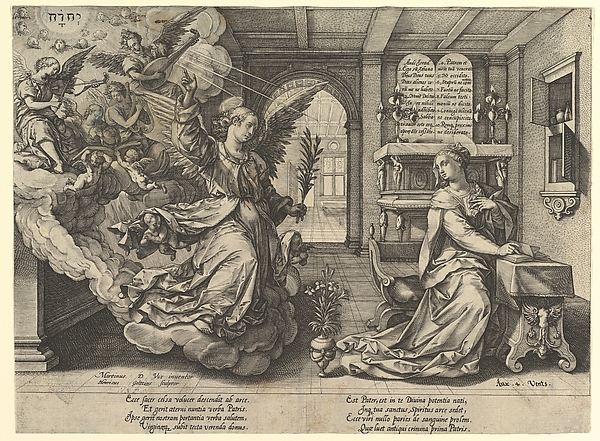
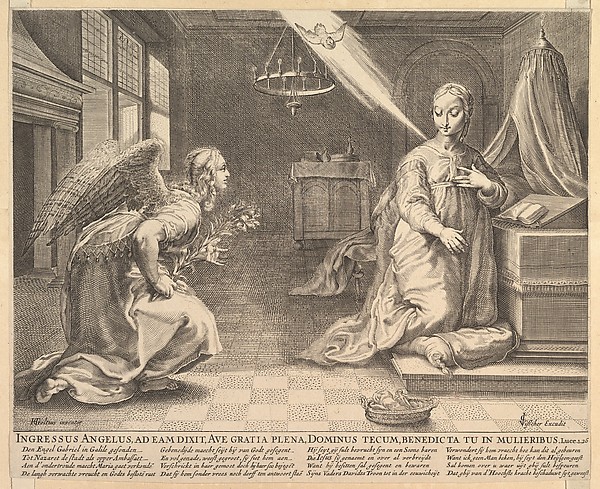
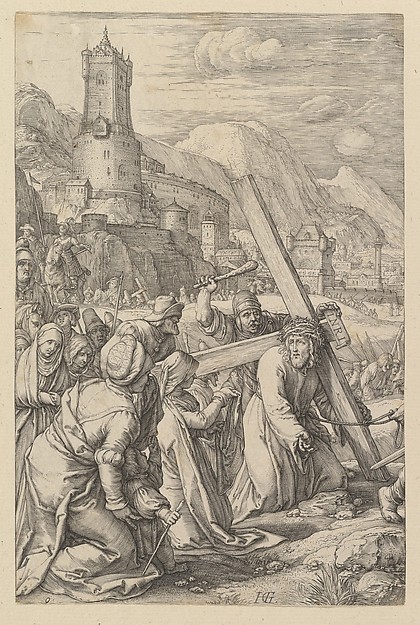
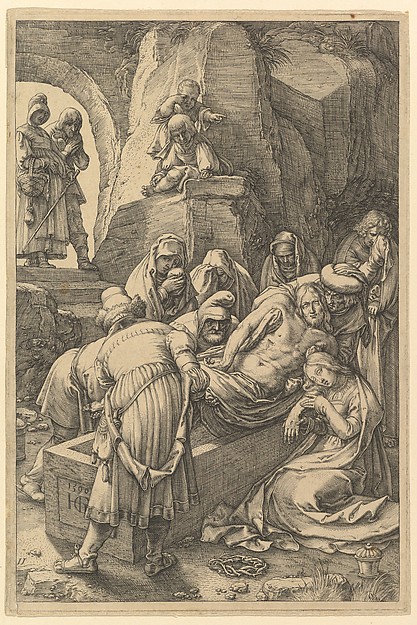
His religious output is enormous. The Life of the Virgin (1593–1594), six engraved plates each executed in deliberate imitation of a different earlier master — Dürer, Raphael, Lucas van Leyden, and others — is a virtuoso demonstration of his technical mastery and his ability to read and reproduce the styles of his predecessors. The Passion of Christ in twelve plates, the great Crucifixion, the Annunciation, the Adoration of the Shepherds, the engravings after his own designs of the Apostles and the Evangelists, and a long sequence of Old Testament narratives circulated throughout the Catholic and Protestant Netherlands and across the Rhine into Germany.
A right-hand burn injury sustained in a childhood fire never healed properly and gave Goltzius a permanently constricted grip; the engraving lines that this disability forced him to develop — long, swelling, parallel strokes laid down with a sweeping movement of the entire forearm — became the signature Goltzius mark, copied by his pupils and circulated as the model for late-Mannerist Dutch engraving for two generations.
A trip to Italy in 1590–1591 transformed his style from late-Mannerist exuberance toward a calmer, more classical, Caravaggio-inflected manner, and on his return he turned increasingly to painting; the late paintings of Lot and his Daughters (Rijksmuseum, 1616), the Venus and Adonis, and the Vertumnus and Pomona are evidence of a major painter who arrived only at the end of his life. He took on Jacob Matham, his stepson, as his successor in the print shop, and the Goltzius workshop continued his designs into the 1620s.
Notable works in detail
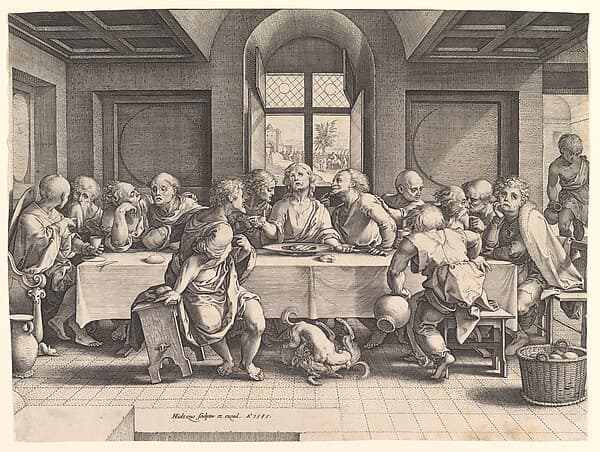
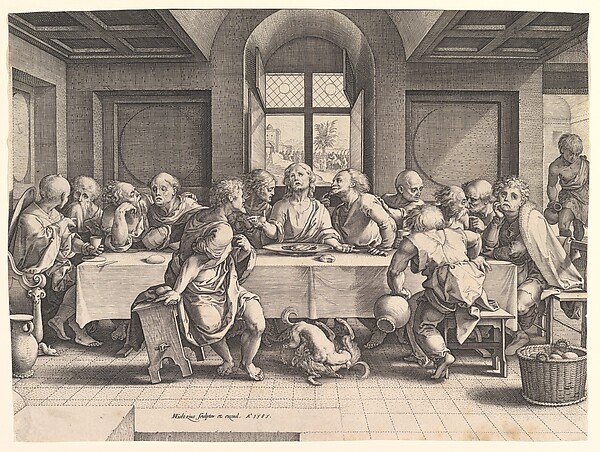
The Last Supper, engraved by Hendrick Goltzius around 1585 in his Haarlem workshop and now in the Metropolitan Museum of Art in New York, depicts the moment from the Synoptic Gospels in which Christ institutes the Eucharist with the apostles in the upper room. Goltzius composes the scene with characteristic late-Mannerist density: Christ seated at the center of a long horizontal table under an architectural canopy, the twelve apostles arranged in dramatic foreshortened postures on either side, John leaning against Christ's chest, Judas isolated in profile holding the small bag of silver. The technical accomplishment of the engraved line — the long swelling parallel strokes that became the Goltzius signature, drawn with a curved-handle burin moved in long sweeping arcs by the artist's right forearm rather than by the wrist — translated the late-Mannerist Dutch compositional sensibility into one of the most virtuoso engraved religious prints of the late sixteenth century.
met-398443
The Crucifixion, engraved by Hendrick Goltzius around 1585 in his Haarlem workshop and now in the Metropolitan Museum of Art in New York, depicts the moment immediately after Christ's death on the cross — the swooning Virgin in the arms of John on the left, the Magdalene clinging to the foot of the cross, the centurion on horseback in the foreground recognizing the divinity of the dying Christ, the two thieves still alive on their crosses to either side. Goltzius's characteristic combination of dramatic Mannerist figural foreshortening and the long swelling burin line that defined the late-sixteenth-century Haarlem engraving school is at full mature statement here. The print is among the principal Goltzius Crucifixion treatments and a defining example of the late-Mannerist Dutch reception of Italianizing High Renaissance religious composition.
met-649981
Massacre of the Innocents, engraved by Hendrick Goltzius around 1580 in his Haarlem workshop, depicts the slaughter of the male children of Bethlehem ordered by King Herod after the visit of the Magi as recorded in Matthew 2. Goltzius fills the print with a roiling chaotic mass of muscular Roman soldiers, screaming mothers clutching their dead infants, and the scattered small bodies of the killed children, set against an architectural backdrop of a Mannerist Italianate town. The compositional density and the dramatic figural foreshortening are characteristic of Goltzius's late-Mannerist Haarlem manner of the late 1570s and 1580s, the years just before his transformative Italian sojourn of 1590–1591 began to reshape his style toward a calmer, more classicizing register.
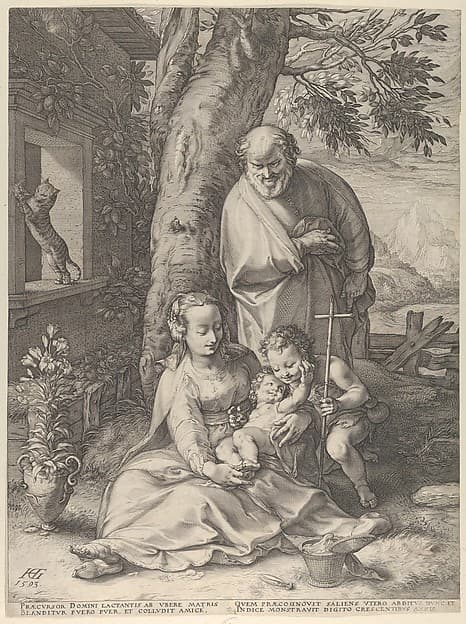
The Holy Family with the Infant John the Baptist
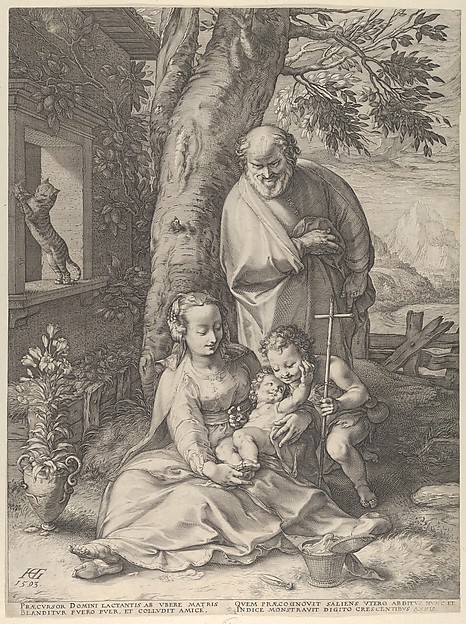
The Holy Family with the Infant John the Baptist, engraved by Hendrick Goltzius around 1593 in his Haarlem workshop and now in the Metropolitan Museum of Art in New York, depicts the iconographic subject in which the small Christ Child meets his cousin John the Baptist while their mothers — the Virgin Mary and Saint Elizabeth — and Saint Joseph attend in formal grouping. Goltzius composes the scene as a quiet domestic encounter in a small Italian Renaissance interior: the seated Virgin holds the Christ Child on her lap, the small John the Baptist embraces the Christ Child from the side, Elizabeth stands behind the Virgin, Joseph waits at the back of the room. The composition shows the lighter, more classicizing manner Goltzius adopted after his 1590–1591 Italian study trip transformed his late-Mannerist Haarlem manner toward a calmer Caravaggio-inflected register.